The U.S. dollar climbed to a fresh two-month high on Thursday as investors increased expectations for additional Federal Reserve interest rate hikes.
Hawkish comments from several Fed officials, resilient U.S. economic data and concerns about inflation all provided support for the greenback.
U.S. Dollar Reaches Two-Month High
The U.S. Dollar Index, which tracks the greenback against a basket of major currencies, rose 0.14% to 101.27 after reaching an intraday high of 101.34.
The move put the index on course for a fourth consecutive daily gain.
Higher U.S. Treasury yields have helped strengthen the dollar by increasing the relative appeal of dollar-denominated assets.
Treasury Yields Remain Near Multi-Year Highs
Treasury yields stabilized somewhat after sharp moves in the previous session. However, they remained at historically elevated levels.
The 30-year U.S. Treasury yield recently reached its highest level since June 2004, while the benchmark 10-year yield climbed to its strongest level in almost two decades.
The rise followed economic data showing stronger U.S. business activity alongside growing price pressures.
Higher bond yields are often supportive for the dollar because they can attract global capital toward U.S. fixed-income assets.
U.S. Jobless Claims Signal Stable Labor Market
Fresh employment data also reinforced expectations that the U.S. economy remains resilient.
Initial unemployment claims fell by 1,000 to 197,000 during the latest week.
That came in below the 201,000 claims expected by economists surveyed by Reuters.
The latest figures suggest that layoffs remain relatively limited and that the U.S. labor market continues to show signs of stability.
Rising Oil Prices Add to Inflation Concerns
Oil prices also moved sharply higher on Thursday, adding to worries about inflation.
Crude prices gained around 4% as investors saw limited signs of progress toward resolving tensions between the United States and Iran.
Higher energy prices can feed into broader inflation by increasing transportation, manufacturing and consumer costs.
That could make the Federal Reserve more cautious about ending its tightening cycle.
Federal Reserve Keeps Further Rate Hikes on the Table
The Federal Reserve raised its benchmark interest rate by 25 basis points last week, bringing the target range to 3.75%-4.00%.
Since then, several policymakers have indicated that further increases may be necessary if inflation fails to moderate.
FXStreet senior analyst Joseph Trevisani noted that elevated Treasury yields across the curve are providing a powerful signal for currency markets.
He also pointed to the importance of U.S. economic growth as the Fed assesses whether inflationary pressure from higher oil prices will persist.
Fed Officials Reinforce Hawkish Outlook
Comments from several Federal Reserve officials on Thursday strengthened expectations that monetary policy could tighten further.
New York Fed President John Williams said another rate increase before the end of the year could be appropriate if inflation risks remain elevated.
Cleveland Fed President Beth Hammack also warned that persistent inflation could become increasingly difficult to bring back toward target.
Philadelphia Fed President Anna Paulson similarly indicated that additional rate hikes may be required.
Markets Raise October Fed Hike Bets
Investors have responded by increasing expectations for another rate increase at the Fed’s October meeting.
According to CME FedWatch data cited in the original report, markets were pricing in a 64.2% probability of at least a 25-basis-point hike.
That compared with 55.4% one week earlier.
The shift in rate expectations has helped strengthen both Treasury yields and the U.S. dollar.
Euro Comes Under Pressure Against Dollar
The euro slipped modestly against the greenback, trading around $1.1374.
European markets were also assessing changes at the European Central Bank following the departure of Executive Board member Isabel Schnabel for a senior position at the International Monetary Fund.
Meanwhile, central banks across Europe continue to respond to inflation pressures linked partly to higher energy costs.
Nordic Currencies Weaken Against U.S. Dollar
Norway’s central bank raised interest rates on Thursday, while Sweden’s central bank signaled that it could also tighten policy before the end of the year.
Despite Norway’s rate increase, the dollar strengthened against the Norwegian krone.
The greenback also gained modestly against the Swedish krona.
These moves highlight the broad strength of the U.S. dollar even as other central banks consider tighter monetary policy.
Dollar Strengthens Against Swiss Franc
The U.S. dollar gained around 0.4% against the Swiss franc, reaching its strongest level since May 2025 during the session.
The Swiss National Bank kept its benchmark interest rate unchanged and indicated that higher inflation linked to Middle East energy disruptions did not currently threaten domestic price stability.
That policy divergence helped support the dollar against the franc.
Japanese Yen Weakens Against Dollar
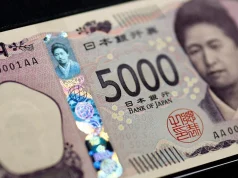
The Japanese yen also came under pressure, weakening to around 158.75 per dollar.
Japan’s recent monetary tightening has so far failed to convince markets that the Bank of Japan is preparing for a significantly faster series of rate increases.
Investors are also monitoring currency policy after coordinated intervention by Japan and the United States earlier this year.
Dollar Outlook Remains Tied to Fed Policy
The U.S. dollar continues to benefit from a combination of high Treasury yields, resilient economic activity and expectations for further Federal Reserve tightening.
However, the next major moves are likely to depend on incoming inflation data, energy prices and signals from Fed policymakers.
For now, expectations that U.S. interest rates could remain higher for longer continue to provide strong support for the greenback.