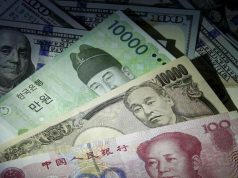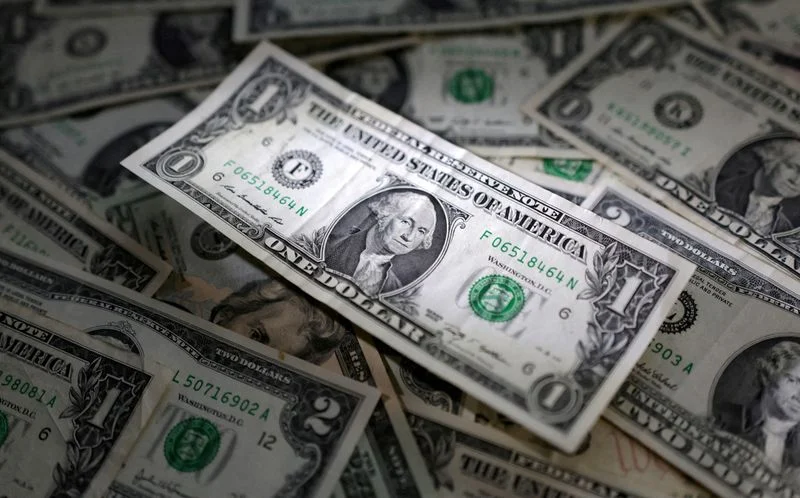
The U.S. dollar remained close to a two-month high on Thursday as investors increased expectations for further Federal Reserve rate hikes.
A stronger-than-expected U.S. manufacturing reading revived inflation concerns, while a weak Treasury auction pushed bond yields higher and provided additional support for the dollar.
The euro traded near a two-month low at around $1.1384, while the British pound remained close to a three-month low at $1.3240.
The U.S. Dollar Index, which tracks the greenback against a basket of major currencies, held near 101.08.
Strong U.S. PMI Revives Inflation Concerns
The latest purchasing managers’ index data came in stronger than expected and raised fresh concerns that inflation could remain elevated.
At the same time, weak demand at an auction of five-year U.S. Treasury notes triggered another round of bond selling.
The five-year Treasury yield moved above 5% for the first time since 2007.
Higher bond yields tend to support the dollar by making U.S. fixed-income assets more attractive to global investors.
Fed Rate Hike Expectations Increase
Expectations for additional monetary tightening also strengthened after comments from Federal Reserve Governor Michael Barr.
Barr said the combination of a resilient U.S. economy and rising inflation risks could require further interest-rate increases.
Markets interpreted his comments as a signal that the Federal Reserve may continue tightening policy.
Traders subsequently increased bets on another rate hike at the Fed’s next meeting in October.
According to CME Group’s FedWatch Tool, markets were pricing in nearly a 70% probability of another increase, up from around 50% one week earlier.
U.S. Economic Strength Supports the Dollar
The relative strength of the U.S. economy has also helped keep demand for the dollar elevated.
Investors are increasingly focused on signs that the economy may be running too hot, potentially forcing policymakers to keep interest rates higher for longer.
Chris Weston, head of research at Pepperstone, said the combination of stronger U.S. growth and more aggressive Fed rate-hike expectations continued to support the dollar.
Further upside surprises in inflation could reinforce expectations for additional monetary tightening.
Higher Oil Prices Add to Inflation Risks
Energy prices have also contributed to concerns about persistent inflation.
Oil prices jumped nearly 4% on Wednesday after Iranian President Masoud Pezeshkian said Iran would not surrender amid tensions with the United States.
Markets were also assessing developments surrounding potential U.S. restrictions on diesel exports.
Brent crude futures later eased around 0.8% to approximately $102.20 per barrel.
Higher energy costs can feed into broader inflation, increasing pressure on central banks to maintain tighter monetary policy.
Yen Recovers From Three-Week Low
The Japanese yen strengthened to around 157.8 per dollar after falling to its weakest level in three weeks.
Japanese Finance Minister Satsuki Katayama said the principles behind the coordinated Japan-U.S. currency intervention carried out in July remained in place.
Her comments suggested that Tokyo could be prepared to act again if excessive currency moves return.
The remarks helped end a four-day decline in the yen.
However, sentiment toward the currency remained fragile after the Bank of Japan’s recent interest-rate increase failed to convince markets that a faster tightening cycle was likely.
Australian Dollar and Kiwi Remain Subdued
The Australian dollar traded around $0.7036, slipping approximately 0.06% ahead of the latest employment data.
The New Zealand dollar was little changed at around $0.5675.
Both currencies remained sensitive to broader moves in the U.S. dollar and expectations for global interest rates.
Chinese Yuan Steady Ahead of Xi Visit
The offshore Chinese yuan was broadly unchanged at around 6.7119 per dollar.
Investors were watching Chinese President Xi Jinping’s first visit to the United States in three years.
The meeting is expected to focus on several major issues, including trade, technology, Taiwan and tensions involving Iran.
The outcome could influence sentiment toward the yuan and broader Asian currency markets.