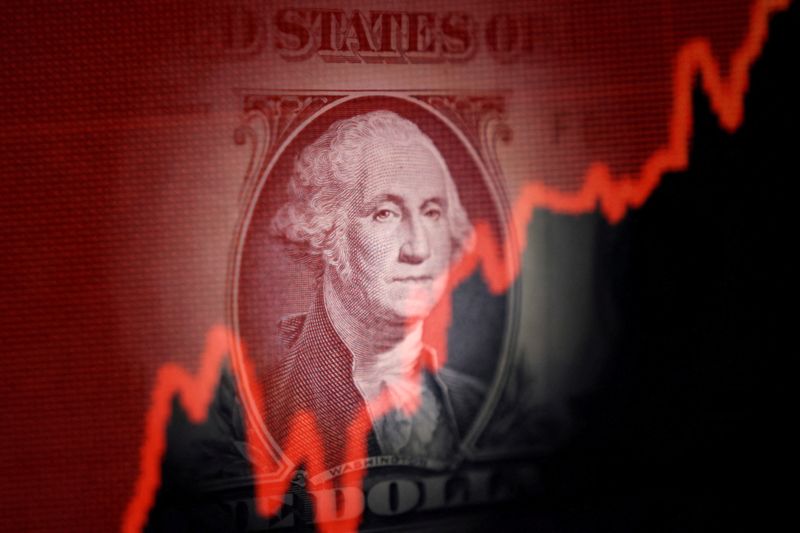
A major selloff in U.S. Treasuries eased slightly on Thursday after benchmark yields climbed to levels not seen since before the global financial crisis.
Stronger U.S. business activity, elevated oil prices and hawkish Federal Reserve signals have increased concerns that inflation could remain persistent and interest rates may stay higher for longer.
U.S. 30-Year Treasury Yield Hits 2004 High
The yield on the benchmark 10-year U.S. Treasury note eased to 5.104% after earlier reaching its highest level since July 2007.
The move followed Wednesday’s sharp bond-market selloff, which produced one of the largest daily increases in yields in recent years.
Meanwhile, the 30-year Treasury yield climbed to 5.443%, its highest level since 2004.
At the shorter end of the curve, the two-year Treasury yield remained near 4.864%, close to its highest level since May 2024.
Strong U.S. PMI Data Fuels Inflation Concerns
Fresh Purchasing Managers’ Index data added to pressure on the bond market.
The latest flash PMI survey showed that U.S. business activity accelerated to its strongest level in more than five years during September, supported by a sharp increase in new orders.
While strong economic activity is generally positive for growth, investors interpreted the data as another sign that demand remains resilient despite tighter monetary conditions.
That raised concerns that inflation could prove more persistent than previously expected.
Weak Treasury Auction Adds to Bond Market Pressure
The bond selloff was also intensified by weak demand at a scheduled auction of five-year Treasury notes.
Primary dealers were forced to absorb a relatively large portion of the issuance, placing additional pressure on Treasury prices in the secondary market.
Since bond prices and yields move in opposite directions, weaker demand contributed to higher yields across the curve.
Rising Oil Prices Increase Inflation Risks
Energy markets also added to inflation concerns.
Crude oil prices moved sharply higher as geopolitical tensions raised uncertainty over the outlook for energy supplies and the Strait of Hormuz.
A prolonged disruption to oil flows could keep energy prices elevated and increase costs across transportation, manufacturing and consumer goods.
That type of cost pressure could make it harder for the Federal Reserve to bring inflation back toward its target.
Yardeni Sees Upside Risk for Treasury Yields
Yardeni Research said it had previously expected the 10-year Treasury yield to remain within a 4%-5% range this year.
However, the firm acknowledged that risks are now becoming increasingly tilted toward higher yields.
The current environment has drawn comparisons with bond-market conditions seen in the years before the global financial crisis.
Federal Reserve Signals Further Rate Hikes
Federal Reserve officials have also reinforced expectations that monetary policy could remain restrictive.
Fed Governor Michael Barr indicated that additional interest rate increases may be necessary to return inflation to target.
Chicago Fed President Austan Goolsbee also highlighted the possibility that the latest energy shock could create more persistent inflation rather than a short-lived increase in prices.
Those comments added to market expectations for further tightening.
Markets Price in Higher Odds of October Rate Hike
Following the latest economic data and Federal Reserve commentary, traders increased bets on another rate increase.
According to CME FedWatch data cited in the original report, markets were pricing in roughly a 70% probability of another 25-basis-point hike in October.
That was up from around 50% before the latest PMI release.
The shift in expectations helped push Treasury yields higher across much of the curve.
Treasury Buybacks Fail to Halt Bond Selloff
The U.S. Treasury also announced measures aimed at supporting market liquidity through its secondary-market buyback program.
Officials indicated that the Treasury would purchase up to $6 billion of 20-year and 30-year bonds during Thursday’s operations.
The move marked the second long-term buyback operation of the month.
However, selling pressure remained strong as investors continued reducing exposure to longer-duration bonds.
Oil and Treasury Supply Remain Key Risks
Yardeni Research said a recovery in bond prices could require a meaningful decline in oil prices, potentially following an improvement in Middle East geopolitical tensions.
The firm also suggested that larger Treasury buybacks or greater reliance on shorter-term Treasury bills could help reduce pressure on longer-term yields.
For now, the outlook for U.S. Treasury yields remains closely tied to inflation, Federal Reserve policy, oil prices, economic growth and government bond supply.