Middle East diplomatic efforts faced another setback on Monday after a planned meeting involving Iran and several Gulf states was postponed. At the same time, fresh attacks near two of the region’s most important oil transit routes increased fears over global energy supplies.
Oil prices climbed by more than 3% as investors reacted to mounting risks across the Middle East. Houthi attacks on Saudi Arabia forced the country to close its key east-west oil pipeline over the weekend, while Iranian attacks on vessels in the Gulf added further pressure to energy markets.
Oman Meeting Postponed as Diplomatic Hopes Fade
Expectations of a near-term diplomatic breakthrough weakened after Oman postponed a regional meeting that had been scheduled for Monday.
Omani Foreign Minister Sayyid Badr Albusaidi said the meeting had been delayed in an effort to build broader agreement among the countries involved.
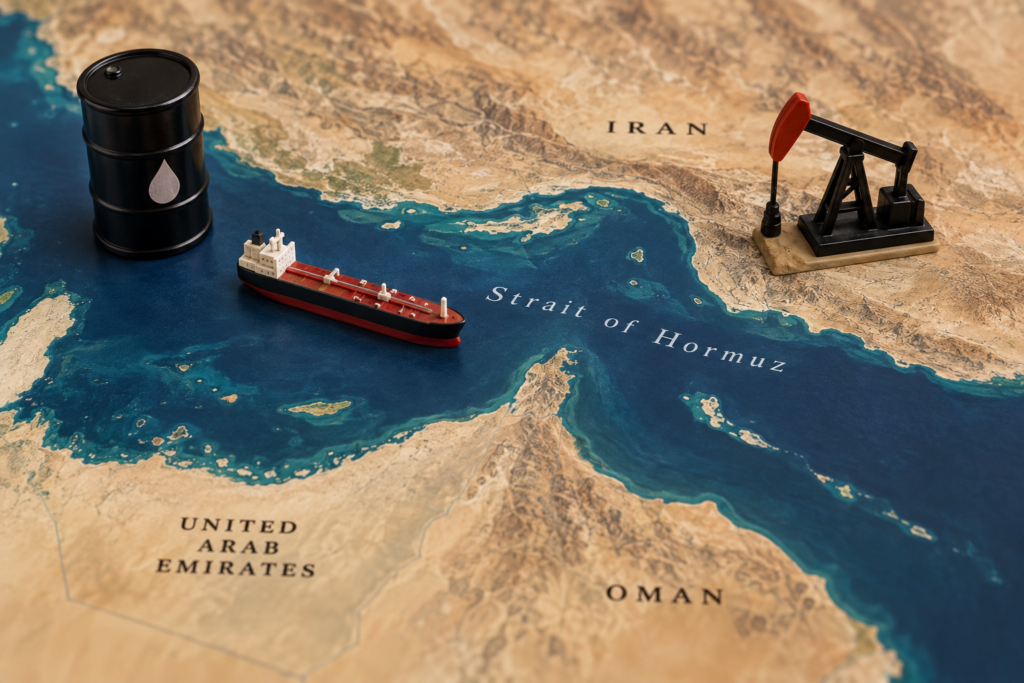
Iranian officials had previously indicated that Tehran planned to attend the talks alongside Gulf Arab states. Iran was expected to present a proposed arrangement developed with Oman concerning the management of shipping through the Strait of Hormuz.
The Strait of Hormuz has historically been one of the world’s most important energy corridors, carrying roughly one-fifth of global oil supplies before the current conflict disrupted traffic.
Iran’s Fars news agency cited a foreign ministry official who said several regional countries had requested the postponement. According to the official, Tehran and Muscat jointly agreed to delay the talks and will work together to establish a new date.
Saudi Oil Pipeline Closure Adds to Supply Concerns
The diplomatic setback came shortly after Saudi Arabia shut down its major east-west pipeline.
The approximately 1,200-kilometre pipeline provides Saudi Arabia with an alternative route for transporting crude oil without relying on the Strait of Hormuz. Its closure has therefore increased concerns about the vulnerability of Middle Eastern oil exports.
Brent crude moved higher as traders assessed the possibility of further supply disruptions.
Saudi Arabia has not yet provided full details about the damage to the pipeline or how long repairs could take.
Market sources have offered different estimates, ranging from several days to several weeks. Satellite imagery has also reportedly shown large columns of smoke near sections of the pipeline.
Shipping Through the Strait of Hormuz Remains Risky
Conditions in the Strait of Hormuz also remain dangerous for commercial shipping.
The UK Maritime Trade Operations agency reported that a vessel travelling through the strait was hit by a projectile on Sunday. The incident caused a fire and led to the evacuation of the crew.
Iran separately reported that an Iranian commercial vessel had been struck near its coastline. One person was killed and four crew members were wounded, according to Iranian authorities.
Ship-tracking data also suggested that commodity vessel traffic through the Strait of Hormuz dropped to fewer than 10 vessels per day over the weekend.
That was significantly below the recent 10-day average of around 14 daily transits.
However, the true number could be higher because some vessels may have switched off their Automatic Identification System transponders to reduce the risk of detection.
Oil Above $100 as U.S. Diesel Prices Reach New High
Oil prices moved above $100 per barrel last week for the first time since July, reflecting growing anxiety over Middle Eastern supply.
Meanwhile, U.S. diesel prices reached another record high on Sunday, rising above $6.20 per gallon.
The increase could add further pressure to transportation costs and inflation if elevated energy prices persist.
Traders and Saudi oil buyers reportedly believe that Saudi Arabia has enough crude stored at the Red Sea port of Yanbu to maintain normal exports for only around five to seven days if the damaged pipeline remains out of operation.
After that period, analysts fear that as much as 4% of global oil supply could face disruption.
That would come in addition to millions of barrels per day already affected by reduced traffic through the Strait of Hormuz.
Middle East Oil Flows Face Renewed Pressure
The latest increase in violence follows a relatively calmer August, when Middle Eastern oil flows had started to recover gradually.
However, the renewed escalation has once again raised questions about whether producers can maintain exports while two strategically important maritime routes remain under pressure.
The Strait of Hormuz connects Gulf producers with international markets, while the Bab el-Mandeb Strait controls access between the Red Sea and the Gulf of Aden.
Disruptions at either location can affect oil prices, shipping costs and global supply chains.
Iran Signals Strait of Hormuz Could Remain Restricted
Iranian Foreign Minister Abbas Araqchi has indicated that an agreement with Oman would not automatically lead to the reopening of the Strait of Hormuz.
In an interview with London-based Al-Araby Al-Jadeed, Araqchi said Tehran would continue restricting the route until the United States meets Iran’s demands.
The position highlights the difficulty facing diplomatic efforts aimed at restoring normal shipping conditions.
The United States has been seeking to pressure Iran over its nuclear programme, its military capabilities and its activities across the region.
President Donald Trump has also continued to argue that the conflict could end before the end of the year.
During a weekend visit to Ireland, Trump suggested that an end to the fighting could come after the U.S. midterm elections in November. He also argued that gasoline prices could fall sharply once the conflict is resolved.
Houthi Attacks on Saudi Arabia Continue
At the same time, Houthi attacks against Saudi Arabia have continued.
Saudi state media released footage showing damage to homes and a mosque following what authorities described as another cross-border attack in the southern province of Jazan.
The Iran-aligned Houthi movement separately claimed that it had attacked a Saudi military base in a neighbouring province.
The attacks followed the Houthis’ capture of Perim Island in the Bab el-Mandeb Strait, a strategically important waterway often referred to as the “Gate of Tears.”
The latest Houthi advance along Yemen’s Red Sea coastline represents one of the most significant escalations in the country’s fighting in recent years.
Washington Faces Growing Regional Challenge
The renewed Houthi offensive presents another challenge for the United States.
Washington wants to protect commercial shipping and support Saudi Arabia. However, U.S. officials are also reluctant to become involved in another major front in the broader Middle East conflict.
The growing pressure also leaves Gulf states with a difficult decision. They can either tolerate increasing economic disruption or pursue deeper diplomatic engagement with Iran.
The United States conducted strikes against Houthi positions for around two months in 2025. Trump later ended the campaign after saying the group had agreed to stop threatening commercial shipping in the Red Sea.
According to reports, Saudi Crown Prince Mohammed bin Salman recently contacted Trump to request military assistance against the Houthis.
For now, Washington is reportedly offering intelligence support rather than direct military involvement.
Trump confirmed that he had spoken with the Saudi crown prince. He also said the Houthis had contacted the U.S. administration and urged Washington not to intervene directly in Yemen.
Energy Markets Remain Focused on the Strait of Hormuz
The combination of stalled diplomacy, attacks on shipping and uncertainty surrounding Saudi Arabia’s oil infrastructure has kept global energy markets on edge.
Any prolonged disruption to the Strait of Hormuz or Saudi Arabia’s alternative export routes could tighten global crude supplies further.
As a result, traders are likely to remain highly sensitive to developments involving Iran, Saudi Arabia, the Houthis and Gulf shipping routes.
A renewed diplomatic meeting could help reduce tensions. However, until a new date is agreed and shipping conditions improve, the Strait of Hormuz is likely to remain one of the biggest geopolitical risks facing the global oil market.