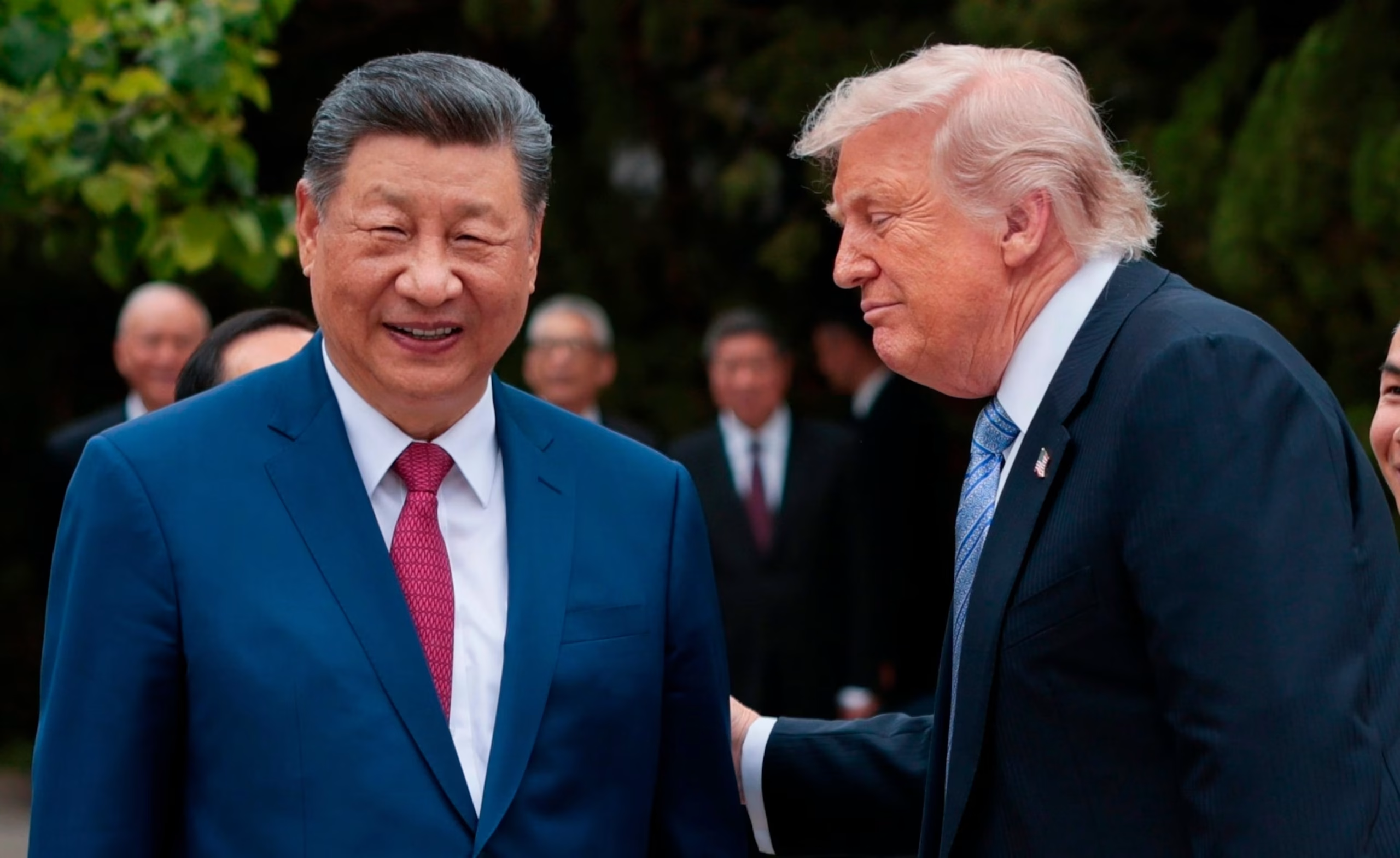
US President Donald Trump is set to welcome Chinese President Xi Jinping to Washington on Wednesday for a three-day visit focused on some of the biggest issues dividing the United States and China.
Trade, technology, Taiwan and Iran are expected to dominate discussions. However, the diplomatic tensions will unfold alongside an elaborate program of ceremonies and official events.
Trump Prepares Formal Welcome for Xi Jinping
Xi’s visit will be his first trip to the United States in nearly three years.
Trump is expected to personally welcome Xi and his wife when they arrive on Wednesday evening at the Maryland military base used by Air Force One.
The visit is expected to include a state dinner, a White House military ceremony with aircraft flyovers and a stop at the National Archives. The archive houses the original US Declaration of Independence and Constitution.
Despite major disagreements between Washington and Beijing, both governments have moved ahead with the summit.
Analysts see the meeting as an opportunity for the world’s largest consumer economy and largest manufacturing economy to demonstrate a degree of stability in their relationship.
Major Breakthrough Remains Uncertain
Expectations for a major agreement during Xi’s visit remain limited.
The current US-China trade truce is due to expire in November. Meanwhile, the two countries remain divided over issues including Taiwan, export controls, narcotics and rare-earth minerals.
People familiar with preparations for the talks expect Xi to strongly raise Beijing’s position on Taiwan. Washington, meanwhile, is expected to maintain restrictions on exports of sensitive US technology despite Chinese objections.
Still, Thursday’s discussions could produce agreements in several areas.
Possible outcomes include reduced tariffs in specific industries, increased cooperation against drug trafficking and expanded communication between the two countries’ militaries.
Trump is also expected to raise the cases of Americans and other individuals being detained in China.
Artificial Intelligence Could Enter the Discussions
Artificial intelligence may become another important topic during the Trump-Xi talks.
The United States and China are competing aggressively for leadership in AI. At the same time, both governments are increasingly aware of the security and economic risks associated with rapidly advancing technology.
The talks could therefore create an opportunity for further communication on AI policy and safety.
Trump and Xi Face Different Domestic Pressures
The summit comes as both leaders deal with challenges at home.
Trump is facing political pressure as public dissatisfaction surrounding the US conflict with Iran grows. Higher energy prices have also become an important domestic issue.
Xi arrives with China’s international trade activity remaining strong. However, the Chinese economy continues to face weaker household consumption and ongoing problems in the property sector.
Analysts say the two leaders may therefore see limited reasons to make major concessions.
Edgard Kagan, a former White House official who is now with the Center for Strategic and International Studies, said Trump believes the US economy will strengthen over time.
He added that Xi may approach the negotiations from a very different perspective, believing that long-term economic trends favor China.
State Dinner to Bring Together Major Tech Leaders
A state dinner scheduled for Thursday is expected to include executives from some of the world’s most influential technology companies.
Expected guests include Apple CEO Tim Cook, Nvidia CEO Jensen Huang and OpenAI CEO Sam Altman.
As with previous Trump-Xi meetings since 2025, the summit is expected to feature a carefully managed public presentation.
Rather than holding a joint press conference or issuing a single joint statement, Washington and Beijing are expected to release separate announcements emphasizing their own priorities and interpretations of the discussions.
US-China Relations Remain Under Pressure
The Xi visit comes during a busy period for US foreign policy.
Trump’s diplomatic schedule began with a two-day stay in New York for the United Nations General Assembly.
At the same time, the continuing conflict with Iran has contributed to higher US energy prices. Domestic political pressure is also growing ahead of the November congressional elections.
China faces its own economic challenges.
Although the country has recorded strong foreign trade activity, weak consumer spending and problems in the property market remain concerns.
Xi has also overseen extensive anti-corruption and disciplinary campaigns within China’s military. These measures have strengthened his control while also raising debate about the readiness of the People’s Liberation Army.
More Trump-Xi Meetings Could Follow
Another meeting between Trump and Xi could take place before the end of the year.
Possible opportunities include the Asia-Pacific Economic Cooperation summit in China in November and the Group of 20 meetings in the United States in December.
That means the Washington summit may represent another stage in a longer negotiating process rather than a final agreement between the two governments.
Taiwan Remains a Major Source of Tension
Taiwan is expected to remain one of the most sensitive issues in the US-China relationship.
After introducing extremely high tariffs on Chinese imports last year, Trump later softened some aspects of his trade policy and rhetoric toward Beijing.
However, tensions have continued in other areas.
Trump has previously accused China of attempting to interfere in US elections, allegations Beijing denies.
Xi is also expected to push Washington to reduce arms sales to Taiwan.
The Trump administration previously approved an $11 billion arms package for Taiwan. Another package reportedly worth around $14 billion has remained on hold.
Trump has described US arms sales to Taiwan as a potential bargaining tool in negotiations with China.
Iran Could Complicate US-China Talks
Iran is also likely to feature prominently in discussions.
China maintains close economic and diplomatic ties with Tehran. Washington believes Beijing could potentially use its influence to encourage movement in the conflict.
However, Trump has previously indicated that he does not believe US officials need China’s assistance.
China, the world’s largest oil importer, has also played an important role in global energy markets since the conflict began.
Beijing reduced oil demand and released crude from strategic reserves, helping ease pressure on global prices.
Although the Trump administration previously threatened severe economic penalties against countries maintaining business relationships with Iran, it has so far avoided imposing secondary sanctions on several major Chinese banks.
China remains Iran’s largest trading partner, making Beijing an important factor in any broader diplomatic or economic strategy involving Tehran.
Trump-Xi Summit Could Shape the Next Phase of US-China Relations
The Washington meeting comes at a sensitive moment for relations between the world’s two largest economies.
Trade, technology, Taiwan, artificial intelligence and Iran are all likely to remain difficult areas of negotiation.
While a sweeping breakthrough appears uncertain, smaller agreements on tariffs, military communication or drug trafficking could still emerge from the talks.
The summit may also help determine the tone of US-China relations ahead of further potential meetings later this year.