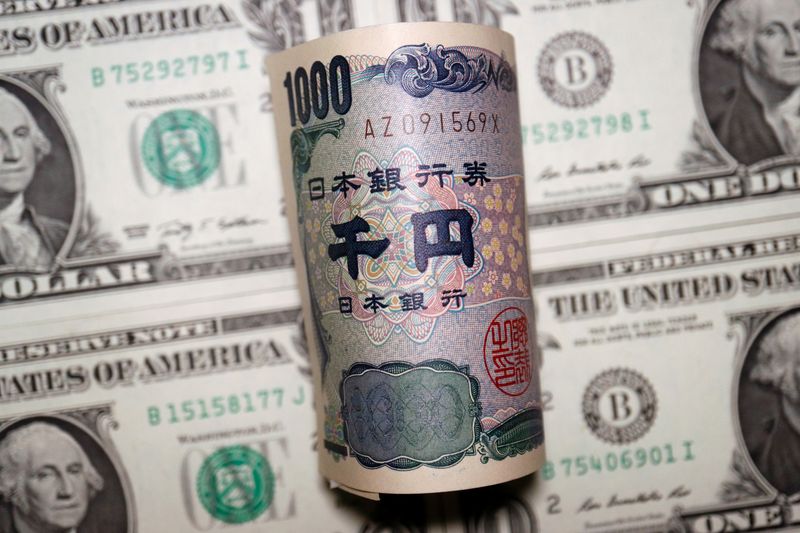
Asian currencies traded within narrow ranges on Friday as the U.S. dollar paused following a strong weekly advance.
The Japanese yen remained close to its weakest level in almost 40 years. Meanwhile, most other regional currencies recorded only limited movement against the dollar.
U.S. Dollar Holds Near One-Month High
The U.S. Dollar Index was largely unchanged at 101.43 after reaching its highest level in more than a month earlier in the week.
Persistent U.S. inflation and hawkish comments from Federal Reserve officials continued to support the dollar.
Investors increasingly expect U.S. interest rates to remain elevated for longer. This outlook has reduced demand for many Asian currencies and other risk-sensitive assets.
Japanese Yen Stays Near Four-Decade Low
The USD/JPY currency pair fell 0.1% to 161.60 after approaching 161.95 on Thursday.
That level marked the yen’s weakest position against the dollar since 1986.
Traders remained cautious about increasing bearish positions against the Japanese currency. Concerns that Japanese authorities could intervene in the foreign exchange market helped limit additional losses.
However, the yen remained under heavy pressure near its multi-decade low.
Tokyo Inflation Offers Limited Support
Tokyo consumer inflation accelerated in June, broadly matching market expectations.
Core consumer price inflation increased by 1.6% year-on-year. Meanwhile, the measure excluding both fresh food and energy rose by 1.1%.
The figures indicated that underlying price pressures remained present in the Japanese economy.
However, the inflation report offered little reason for the Bank of Japan to tighten monetary policy more aggressively.
Interest-Rate Gap Continues to Weigh on Yen
The wide difference between U.S. and Japanese interest rates remained the main source of pressure on the yen.
U.S. interest rates are expected to stay high as the Federal Reserve continues its efforts to control inflation.
In contrast, Japanese borrowing costs remain relatively low. This makes dollar-denominated assets more attractive to investors and reduces demand for the yen.
As a result, stronger Tokyo inflation provided only limited support for the Japanese currency.
Malaysian Ringgit Leads Regional Gains
The Malaysian ringgit outperformed most Asian currencies on Friday.
The USD/MYR pair fell 0.4%, indicating that the ringgit strengthened against the U.S. dollar.
Elsewhere, USD/KRW rose 0.2% as the South Korean won weakened. The Taiwan dollar also slipped by around 0.1%.
Most Asian currencies remained range-bound as investors assessed the outlook for U.S. monetary policy.
Rupiah and Thai Baht Weaken
The Indonesian rupiah recorded a modest decline, with USD/IDR rising 0.23%.
Thailand’s baht also weakened as USD/THB climbed 0.31%.
Elevated U.S. Treasury yields continued to support the dollar and place pressure on regional currencies.
Higher U.S. yields can attract international capital away from Asian markets and toward dollar-based investments.
Australian and New Zealand Dollars Decline
The Australian dollar fell 0.3% to $0.6889, extending its weekly losses.
The New Zealand dollar also weakened, with NZD/USD declining by 0.2%.
Investors continued to favour the U.S. dollar amid expectations that the Federal Reserve could maintain restrictive monetary policy or introduce further tightening.
Australian Inflation Keeps RBA Outlook Uncertain
The Australian dollar also remained under pressure following the release of persistent inflation and resilient labour market figures.
The data strengthened expectations that the Reserve Bank of Australia may need to keep interest rates high for longer.
However, investors remain divided over whether the central bank will deliver another rate increase.
The possibility of tighter Australian monetary policy may provide some support for the currency. Nevertheless, strong demand for the U.S. dollar continues to limit its recovery.
Markets Await New Federal Reserve Signals
Investors are now looking toward upcoming U.S. economic reports and comments from Federal Reserve officials for further guidance.
Thursday’s personal consumption expenditures inflation report reinforced expectations that U.S. monetary policy will remain restrictive during the second half of the year.
Further evidence of persistent inflation could strengthen the dollar and place additional pressure on the yen and other Asian currencies.