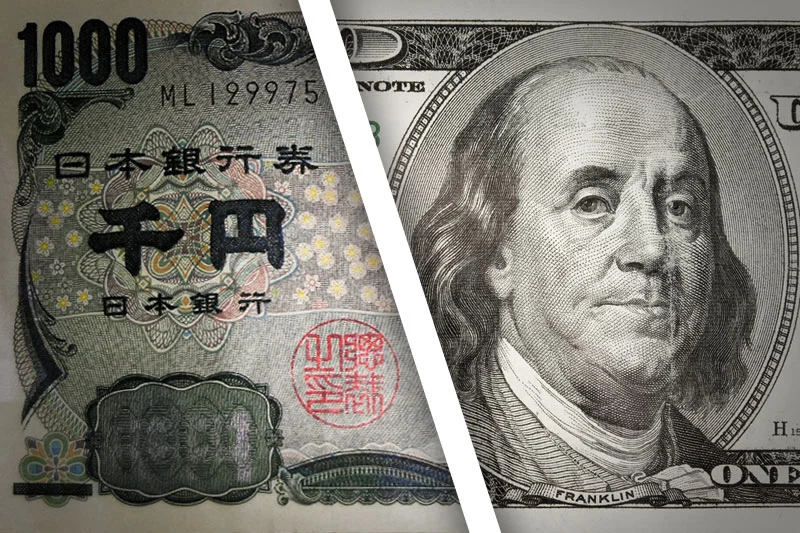
The U.S. dollar strengthened on Tuesday, pushing the Japanese yen to its lowest level against the greenback in four decades.
Heavy selling pressure on the yen increased expectations that Japanese authorities could intervene in the currency market. However, repeated warnings from government officials failed to reverse the decline.
Dollar Index Extends Quarterly Gain
The U.S. Dollar Index, which tracks the currency against six major rivals, recovered part of its overnight losses and traded near 101.33.
The index was heading for a quarterly gain of approximately 1.4%, following a 1.6% increase during the first quarter of 2026.
A resilient U.S. economy and expectations of higher interest rates have continued to support demand for the dollar.
USD/JPY Reaches Highest Level Since 1986
The dollar climbed as high as 162.42 yen, its strongest level against the Japanese currency since 1986.
Japanese Chief Cabinet Secretary Minoru Kihara and Finance Minister Satsuki Katayama issued fresh warnings about excessive currency movements.
However, their comments provided little relief for the yen.
Weak Yen Benefits Exporters but Raises Import Costs
The weaker Japanese yen has supported the earnings of large exporters by increasing the value of overseas revenue when converted back into yen.
This has also helped Japan’s major stock indexes reach record levels.
However, the currency decline has made dollar-denominated imports significantly more expensive.
Japan relies heavily on imported energy, commodities and raw materials. Therefore, a weaker yen can increase inflation and place additional pressure on households and businesses.
Bank of Japan Rate Hikes Fail to Support Yen
The continued decline highlights the limits of recent changes in Japanese monetary policy.
The Bank of Japan raised its benchmark interest rate to 1%, its highest level in 30 years.
Nevertheless, the interest-rate gap between the United States and Japan remains wide. Higher U.S. yields continue to make dollar-denominated assets more attractive to investors.
As a result, capital has continued to move toward the U.S. dollar.
Federal Reserve Policy Supports Dollar Strength
The dollar has gained broadly across global markets during the quarter.
Investors have been encouraged by the strength of the U.S. economy and the Federal Reserve’s hawkish policy stance.
Even after oil prices declined and some investors moved toward traditional safe-haven assets, demand for the dollar remained strong.
Markets are currently pricing in the possibility of two additional U.S. interest-rate increases before the end of the year.
Analysts See Persistent Pressure on the Yen
Nomura analysts said the yen’s weakness remained notable despite lower crude oil prices and periods of risk-averse market sentiment.
They argued that these conditions normally provide some support for the Japanese currency.
However, the yen continued to weaken, suggesting that underlying selling pressure remains strong.
Nomura also indicated that Japan’s Finance Ministry may hesitate to launch aggressive intervention while domestic policymakers remain behind changing global interest-rate conditions.
Previous Currency Intervention Had Limited Impact
Japan has already spent heavily to support the yen.
Official figures showed that the Finance Ministry used a record 11.73 trillion yen, equivalent to approximately $72.4 billion, to intervene in foreign exchange markets between late April and late May.
The intervention began after USD/JPY moved above the closely watched 160 level.
However, the measures provided only temporary support, and the yen later resumed its decline.
Markets Await Kevin Warsh’s Sintra Speech
Currency traders are now focused on the European Central Bank’s annual policy forum in Sintra, Portugal.
The event will include a closely watched panel featuring newly appointed Federal Reserve Chair Kevin Warsh.
It will be his first international speech since taking control of the U.S. central bank.
Warsh will appear alongside Bank of England Governor Andrew Bailey and Bank of Canada Governor Tiff Macklem.
Interest-Rate Outlook Could Drive the Dollar’s Next Move
Investors will examine Warsh’s remarks for clues about whether the Federal Reserve intends to maintain its hawkish policy direction.
Any indication that further rate increases are likely could provide additional support for the dollar and place more pressure on the Japanese yen.
Markets will also monitor comments from European Central Bank officials Philip Lane and Isabel Schnabel.
Their speeches may provide further guidance on the eurozone’s interest-rate outlook as policymakers remain divided over persistent core inflation.