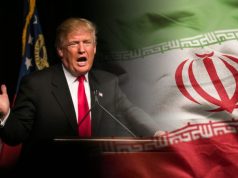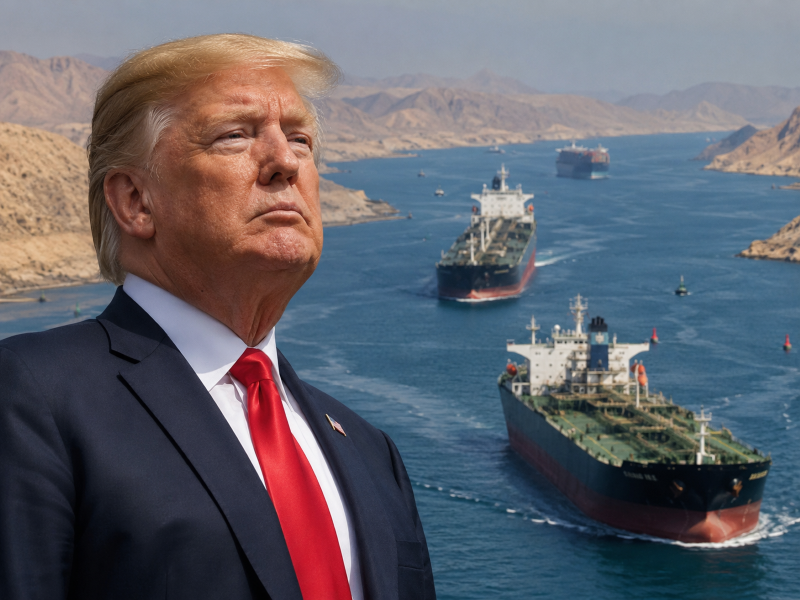
U.S. President Donald Trump has threatened military action against Oman if the country interferes with Washington’s efforts to negotiate a peace agreement with Iran, according to Fox News.
Trump made the remarks during an interview with the network as a temporary ceasefire framework between the United States and Iran approached its scheduled expiration on Monday.
Trump Warns Oman Over Strait of Hormuz Talks
The comments came after Trump was asked about separate discussions between Iran and Oman over a possible agreement concerning control of the Strait of Hormuz.
Trump responded with an explicit threat of military action if Oman obstructed U.S.-Iran negotiations.
Oman and Iran have both been involved in discussions surrounding the possible reopening of the strait, one of the world’s most important energy shipping routes.
Strait of Hormuz Remains Critical for Global Energy
Iran said last week that it was holding talks with Oman over reopening the Strait of Hormuz.
Both countries have coastlines along the strategic waterway, which historically handled roughly one-fifth of global oil and liquefied natural gas shipments before the outbreak of the conflict in late February.
Any prolonged disruption to shipping through the strait could have significant consequences for global energy markets and oil prices.
U.S.-Iran Peace Talks Show Limited Progress
Diplomatic efforts to establish a new peace agreement between Washington and Tehran have so far produced little evidence of a major breakthrough.
A framework agreement signed in June effectively broke down following a series of attacks on vessels traveling through the Strait of Hormuz.
Trump reiterated on Monday that preventing Iran from obtaining a nuclear weapon remains the central objective of U.S. policy toward the conflict.
He stressed that Washington’s priority is to ensure Iran cannot develop or acquire nuclear weapons.
Shipping Through Hormuz Drops Sharply
Despite repeated diplomatic efforts, the conflict has continued to alternate between periods of escalation and temporary calm.
Shipping activity through the Strait of Hormuz has been heavily disrupted as a result.
According to shipping data from Kpler cited by Reuters, only five commodity vessels crossed the strait on Saturday, while none passed through on Sunday.
That compared with 31 vessels during the previous weekend.
Before the U.S. and Israeli military campaign against Iran began in late February, more than 130 ships per day reportedly traveled through the waterway.
Vessel Attacks Add to Shipping Concerns
Traffic through the Strait of Hormuz slowed further following attacks last week on three vessels operated by the Abu Dhabi National Oil Company.
The United Arab Emirates reported the incidents, adding to concerns over the security of commercial shipping in the region.
Ongoing attacks have increased risks for energy companies, shipping operators and insurers using the strategic route.
U.S. Signals Naval Blockade Could Continue
The United States has also indicated that its naval blockade of Iranian ports could remain in place for an extended period.
Such a move could further reduce expectations for an immediate diplomatic settlement with Tehran.
Trump has also made increasingly aggressive statements about future U.S. control over the Strait of Hormuz.
Speaking recently to supporters, he suggested that Washington could eventually claim the strategic waterway as U.S. territory after the conflict with Iran ends.
Iran strongly rejected the suggestion.
Iran’s deputy foreign minister responded that control over whether the strait remains open or closed would remain under Iranian authority.
Oil Prices Remain Sensitive to Hormuz Developments
The continued geopolitical uncertainty has kept energy markets on alert.
Brent crude futures, the global benchmark for oil prices, were trading modestly higher at around $88.91 per barrel on Monday.
Any further escalation involving Iran, Oman or shipping through the Strait of Hormuz could increase concerns about global oil supply disruptions.
For now, investors remain focused on whether diplomatic efforts can resume or whether tensions will escalate further across the Persian Gulf.