Tesla has officially unveiled its long-awaited next-generation Roadster, showcasing extraordinary performance capabilities, including brief airborne maneuvers powered by SpaceX-inspired compressed-air thrusters.
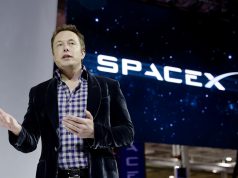
The electric vehicle manufacturer presented the redesigned sports car on Thursday evening during a live demonstration at SpaceX’s testing facility in McGregor, Texas.
Tesla CEO Elon Musk announced that production is expected to begin in 2028, following years of delays since the vehicle was originally introduced in 2017.
Investors responded positively to the unveiling. Tesla (NASDAQ: TSLA) shares jumped more than 3% in after-hours trading after declining over 1% during the regular session.
Tesla Roadster Takes Flight With SpaceX Rocket Technology
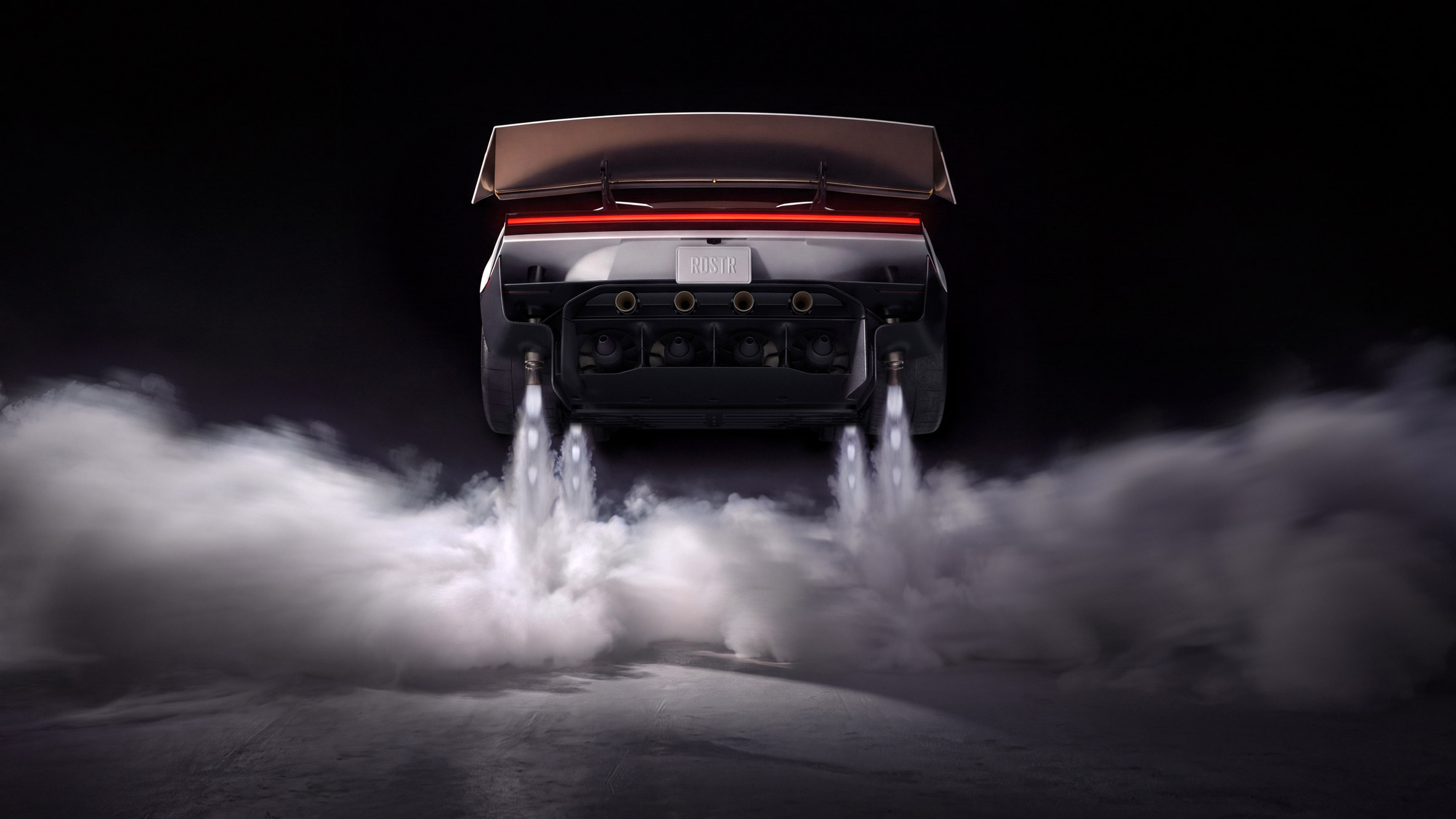
The highlight of Tesla’s presentation was the Roadster’s ability to perform controlled aerial maneuvers using advanced compressed-air propulsion technology.
During the demonstration, the electric sports car climbed a curved ramp before reaching a completely inverted position.
The vehicle then launched into the air, using its built-in thrusters to correct its orientation before landing safely on all four wheels.
Tesla also demonstrated what it calls short-burst flight.
In another stunt, the Roadster briefly lifted off the ground and traveled over several parked vehicles, including a semitruck.
Unlike conventional aircraft, the Roadster uses pressurized gas rather than jet engines or combustion-based rocket propulsion.
The technology was developed through collaboration between Tesla and SpaceX, Elon Musk’s aerospace company.
Although the demonstration showcased limited flight capabilities, the vehicle has not demonstrated sustained aircraft-style flight.
Furthermore, the availability of these features in future production vehicles remains subject to technical development and regulatory approval.
Tesla Roadster Accelerates From 0 to 60 MPH in Just 0.81 Seconds
Beyond its unusual flight capabilities, the redesigned Tesla Roadster demonstrated exceptional acceleration.
According to Tesla, the prototype accelerated from 0 to 60 miles per hour in approximately 0.81 seconds.
The remarkable performance was achieved through a combination of electric motor power and compressed-air thrusters.
Musk indicated that engineers expect to improve the vehicle’s acceleration further before production begins.
The Tesla CEO also discussed an ambitious top-speed objective approaching Mach 0.5, equivalent to approximately half the speed of sound.
However, that figure remains an aspiration rather than a demonstrated production specification.
Tesla has separately outlined a top speed exceeding 230 mph for the new Roadster.
If its performance targets are achieved, the vehicle could become one of the fastest-accelerating production cars ever developed.
Nevertheless, independent testing will be necessary to confirm the performance figures once a production-ready version becomes available.
How the Tesla Roadster’s Compressed-Air Thrusters Work
The Roadster’s propulsion system represents a significant departure from conventional electric sports car engineering.
Instead of relying exclusively on electric motors, the vehicle incorporates cold-gas thrusters that release highly compressed air to generate additional thrust.
The system reportedly carries approximately 260 kilograms of compressed air, stored in specialized high-pressure tanks.
An onboard compressor is designed to replenish the air supply automatically, allowing the vehicle to recharge its propulsion system without requiring conventional rocket fuel.
In addition to producing forward thrust, the system can help control the vehicle’s movement while airborne.
The Roadster also features an advanced suction system designed to increase downward force and improve traction.
By generating strong suction beneath the vehicle, the technology allows the car to maintain contact with surfaces that would normally be impossible to navigate.
Tesla demonstrated this capability by driving the Roadster upside down along a specially constructed ramp.
Together, the suction system and compressed-air thrusters could significantly expand the vehicle’s performance capabilities beyond those of traditional electric sports cars.
Elon Musk Targets 2028 Production After Years of Roadster Delays
Tesla first introduced its second-generation Roadster concept in November 2017, promising performance figures that attracted considerable attention from the automotive industry.
At the time, the company advertised acceleration from 0 to 60 mph in approximately 1.9 seconds and suggested a starting price of $200,000.
However, the project experienced repeated delays as Tesla shifted resources toward expanding electric vehicle production and developing autonomous driving technology.
The redesigned Roadster was finally presented in October 2026, nearly nine years after its initial announcement.
Musk now expects manufacturing to begin in 2028.
Tesla has not announced a final selling price for the newly unveiled version.
The company is also preparing different Roadster configurations, including a specialized Rocket variant equipped with a more extensive flight system.
However, the limited-flight capabilities demonstrated during the event do not necessarily mean that every production Roadster will offer the same features.
Given the project’s history of postponements, the 2028 production target remains subject to further development and manufacturing progress.
Tesla’s Flying Roadster Faces Safety and Regulatory Questions
Despite the impressive demonstration, important questions remain about the vehicle’s safety and potential use on public roads.
Musk acknowledged that the Roadster was not necessarily designed with safety optimization as its primary objective.
He nevertheless described the project as a vehicle intended for actual road use rather than simply an experimental prototype.
The demonstration was conducted remotely, without a driver inside the vehicle.
This precaution reflected the unusual risks associated with testing powerful compressed-air thrusters and airborne maneuvers.
In addition, the Roadster’s flight capabilities could raise regulatory challenges in countries where vehicles that leave the ground fall under aviation rules.
The specialized Rocket version may therefore face restrictions that do not apply to conventional road vehicles.
Tesla will need to address these technical, safety and legal considerations before bringing its most ambitious Roadster configurations to customers.
Tesla Roadster Could Challenge Ferrari and Luxury Electric Supercars
The next-generation Roadster enters an increasingly competitive market for high-performance luxury electric vehicles.
Established automotive manufacturers are expanding their electric sports car offerings, while newer companies continue developing vehicles with extreme acceleration and advanced technologies.
Potential competitors include Ferrari’s upcoming electric models, alongside luxury offerings from Jaguar and Rolls-Royce.
However, Tesla’s approach differs from traditional high-performance electric vehicles.
Rather than focusing exclusively on speed, battery range and handling, the Roadster introduces propulsion technologies more commonly associated with aerospace engineering.
The collaboration with SpaceX could provide Tesla with a distinctive technological identity in the luxury sports car market.
Nevertheless, the Roadster’s eventual commercial success will depend on its pricing, reliability, production capabilities and the practicality of its advanced features.
Tesla Bets on AI, Robotics and Innovation Amid EV Sales Pressure
The Roadster unveiling comes at an important time for Tesla as the company works to strengthen its position in the global electric vehicle industry.
Tesla’s core automotive business has faced pressure from declining sales and intensifying competition, particularly from Chinese manufacturers.
The company’s broader strategy has increasingly emphasized artificial intelligence, autonomous driving and robotics as potential sources of future growth.
Musk has repeatedly identified these technologies as central to Tesla’s long-term development.
Earlier in 2026, Tesla announced plans to discontinue production of its Model S and Model X vehicles and repurpose manufacturing capacity for its Optimus humanoid robot program.
This strategic shift highlights the company’s ambition to expand beyond conventional electric vehicle manufacturing.
While the Roadster is unlikely to become a major contributor to Tesla’s overall sales volume, it could serve as a showcase for the company’s engineering capabilities and technological innovation.
The vehicle’s unusual design and collaboration with SpaceX may also strengthen Tesla’s brand recognition in an increasingly competitive automotive market.
Tesla Roadster Outlook: Can the Flying Electric Supercar Deliver?
Tesla’s latest Roadster demonstration has revived interest in a project that has experienced nearly a decade of delays.
Its combination of extreme acceleration, advanced suction technology and compressed-air propulsion represents an ambitious attempt to redefine electric sports car performance.
However, important challenges remain before the vehicle can enter commercial production.
Tesla must demonstrate that its technologies can operate reliably outside controlled testing environments while also addressing safety and regulatory requirements.
The company must also prove that its planned 2028 production timeline is achievable.
For investors, the Roadster represents another example of Tesla’s efforts to position itself as a technology-driven company rather than simply a traditional automaker.
Whether the new electric supercar becomes a commercially successful product or primarily a showcase for advanced engineering remains to be seen.