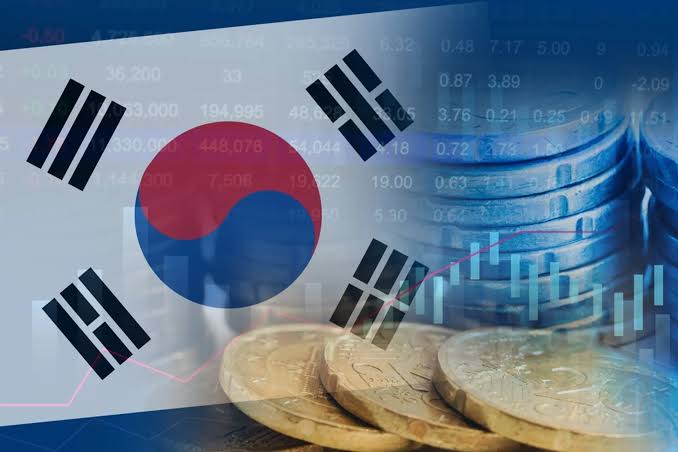
South Korea’s inflation slowed in October, with consumer prices rising less than economists had anticipated. However, persistent underlying price pressures suggest that the Bank of Korea may face continued challenges in bringing inflation back to its 2% target.
Official figures released on Tuesday showed a modest decline in annual inflation, although higher transportation, recreation, and household-related costs continued to affect consumers.
South Korea Inflation Slows to 2.8% in October
South Korea’s Consumer Price Index (CPI) increased 2.8% year-over-year in October, according to official government data.
The reading marked a slight slowdown from September’s 2.9% increase and came in below market expectations of approximately 2.9%.
On a monthly basis, consumer prices advanced 0.2%, compared with a 0.3% increase in September. The latest figure also fell short of economists’ forecasts for another 0.3% rise.
The softer inflation figures indicate that overall consumer price growth is gradually moderating. Nevertheless, several important categories continue to experience significant price increases.
Core Inflation Remains Elevated Despite Slower CPI Growth
Despite the decline in headline inflation, South Korea’s core inflation remained unchanged at 2.8% year-over-year in October.
Core CPI excludes volatile food and energy prices, providing a clearer picture of underlying inflation trends across the economy.
The unchanged reading suggests that inflationary pressures remain persistent, particularly in services and other essential spending categories.
For policymakers, this creates a challenging environment. Although headline inflation is moving lower, underlying price growth remains above the Bank of Korea’s official 2% target.
Transportation and Household Costs Drive Price Pressures
Transportation costs recorded some of the largest annual price increases in October, climbing 6.8% compared with the previous year.
Recreation and cultural expenses also rose significantly, increasing 5.1% year-over-year.
Meanwhile, furnishings and household equipment prices advanced 4.0%, highlighting continued pressure on household budgets.
Other categories experienced more moderate increases. Food and non-alcoholic beverage prices rose just 0.5%, while housing, water, electricity, gas, and other fuel costs increased 2.0%.
These differences suggest that inflation remains uneven across the South Korean economy, with certain sectors facing considerably stronger price pressures than others.
Bank of Korea Faces Difficult Interest Rate Decision
The latest South Korea inflation report comes ahead of the Bank of Korea’s next monetary policy meeting, scheduled for November 26.
At its October meeting, the central bank maintained its benchmark interest rate at 3.00%, following consecutive rate increases in July and August.
Policymakers have kept the possibility of further monetary tightening open as they assess persistent inflation risks and broader economic conditions.
Although October’s weaker-than-expected CPI reading could provide some relief, core inflation remains elevated.
Consequently, the central bank may need to maintain a restrictive monetary policy stance until there is clearer evidence that inflation is returning sustainably toward its target.
South Korea Inflation Outlook Remains Uncertain
Looking ahead, the direction of South Korea’s inflation will depend on several economic factors, including energy prices, domestic demand, and the persistence of underlying cost pressures.
The latest figures suggest that consumer price growth is easing gradually rather than declining sharply.
However, sustained increases in transportation, services, and household expenses could make it more difficult for inflation to return to the Bank of Korea’s 2% objective.
Investors will now closely monitor upcoming economic indicators and the central bank’s November policy decision for further clues about the country’s interest rate outlook.