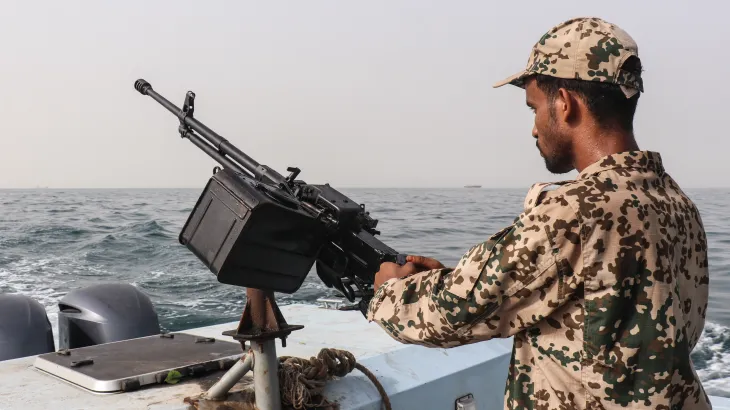
Iran-backed Houthi forces in Yemen have reportedly claimed responsibility for an attack on a Saudi tanker in the Red Sea.
The reported strike has added fresh uncertainty to diplomatic efforts aimed at reducing tensions in the Middle East and reopening important regional shipping routes.
Oil Prices Edge Higher After Red Sea Attack Report
Brent crude futures moved slightly higher on Wednesday following reports of the attack.
The global oil benchmark had fallen earlier in the week as investors became more optimistic about a possible diplomatic breakthrough between the United States and Iran.
The latest security incident, however, has reminded markets that risks to regional shipping and energy supplies remain high.
US, Iran and Oman Reportedly Near Interim Deal
Axios previously reported that the United States, Iran and Oman were approaching an interim agreement concerning the Strait of Hormuz.
Washington was reportedly hoping to announce the agreement on Wednesday.
The proposed framework would reopen the strategic waterway, restore the U.S.-Iran ceasefire and create a path toward renewed nuclear negotiations.
According to the report, discussions had been taking place for several weeks and involved regional mediators as well as U.S. officials.
Iranian Media Signals Possible Delay
Iranian media presented a more cautious view of the negotiations.
Reports suggested that Tehran believes an agreement to reopen the Strait of Hormuz could be delayed while U.S. threats remain in place.
Iran has also maintained that its direct discussions are limited to mediators in Oman.
This contrasts with repeated statements from Washington that broader negotiations with Tehran are continuing.
Trump Says Agreement Is Close
U.S. President Donald Trump told Fox News that an agreement to reopen the Strait of Hormuz and address Iran’s nuclear programme was close.
He described a potential deal as imminent but also warned Tehran against rejecting the proposal.
Trump called the negotiations Iran’s final opportunity to reach an agreement, adding further pressure to an already fragile diplomatic process.
Conflicting Signals Cloud Peace Talks
The latest developments come amid a series of mixed messages from the United States and Iran.
Trump has repeatedly said that negotiations are taking place. Iranian officials, however, have largely rejected that description.
This disagreement has made it difficult for investors and regional governments to determine how close the two sides are to a genuine breakthrough.
Previous Ceasefire Came Under Pressure
Analysts have highlighted a repeated pattern of escalation followed by attempts to reduce tensions.
Trump recently cancelled planned strikes against Iran after both sides exchanged limited air attacks over several days.
Those clashes weakened a ceasefire framework that had been agreed in June.
Deutsche Bank analysts warned that markets had experienced several previous periods of optimism that failed to produce a lasting resolution.
As a result, investors are likely to focus closely on the details of any formal agreement rather than relying only on public statements.
Strait of Hormuz Remains Central to the Conflict
The Strait of Hormuz continues to be one of the most important issues in the dispute.
Recent U.S.-Iran tensions were partly triggered by attacks on commercial vessels operating near the waterway.
Iran has repeatedly asserted authority over the strait. The United States has opposed any attempt to impose fees or restrictions on ships passing through it.
Why the Strait of Hormuz Matters
Before the conflict began in February, at least one-fifth of global oil supplies moved through the Strait of Hormuz.
Any prolonged disruption could reduce energy exports, increase shipping costs and push oil prices higher.
Iran has effectively restricted access to the waterway during the conflict, increasing pressure on global energy markets.
Markets Await Clear Evidence of Progress
Investors are now watching for confirmation of a formal agreement between the United States and Iran.
A deal that restores safe passage through the Strait of Hormuz could ease concerns about global oil supplies and lower shipping risks.
However, further attacks in the Red Sea or renewed military action could undermine diplomatic progress and place additional upward pressure on oil prices.