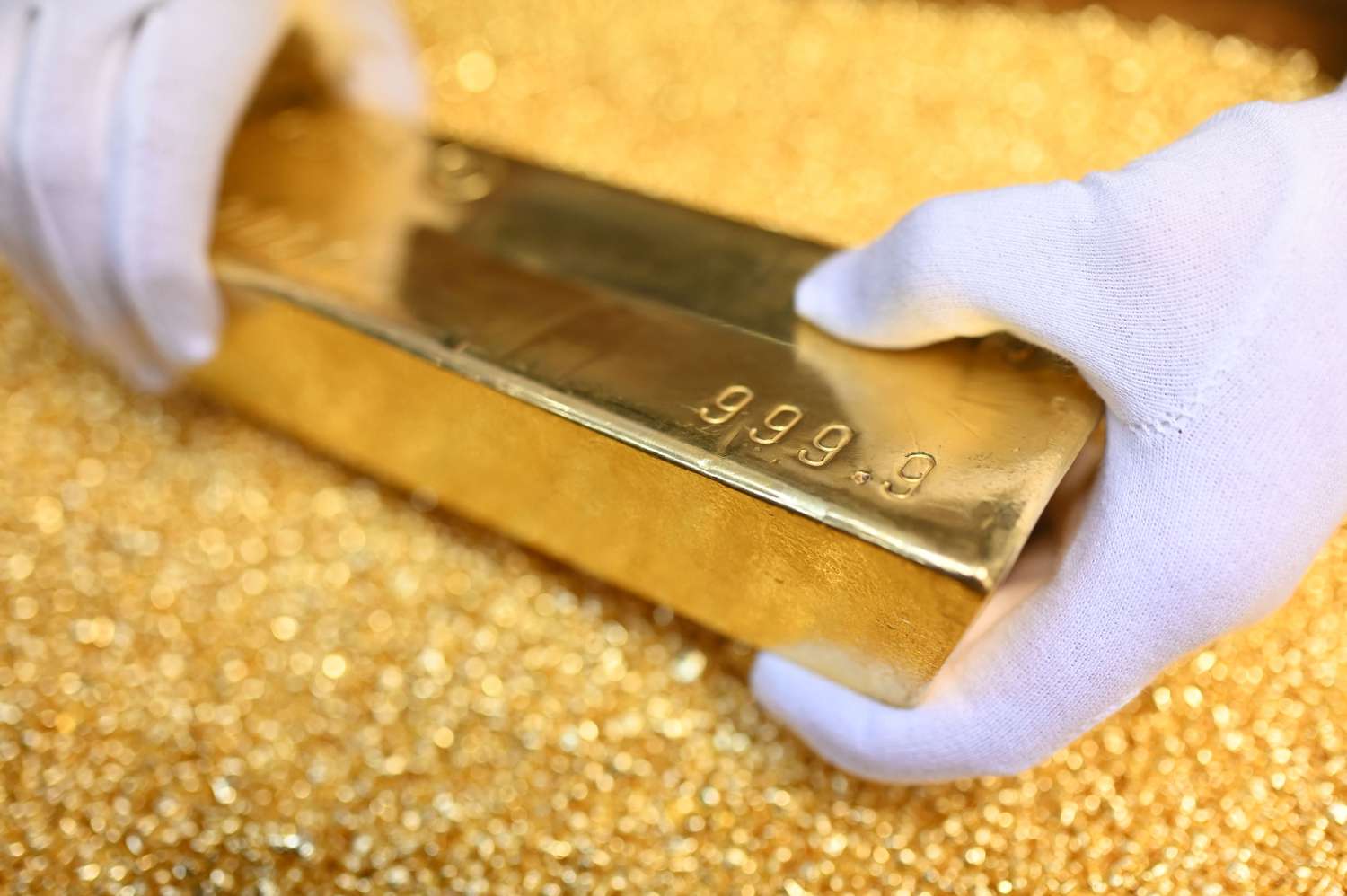
Gold prices moved slightly lower on Thursday, extending pressure after a sharp decline in the previous session.
Higher oil prices, a stronger U.S. dollar and rising Treasury yields continued to weigh on bullion as investors assessed the likelihood of additional Federal Reserve interest-rate increases.
At 01:58 ET, or 05:58 GMT, XAU/USD fell 0.2% to $4,281.13 per ounce. Gold futures declined 0.1% to $4,315.55.
Silver dropped 0.6% to $64.09 per ounce. Meanwhile, platinum gained 0.3% to $1,758.69 and palladium rose 0.4% to $1,273.79.
The U.S. Dollar Index was little changed at 101.13.
Gold Prices Remain Sensitive to Fed Policy
Gold continues to react strongly to expectations surrounding Federal Reserve monetary policy.
Investors are watching whether higher energy prices could keep inflation elevated and force the Fed to raise interest rates further.
Higher rates generally reduce the appeal of gold because the precious metal does not pay interest. As yields rise, interest-bearing assets such as government bonds can become more attractive to investors.
Oil Prices Rise as Iran Tensions Persist
Oil prices moved higher as geopolitical tensions surrounding Iran continued to cloud the outlook for diplomatic progress.
Iranian President Masoud Pezeshkian told the United Nations that Tehran would not guarantee freedom of navigation through the Strait of Hormuz while U.S. sanctions and a blockade remain in place.
His comments highlighted the challenges facing renewed diplomatic efforts between Iran and the United States.
Pezeshkian said Iran remained open to negotiations but would not respond to threats. He also repeated that Tehran does not seek to develop nuclear weapons.
However, he maintained that Iran would not give up its right to pursue nuclear technology for economic and civilian purposes.
His remarks came one day after U.S. President Donald Trump said American officials had held “very good” discussions with Iranian representatives on the sidelines of the United Nations summit.
Higher Oil Prices Add to Inflation Concerns
The rise in oil prices is particularly important for gold because higher energy costs can contribute to broader inflation pressures.
That could encourage the Federal Reserve to maintain tighter monetary policy for longer or raise interest rates further.
Gold has fallen roughly 20% since the U.S.-Iran conflict began in late February, with oil prices and the outlook for Federal Reserve policy remaining key market drivers.
Treasury Yields Climb After Strong U.S. Data
The U.S. Treasury market also came under renewed selling pressure following stronger-than-expected economic data and weak demand at a government debt auction.
Bond yields across several maturities climbed toward their highest levels in almost two decades as investors increased expectations that inflation could remain persistent.
The five-year U.S. Treasury yield moved above 5% for the first time since 2007.
The rise created another headwind for gold, as higher bond yields increase the opportunity cost of holding non-yielding assets.
Strong U.S. Economy Supports Rate-Hike Expectations
Recent U.S. economic data also strengthened expectations for tighter monetary policy.
U.S. business activity expanded at its fastest pace in more than five years, reinforcing the view that the economy remains resilient despite elevated borrowing costs.
Federal Reserve Governor Michael Barr said additional rate increases may be required to bring inflation back toward the central bank’s 2% target.
His comments followed similar warnings from other Fed officials that inflationary pressures remain persistent.
Swap markets are now pricing in at least three additional Federal Reserve rate hikes by April next year, marking a notable shift from expectations earlier in the week.
Gold Outlook Remains Under Pressure
Gold continues to benefit from longer-term demand factors, including its role as a safe-haven asset and a store of value.
However, the near-term environment remains challenging.
Strong U.S. economic activity, elevated Treasury yields, rising oil prices and a firm dollar are all limiting demand for bullion and keeping gold prices under pressure.