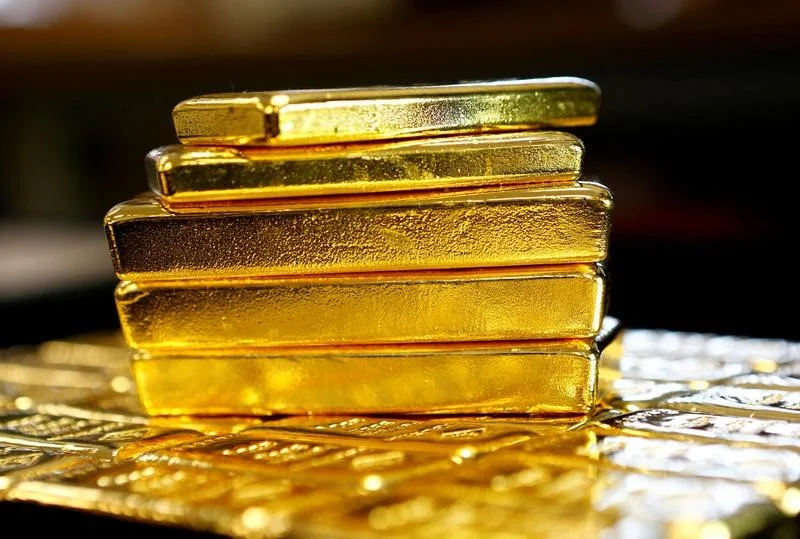
Gold prices declined on Thursday, October 29, as investors assessed the Federal Reserve’s latest interest rate decision and awaited fresh US inflation data.
The precious metal came under renewed selling pressure after the central bank maintained borrowing costs but provided limited guidance about future monetary policy.
Meanwhile, uncertainty surrounding additional interest rate hikes, a stronger US dollar, and volatility in equity markets continued to influence the gold price outlook.
Gold Price Falls Toward $4,040 as Precious Metals Decline
Spot gold dropped 0.7% to $4,038.49 per ounce during early Thursday trading, reversing modest gains recorded over the previous three sessions.
Meanwhile, US gold futures declined 0.1% to $4,049.72 per ounce.
Other precious metals also experienced selling pressure.
Silver prices fell 1.4% to $53.23 per ounce, while platinum declined 1.4% to $1,520.17.
Spot palladium lost 0.7% to $1,009.02, while palladium futures retreated 1.1% to $1,002.25.
At the same time, the US Dollar Index edged higher to approximately 102.20, creating an additional challenge for dollar-denominated precious metals.
These figures reflect market conditions at approximately 00:51 ET on October 29.
Federal Reserve Holds Interest Rates as Inflation Concerns Persist
The Federal Reserve maintained its benchmark interest rate within the 3.75%–4.00% range following its October 28 monetary policy meeting.
The Federal Open Market Committee approved the decision by a 10-2 vote, broadly matching market expectations.
However, uncertainty surrounding the Fed’s next move continued to influence financial markets.
Federal Reserve Chair Kevin Warsh acknowledged that inflation remains elevated, while policymakers indicated that additional economic information would guide future interest rate decisions.
Traders continue to anticipate another rate increase in December, particularly as elevated energy prices complicate efforts to bring inflation under control.
Higher interest rates can weigh on gold because the precious metal does not generate interest income. Consequently, investors may favor yield-bearing assets when borrowing costs remain elevated.
Fed Announces Changes to Future Policy Meetings
Warsh also outlined adjustments to the Federal Reserve’s future monetary policy meeting structure.
Beginning in 2027, one of the central bank’s eight scheduled annual meetings will focus exclusively on broader monetary policy strategy rather than interest rate decisions.
In 2028, two meetings are expected to concentrate on strategic discussions, leaving six regular rate-setting meetings.
The changes are intended to provide policymakers with additional opportunities to examine long-term economic and monetary issues.
However, investors will continue monitoring the Fed’s communications for indications of future monetary tightening or potential policy adjustments.
US PCE Inflation Data Could Influence Gold Prices
Attention is now shifting toward September’s Personal Consumption Expenditures (PCE) price index, scheduled for release on Thursday.
The PCE index is one of the Federal Reserve’s preferred inflation measures and plays an important role in shaping interest rate expectations.
A stronger-than-expected inflation reading could increase the likelihood of additional monetary tightening, potentially putting further pressure on gold prices.
Conversely, signs of easing inflation could reduce expectations for future rate increases and provide support for precious metals.
The report may also influence US Treasury yields and dollar movements, both of which are important factors for gold investors.
Stock Market Selloff Adds Pressure to Gold
Gold has also faced challenges from recent volatility in global equity markets.
Concerns about substantial artificial intelligence infrastructure spending and its impact on corporate profitability have contributed to weakness in technology stocks.
During last week’s AI-related stock market selloff, some investors reportedly liquidated gold positions to offset losses elsewhere in their portfolios.
This selling pressure contributed to bullion falling to its lowest level since July.
Gold has declined approximately 2.5% during October and remains on course for a second consecutive monthly loss.
Although gold is traditionally considered a safe-haven asset, it can experience temporary declines during periods of financial market stress.
Investors facing margin calls or liquidity requirements may sell precious metals alongside other assets to raise cash.
Central Bank Gold Purchases Provide Longer-Term Support
Despite recent weakness, sustained central bank demand remains an important source of support for the gold market.
According to estimates from Goldman Sachs, global central banks purchased approximately 79 tonnes of gold in August 2026.
This represented more than four times the average monthly purchasing volume recorded before 2022.
China accounted for an estimated 25 tonnes, making it the largest identifiable buyer during the period.
The figures highlight continued interest among monetary authorities in diversifying their reserve assets.
Central bank gold purchases can provide a relatively stable source of demand, particularly when private investment flows fluctuate.
Rick Kanda, managing director of The Gold Bullion Company, suggested that sustained purchases by central banks could support gold prices over the longer term.
However, he also acknowledged that interest rates, investor confidence, and geopolitical developments remain important influences on the precious metal.
Gold Price Outlook: What Comes Next?
The near-term outlook for gold remains uncertain as investors assess monetary policy expectations and broader financial market developments.
The upcoming US PCE inflation report could provide fresh direction for Treasury yields, the US dollar, and precious metals.
Meanwhile, additional volatility in technology stocks could influence investor liquidity needs and demand for safe-haven assets.
Although the Federal Reserve’s cautious stance may limit gold’s immediate upside potential, continued central bank purchases could provide longer-term support.
Investors will now focus on inflation trends, December interest rate expectations, and changes in global risk sentiment.
Ultimately, gold’s next significant move may depend on whether incoming economic data reinforces expectations for further monetary tightening or encourages investors to anticipate a less restrictive Federal Reserve policy.