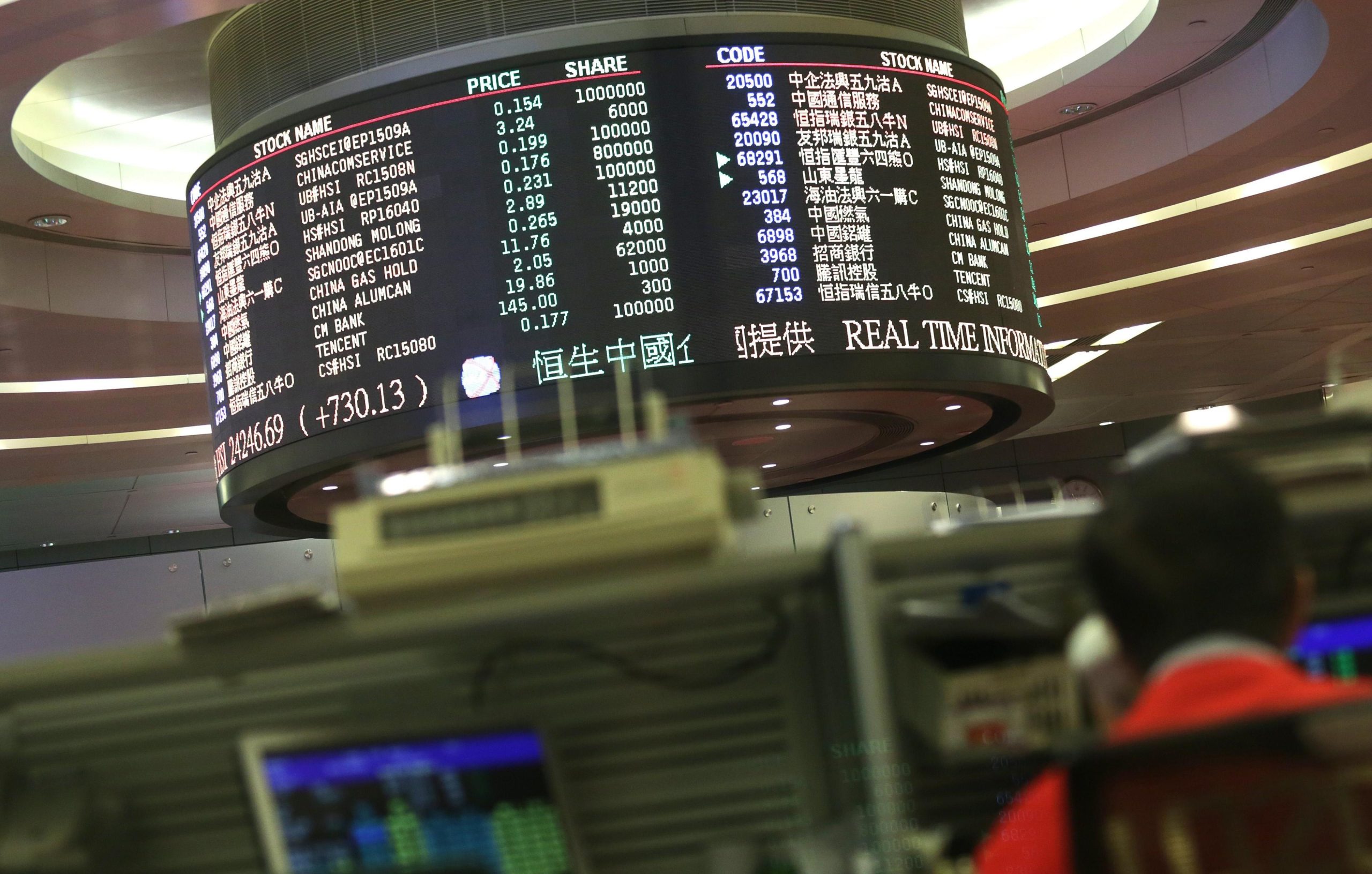
Asian stock markets declined on Thursday, October 29, as disappointing investor reactions to Alphabet and Samsung Electronics earnings weighed on technology shares.
Major regional indices surrendered earlier gains as concerns about artificial intelligence spending and corporate profitability intensified.
Meanwhile, US stock index futures also weakened, with Nasdaq 100 futures falling approximately 1.5% during Asian trading.
Investors are now awaiting quarterly earnings from Amazon and Intel for further indications about the sustainability of the global AI investment boom.
Asian Stocks Retreat as Alphabet Earnings Disappoint
Alphabet (NASDAQ: GOOGL), Google’s parent company, triggered renewed selling pressure across technology markets following its third-quarter earnings announcement.
The company’s shares plunged approximately 10% in after-hours trading as investors reacted to weaker-than-expected financial results and substantial spending on artificial intelligence infrastructure.
Although Alphabet reported strong revenue growth, concerns about elevated capital expenditures and the financial returns from AI investments overshadowed its operating performance.
Microsoft (NASDAQ: MSFT), however, delivered a more positive market reaction.
The technology giant’s shares climbed approximately 3% after reporting stronger-than-expected cash flow, providing reassurance about its ability to finance ongoing AI investments.
The contrasting results highlighted investors’ growing focus on profitability and cash generation rather than revenue growth alone.
South Korea’s KOSPI Falls as Samsung Shares Slide
South Korea’s KOSPI index declined approximately 3%, reversing part of its strong advance during the previous trading session.
Samsung Electronics (KS: 005930) shares dropped nearly 6% despite the semiconductor giant reporting record third-quarter operating earnings.
Investors focused on weaker-than-expected semiconductor profitability and uncertainty surrounding the company’s future shareholder distribution plans.
Samsung also disappointed markets by postponing further details about additional shareholder returns until January 2027.
Meanwhile, its consumer electronics division continued to face financial pressure.
The company’s Device eXperience business recorded an operating loss of approximately 800 billion won as rising memory and electronic component costs weighed on profitability.
The results underscored the challenges facing Samsung outside its rapidly expanding memory chip operations.
AI Memory Demand Remains Strong Despite Samsung Selloff
Despite the negative market reaction, Samsung expects demand for advanced memory chips to remain exceptionally strong.
The company warned that AI-driven demand could exceed available industry supply throughout 2027.
Samsung also projected semiconductor capital expenditures of approximately 76.8 trillion won for 2026, representing a 62% increase from the previous year.
The substantial investment reflects the company’s efforts to expand production capacity and strengthen its position in the global semiconductor industry.
Meanwhile, rival SK Hynix continued benefiting from strong demand for AI memory products.
SK Hynix shares gained approximately 1.6% on Thursday after surging 11% in the previous session.
The earlier rally followed stronger-than-expected earnings and the announcement of a major shareholder return program valued at approximately 100 trillion won.
South Korea’s KOSPI had climbed nearly 7% on Wednesday, supported by optimism surrounding the semiconductor sector.
However, Samsung’s disappointing market reaction reversed much of that positive momentum.
China and Hong Kong Technology Shares Face Pressure
Chinese equity markets also weakened as selling pressure spread across semiconductor and technology stocks.
The Shanghai Composite Index declined approximately 1.2%, while the blue-chip CSI 300 index recorded a similar decrease.
Technology-related companies led the losses as investors reassessed the outlook for AI infrastructure spending and semiconductor demand.
Meanwhile, Hong Kong’s Hang Seng Index remained broadly unchanged.
However, the Hang Seng TECH Index fell approximately 2%, reflecting continued weakness among major technology companies.
The mixed performance highlighted differences in investor sentiment across China’s broader equity market.
Japan and Australia Show Mixed Stock Market Performance
Japanese equities traded unevenly as investors prepared for the Bank of Japan’s upcoming monetary policy announcement.
The Nikkei 225 Index edged approximately 0.2% higher after surrendering most of its earlier gains.
Meanwhile, the broader TOPIX Index declined 0.3%.
Elsewhere, Australia’s S&P/ASX 200 advanced approximately 0.4%, outperforming several other regional benchmarks.
Singapore’s Straits Times Index also recorded a modest increase of 0.1%.
However, futures linked to India’s Nifty 50 Index declined approximately 0.3%, indicating a potentially weaker opening for Indian equities.
These movements demonstrated that selling pressure remained concentrated in technology-related stocks rather than affecting every Asian market equally.
Federal Reserve Holds Rates as Bank of Japan Decision Approaches
Beyond corporate earnings, investors continued assessing monetary policy developments in the United States and Japan.
The Federal Reserve maintained interest rates at its October 28 meeting, although two policymakers supported an immediate increase.
According to CME FedWatch data cited during the trading session, markets assigned approximately a 78% probability to another US interest rate increase in December.
The decision left investors particularly sensitive to upcoming inflation figures and changes in Treasury yields.
Meanwhile, the Bank of Japan began its two-day policy meeting on Thursday.
Economists widely expect the Japanese central bank to maintain its benchmark interest rate at 1.25%, following September’s increase.
However, policymakers could revise their inflation forecasts higher as elevated oil prices and a relatively weak yen continue adding pressure to consumer prices.
Investors will closely examine comments from BOJ Governor Kazuo Ueda for indications about the possibility of another interest rate increase in December.
US Inflation Data and Major Technology Earnings in Focus
Attention is also shifting toward the upcoming US Personal Consumption Expenditures (PCE) price index.
The September inflation report is scheduled for release on Thursday, October 29, and could influence expectations for future Federal Reserve interest rate decisions.
A stronger-than-expected inflation reading could reinforce concerns about prolonged monetary tightening, potentially weighing on equity valuations.
Meanwhile, upcoming earnings announcements from Amazon and Intel represent another important test for technology investors.
Market participants will focus on whether accelerating demand for artificial intelligence services can justify the enormous investments in data centers, semiconductors, and cloud computing infrastructure.
Corporate guidance regarding capital expenditures, operating margins, and future revenue growth will be particularly important.
Asian Stock Market Outlook Remains Tied to AI Earnings
Asian stock markets remain sensitive to developments in the global technology sector as investors evaluate the financial sustainability of artificial intelligence spending.
Although demand for advanced semiconductors and AI infrastructure remains strong, disappointing earnings expectations and rising costs have increased market volatility.
The contrasting performances of Alphabet, Microsoft, Samsung, and SK Hynix demonstrate that investors are increasingly distinguishing between companies delivering profitable AI growth and those facing pressure from heavy investment requirements.
Meanwhile, Federal Reserve policy, US inflation data, and the Bank of Japan’s upcoming decision could influence broader market sentiment.
For now, investors will closely monitor major technology earnings and monetary policy developments for clearer indications about the next direction of Asian equities.