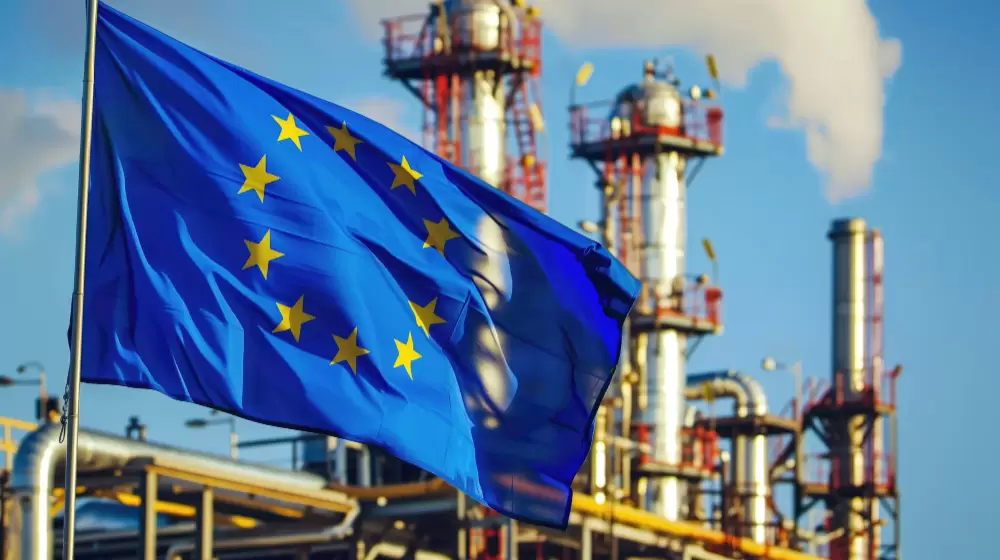
European natural gas prices climbed to their highest levels since 2022 on Wednesday as renewed Houthi attacks against Saudi Arabian energy infrastructure intensified concerns about global fuel supplies.
The escalation in Middle Eastern tensions has increased uncertainty across energy markets, particularly as Europe prepares for the winter heating season with unusually low natural gas inventories.
Disruptions to liquefied natural gas (LNG) shipments, rising transportation costs and forecasts of colder weather have added further upward pressure on European energy prices.
European Natural Gas Prices Reach Four-Year Highs
European natural gas futures extended their recent rally, with the benchmark Dutch Title Transfer Facility (TTF) contract rising 1.2% to €97.35 per megawatt-hour (MWh).
The increase pushed prices to their highest levels in approximately four years, reflecting growing concerns about the availability of natural gas supplies during the winter.
In the United Kingdom, the benchmark National Balancing Point (NBP) gas futures contract advanced 1.5% to 241 pence per therm.
British natural gas prices also reached their highest levels since 2022, extending their winning streak to six consecutive trading sessions.
The continued gains highlight how geopolitical developments in the Middle East are influencing European energy markets despite the region’s efforts to diversify its suppliers.
Houthi Attacks on Saudi Arabia Raise Energy Supply Concerns
Renewed military activity by Yemen’s Iran-aligned Houthi movement has intensified concerns about the security of Saudi Arabia’s critical energy infrastructure.
On Tuesday, the Houthis claimed responsibility for a ballistic missile attack targeting the Ras Tanura oil refinery, one of Saudi Arabia’s most important energy facilities.
The complex plays a major role in the kingdom’s oil refining and export operations.
However, Saudi authorities had not independently confirmed the claimed refinery strike at the time of the initial reports.
The latest escalation followed reports of attacks targeting infrastructure along Saudi Arabia’s East-West Crude Oil Pipeline and other strategically important facilities.
These developments have heightened fears that further military escalation could disrupt regional energy production and transportation.
Saudi Arabia’s East-West Pipeline Faces Growing Risks
Saudi Arabia’s approximately 1,200-kilometer East-West Pipeline provides an important alternative route for transporting crude oil.
The pipeline carries oil from eastern production areas toward terminals on the Red Sea, allowing some exports to avoid the Strait of Hormuz.
Its strategic importance has increased as the broader conflict involving Iran continues to threaten shipping through the Persian Gulf.
Any disruption to the pipeline could reduce Saudi Arabia’s ability to redirect crude exports away from vulnerable maritime routes.
Although the pipeline primarily transports oil rather than natural gas, additional disruptions could intensify uncertainty across global energy markets.
Middle East Conflict Threatens Regional Peace Efforts
The latest attacks have complicated diplomatic efforts to reduce tensions across the Middle East.
On Monday, senior representatives from Saudi Arabia, Turkey and Pakistan met Iranian officials in Tehran to discuss regional security and cooperation.
Following the meeting, the participating countries agreed to continue negotiations aimed at improving stability and preventing further escalation.
However, renewed hostilities have raised questions about whether these diplomatic initiatives can produce lasting progress.
Energy traders remain particularly concerned about the possibility of further attacks on production facilities, pipelines and major shipping routes.
Continued instability could sustain a geopolitical risk premium in global oil and natural gas prices.
LNG Supply Disruptions Increase Pressure on European Markets
The ongoing conflict has also created significant challenges for international liquefied natural gas shipments.
The Strait of Hormuz remains a critical passage for energy exports from the Persian Gulf, including LNG shipments from Qatar and the United Arab Emirates.
Disruptions to commercial navigation have restricted the movement of energy supplies, forcing buyers to compete for available cargoes from alternative producers.
Additional shipping constraints and longer routes around Africa have increased transportation costs for some energy deliveries.
For European utilities, reduced access to Middle Eastern LNG has complicated efforts to secure sufficient supplies before winter.
Competition with Asian buyers could intensify if colder temperatures increase heating demand across both regions.
The resulting supply uncertainty has contributed to rising European natural gas prices.
European Gas Storage Falls Below Seasonal Averages
Europe’s relatively low natural gas inventories have added another source of concern.
According to Gas Infrastructure Europe (GIE), underground gas storage facilities across the European Union were approximately 74.9% full in the latest available late-October data.
This represents a substantial shortfall compared with the roughly 89.6% five-year average for the same period.
Storage levels were also below the approximately 82.9% recorded one year earlier.
The figures suggest that Europe is entering the winter heating season with a smaller supply buffer than usual.
Colder Weather Could Accelerate Gas Withdrawals
Weather forecasts indicate that parts of Northern and Central Europe could experience below-average temperatures in early November.
An earlier start to colder weather would likely increase residential and commercial heating demand.
Utilities could therefore begin withdrawing natural gas from underground storage facilities sooner than expected.
With inventories already below historical averages, faster withdrawals could increase the risk of additional supply shortages later in the winter.
Countries with particularly low storage levels may face greater pressure to secure additional LNG imports or alternative pipeline supplies.
European Gas Price Outlook Remains Uncertain
The outlook for European natural gas prices will depend heavily on developments in the Middle East, LNG availability and winter weather conditions.
Further attacks on Saudi Arabian energy infrastructure or prolonged restrictions on shipping through the Strait of Hormuz could sustain upward pressure on gas prices.
Similarly, stronger heating demand could accelerate the depletion of European storage reserves.
On the other hand, successful diplomatic negotiations, improved shipping conditions or milder weather could help ease supply concerns.
For now, European natural gas prices remain near their highest levels since 2022, with geopolitical tensions and below-average inventories creating considerable uncertainty ahead of winter.