Warsh Avoids Signaling the Federal Reserve’s Rate Path
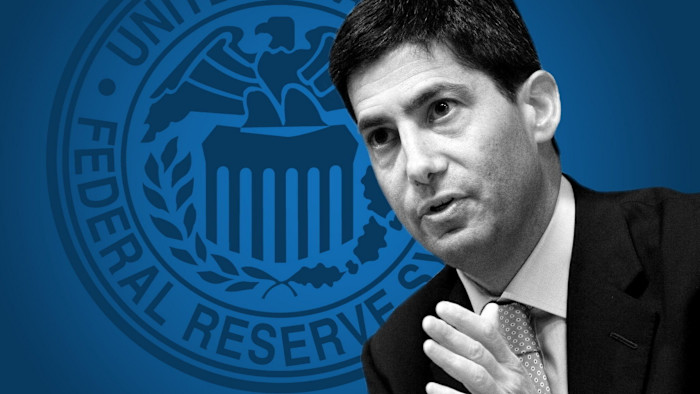
Federal Reserve Chair Kevin Warsh declined to provide clear guidance on future interest rates on Wednesday.
Instead, he said policymakers would have a “good family fight” when they meet again later in July.
His comments reinforced expectations that the Federal Reserve may move away from giving markets a detailed roadmap for monetary policy.
Warsh Supports Ending Forward Guidance
Warsh spoke alongside other major central bankers at a European Central Bank event in Sintra, Portugal.
During the discussion, he praised ECB President Christine Lagarde for defending the decision to stop outlining a specific policy path for investors.
Warsh said he agreed with Lagarde’s position and suggested that the Fed could adopt a similar approach.
Forward guidance is used by central banks to signal how interest rates may change in the future. However, critics argue that it can limit flexibility when economic conditions shift.
Federal Reserve Reviews Its Communication Strategy
Warsh chaired his first Federal Reserve meeting last month.
At that gathering, he announced a broad review of the central bank’s operations. The review will examine how the Fed communicates, evaluates economic data and makes policy decisions.
Warsh repeated that the central bank wants to chart a new course and improve the quality of its decisions.
The changes could lead to a more data-dependent approach with fewer promises about future interest-rate moves.
Inflation Remains the Fed’s Main Concern
Although Warsh avoided discussing the rate outlook directly, he offered a clearer message on inflation.
Price pressures have remained a major concern since the Iran conflict caused a sharp increase in energy costs earlier this year.
Some investors believe the inflation shock could encourage the Federal Reserve to raise interest rates in 2026.
The Fed left borrowing costs unchanged at its June meeting.
Falling Oil Prices Ease Some Pressure
Oil prices have moved back toward pre-war levels since the signing of an interim peace agreement in June.
However, policymakers remain uncertain about how the earlier energy surge may affect broader consumer prices.
Higher fuel and transportation costs can spread through the economy by increasing expenses for businesses and households.
The European Central Bank became the first G7 central bank to raise interest rates in response to the Middle East conflict last month.
Its decision aimed to limit the risk that the energy shock would create a longer-lasting rise in inflation.
Warsh Says U.S. Prices Remain Too High
Warsh said prices in the United States were still too high.
He also warned that anyone expecting the Fed to accept inflation above its 2% target would be disappointed.
The Fed chair pledged that the central bank would restore price stability.
The headline consumer price index stood at 4.2% in May. However, Warsh said inflation expectations and related risks had moderated in recent weeks.
Higher Rates Remain a Possibility
Warsh did not confirm whether the Federal Reserve would raise or lower rates at its next meeting.
Still, his focus on price stability suggests that policymakers may remain cautious about reducing borrowing costs.
If inflation stays elevated, the Fed could keep rates high for longer or consider another increase.
By contrast, weaker employment or economic growth could strengthen the case for a more accommodative policy stance.
Warsh Defends Federal Reserve Independence
Warsh also emphasized that the Federal Reserve would remain independent from political influence.
President Donald Trump appointed Warsh to succeed former Fed Chair Jerome Powell.
Trump has repeatedly called for lower interest rates to support economic growth.
However, Warsh said the central bank’s independence would not change.
His comments suggested that monetary policy decisions would continue to be based on inflation, employment and wider economic conditions rather than political pressure.
Markets Await the July Fed Meeting
Investors will now focus on the Federal Reserve’s meeting later in July.
Without clear forward guidance, upcoming inflation, employment and economic growth data may have a greater impact on market expectations.
Warsh’s new communication strategy could also create more uncertainty around future rate decisions.
For markets, the key question is whether the Fed’s reduced guidance will improve policy flexibility or increase volatility in bonds, stocks and the U.S. dollar.