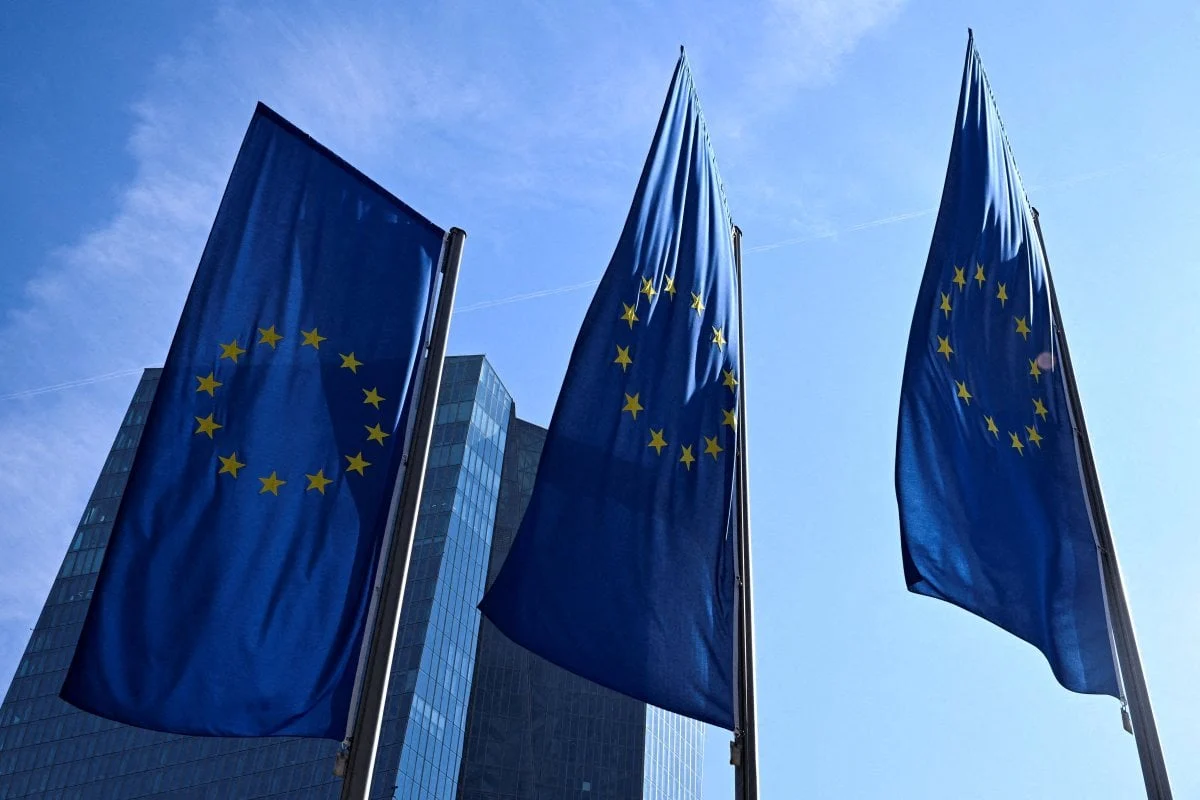
European Central Bank policymakers indicated that another ECB rate hike may be necessary to contain inflationary pressures linked to the Iran conflict, according to the account of the ECB’s July policy meeting released on Thursday.
The ECB kept interest rates unchanged at its July 22-23 meeting, following a rate increase in June — its first hike in nearly three years.
The June move was designed to prevent higher energy costs linked to the conflict from feeding more deeply into inflation across the euro area.
ECB July Meeting Viewed as a Pause
The meeting account suggested that policymakers did not see July’s decision to keep rates unchanged as the end of the tightening cycle.
Instead, officials described the decision as a pause in rate hikes.
Policymakers stressed that keeping rates steady in July should not be interpreted as confirmation that borrowing costs had already reached their peak.
The ECB indicated that another increase would probably be required unless the inflation outlook improved significantly.
September ECB Rate Hike Remains Possible
The central bank deliberately avoided committing publicly to a September rate increase.
Officials wanted to preserve flexibility in case inflation data improved enough to reduce the need for further monetary tightening.
However, expectations for another move have strengthened.
With eurozone inflation still close to 3%, the Iran conflict continuing and economic activity showing resilience, ECB policymakers appear increasingly prepared to tighten policy again.
A potential move at the September 9-10 meeting could lift the ECB’s policy rate from 2.25% to 2.50%.
Inflation Remains the ECB’s Main Concern
Persistent inflation remains one of the main factors influencing the ECB’s outlook.
Higher energy prices can spread through the wider economy by increasing costs for businesses and households.
This creates the risk that temporary price increases become more persistent, making it harder for the ECB to bring inflation back toward its target.
As a result, policymakers are closely monitoring economic data before deciding how much further interest rates may need to rise.
Isabel Schnabel Emphasizes Data-Dependent Policy
ECB Executive Board member Isabel Schnabel recently reinforced the central bank’s data-dependent approach.
She indicated that incoming economic figures would determine whether borrowing costs need to rise further and, if so, by how much.
That approach gives policymakers flexibility to respond to changing inflation and growth conditions rather than committing to a predetermined rate path.
Eurozone Economy Shows Resilience
Recent economic indicators have also reduced concerns that higher interest rates are causing a sharp slowdown across the euro area.
Business surveys and output data suggest the eurozone economy is performing better than previously expected.
Stronger activity could give the ECB more room to continue tightening monetary policy if inflation remains elevated.
Bank Lending Accelerates Across the Eurozone
Fresh data released Thursday also showed improving credit conditions.
Banks increased lending to companies by 4.4% in July, marking the fastest pace of corporate credit growth in more than three years.
The acceleration suggests that businesses are continuing to access financing despite higher borrowing costs.
That resilience may strengthen the argument among more hawkish ECB officials that the economy can withstand another rate increase.
ECB Rate Outlook Remains in Focus
For now, the ECB appears unwilling to declare its tightening cycle complete.
The July decision to leave interest rates unchanged was treated as a temporary pause rather than a final stopping point.
If inflation remains elevated and the eurozone economy continues to hold up, another ECB rate hike in September could become increasingly likely.
Investors will therefore continue watching inflation, economic growth, energy prices and ECB commentary for further clues about the direction of European monetary policy.