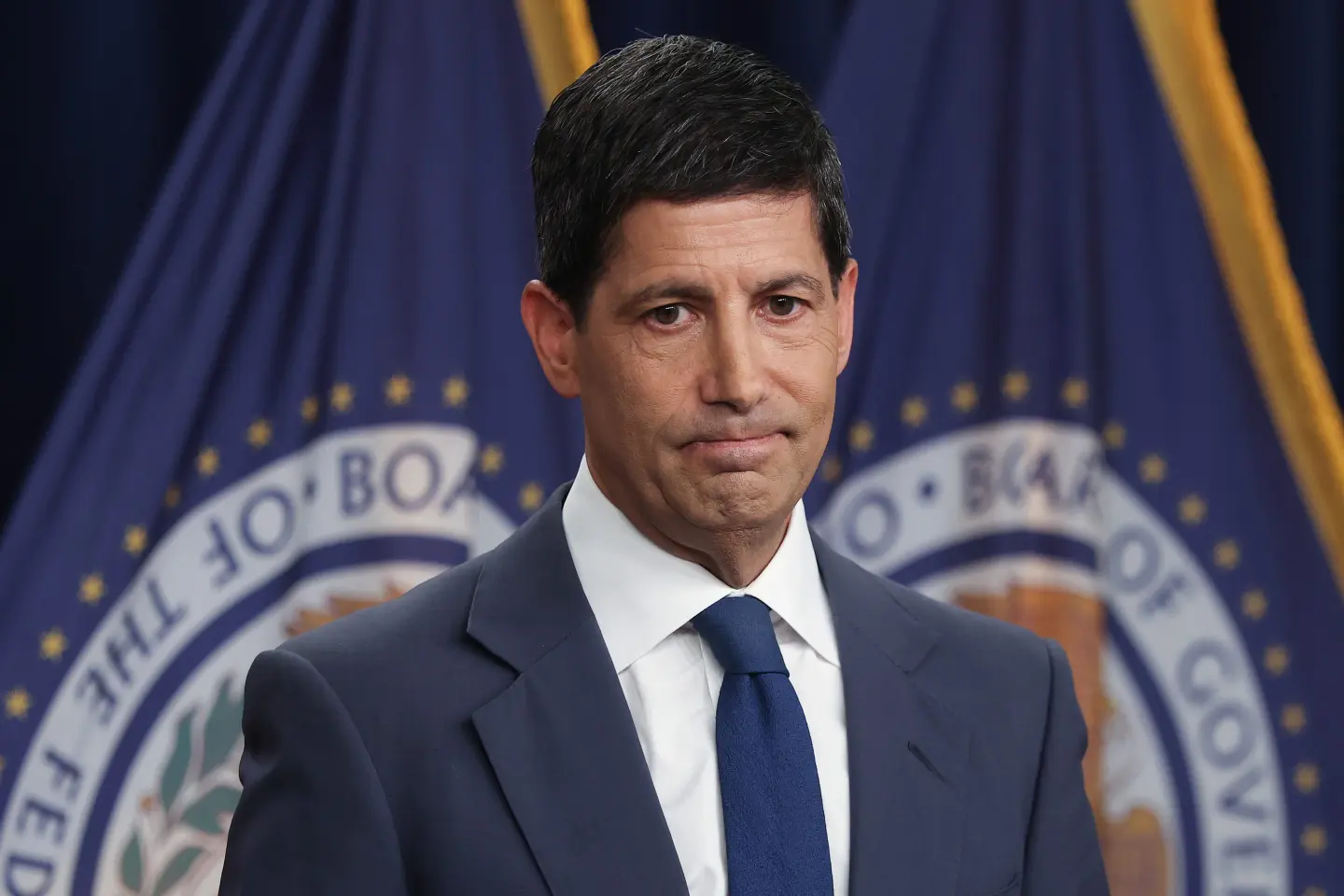
Investors reacted positively to Federal Reserve Chair Kevin Warsh’s latest comments on inflation, but uncertainty remains over how the U.S. central bank will respond to incoming economic data in the months ahead.
In a closely watched speech at the Jackson Hole symposium, Warsh stressed that the Fed still has work to do if policymakers are not convinced inflation is moving sustainably back toward the central bank’s 2% target.
Warsh Signals Stronger Focus on Inflation
Warsh said financial conditions do not currently appear restrictive and moved closer to acknowledging that additional interest rate hikes could become necessary if inflationary pressures remain persistent.
Since taking over as Fed chair several months ago, Warsh has also made it clear that he wants to reduce the central bank’s reliance on forward guidance.
That means investors should expect fewer signals about the future path of interest rates.
Warsh repeated that approach during his Jackson Hole speech, reinforcing his preference for a more limited communication strategy.
Investors Look for Greater Clarity From the Fed
Many investors had hoped Warsh’s speech would provide reassurance about his leadership and the Federal Reserve’s commitment to bringing inflation under control.
His previous comments had created some uncertainty in financial markets.
At the Fed’s July policy meeting, Warsh suggested that rising bond yields could tighten financial conditions enough to reduce the need for further rate increases.
That view led some investors to question how aggressively the Fed would respond if inflation remained elevated.
Phil Blancato, chief market strategist at Osaic, said Warsh’s latest remarks were clearer than his previous comments.
However, he noted that investors still have limited guidance on exactly what combination of inflation and labor market data would trigger additional Fed action.
Treasury Yields Rise After Hawkish Speech
Financial markets interpreted Warsh’s comments as relatively hawkish.
The 2-year U.S. Treasury yield, which is highly sensitive to expectations for Federal Reserve policy, climbed to around 4.34%, its highest level in a month.
Meanwhile, the 30-year Treasury yield remained near 5.19%.
Long-term yields have recently climbed to levels not seen in nearly two decades, increasing concerns about borrowing costs and financial conditions.
Some investors believe Warsh’s clearer inflation message could help reduce uncertainty in the bond market.
S&P 500 Slips as Dollar Strengthens
Equity markets also reacted cautiously to the speech.
The S&P 500 fell around 0.3%, while the U.S. dollar strengthened against a basket of major currencies.
The combination of higher short-term Treasury yields, a stronger dollar and weaker equities reflected growing expectations that the Federal Reserve could keep monetary policy tighter for longer.
September Rate Hike Odds Jump
Inflation has remained above the Federal Reserve’s 2% annual target for several years.
Recent data showed that the Personal Consumption Expenditures Price Index, the Fed’s preferred inflation measure, rose 3.7% year-on-year through July.
Following Warsh’s speech, interest rate markets sharply increased expectations for another Fed rate hike.
Fed funds futures indicated roughly a 57% probability of a September rate increase, according to LSEG data.
That compared with around 35% before Warsh delivered his remarks.
Chris Gunster, head of fixed income at Fidelis Capital, said Warsh’s tone was more hawkish than markets had expected.
September Rate Increase Is Not Guaranteed
Despite the change in market expectations, some investors remain unconvinced that the Federal Reserve will definitely raise rates in September.
Warsh has already launched several reviews that could reshape how the central bank conducts monetary policy.
These include examinations of the Fed’s balance sheet, the economic data it relies on and its broader inflation framework.
Michael Arone, chief investment strategist at State Street Investment Management, said Warsh still has considerable flexibility before making the next policy decision.
He added that he had not yet concluded that a September rate hike was inevitable.
Fed’s Reaction Function Remains Unclear
Warsh’s Jackson Hole remarks helped remove some uncertainty around the Fed’s commitment to its 2% inflation target.
However, questions remain over exactly how policymakers will react to different combinations of inflation, employment and economic growth.
Some strategists noted that Warsh acknowledged the U.S. economy was running hot but offered limited detail about what would convince the central bank to tighten policy further.
This lack of clarity around the Fed’s so-called reaction function remains a key concern for investors.
Jobs and Inflation Data Become Critical
Attention will now shift toward upcoming U.S. economic reports.
The monthly employment report is scheduled for next Friday, followed by the latest consumer price index data the following week.
Both releases could significantly influence expectations ahead of the Federal Reserve’s September meeting.
With markets now assigning a much higher probability to another rate hike, upcoming payroll and inflation figures could play a decisive role in determining the Fed’s next move.