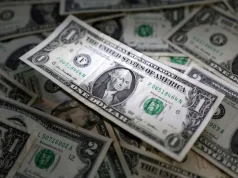
The U.S. dollar moved lower against most major currencies on Monday as a sharp decline in crude oil prices reduced inflation concerns.
The move also weakened demand for the dollar as a safe-haven asset at the start of an important week for global monetary policy.
U.S. Dollar Index Gives Up Recent Gains
The U.S. Dollar Index fell around 0.3% during European trading.
The index surrendered part of its recent advance as signs of easing tensions in the Middle East encouraged investors to return to risk-sensitive currencies.
The dollar had experienced increased volatility in recent weeks. Higher energy prices and new U.S. trade tariffs had pushed Treasury yields toward multi-year highs.
These developments also strengthened expectations that central banks would keep interest rates elevated for longer.
Oil Price Drop Reduces Inflation Concerns
The latest dollar decline followed an approximately 5% plunge in Brent crude oil prices.
Oil moved sharply lower after Washington paused its two-week military campaign against Iran. Tehran also agreed to suspend retaliatory attacks as long as the United States avoided further military action.
The de-escalation reduced concerns about disruptions along major maritime trade routes.
It also lowered fears that a prolonged energy supply shock could drive global inflation higher again.
Euro Rises as Energy Costs Fall
The euro gained around 0.3% and traded close to $1.1440.
Lower energy prices offered immediate relief to the Eurozone economy, which remains highly sensitive to imported oil and gas costs.
This allowed traders to look beyond the European Central Bank’s neutral policy message from the previous week.
Falling energy expenses could support economic activity while also reducing pressure on inflation.
Sterling Edges Higher Before BOE Meeting
The British pound also strengthened slightly against the dollar.
Sterling rose around 0.1% as investors continued to expect the Bank of England to follow a gradual approach to monetary easing.
The central bank is scheduled to announce its latest interest-rate decision later in the week.
Traders will focus on any guidance regarding inflation, wage growth and the future pace of rate changes.
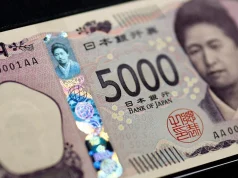
Japanese Yen Recovers From Multi-Decade Lows
The Japanese yen strengthened by approximately 0.2%.
As a result, the USD/JPY exchange rate fell toward 163.4 yen, its lowest level in more than two weeks.
The yen had recently traded near its weakest levels in four decades.
That decline increased speculation that Japanese authorities could intervene in the currency market. Investors have also considered whether the Bank of Japan may accelerate the pace of its interest-rate increases.
Fed Rate-Hike Expectations Decline
Lower commodity prices caused traders to reduce their short-term forecasts for U.S. interest rates.
According to the CME FedWatch Tool, the implied probability of a 25-basis-point Federal Reserve rate increase fell to 33.7%.
That was down from 37.4% at the end of Friday’s session.
The Federal Reserve is still widely expected to leave its benchmark interest rate unchanged when its two-day meeting concludes on Wednesday.
However, investors will closely examine the central bank’s statement and Chair Kevin Warsh’s comments for clues about the future policy outlook.
Fed, BOE and BOJ Decisions Take Center Stage
The Federal Reserve decision will be followed by policy announcements from the Bank of England and the Bank of Japan.
These meetings could shape currency markets by changing expectations for the future direction of global interest rates.
Lloyd’s Bank foreign exchange strategist Nicholas Kennedy said the July Federal Open Market Committee decision would be a major focus for investors.
He suggested that an unchanged policy rate, accompanied by some hawkish disagreement among policymakers, could accurately reflect the current economic environment.
Indonesian Rupiah Falls Against Broader Trend
Most risk-sensitive currencies benefited from the weaker dollar. However, Indonesia’s rupiah moved in the opposite direction.
The currency fell around 0.3% after Bank Indonesia Governor Perry Warjiyo unexpectedly resigned for personal reasons.
Warjiyo had led the central bank since 2018.
His sudden departure raised concerns about leadership stability and the future independence of Bank Indonesia.
Interim Governor Named at Bank Indonesia
Senior Deputy Governor Destry Damayanti was appointed interim governor to maintain operational continuity.
Nevertheless, analysts warned that the unexpected leadership change could leave the rupiah vulnerable.
The uncertainty surrounding Bank Indonesia outweighed the positive effect of broader dollar weakness.
Currency Markets Await Central Bank Guidance
Major technology earnings and several central bank decisions are scheduled over the coming days.
As a result, foreign exchange traders may remain cautious until the Federal Reserve releases its policy statement.
Trading across major G10 currencies could remain within relatively narrow ranges before Wednesday’s announcement.
For now, falling oil prices have reduced inflation fears and weakened demand for the U.S. dollar. However, the next move in currency markets will likely depend on guidance from the Federal Reserve, Bank of England and Bank of Japan.