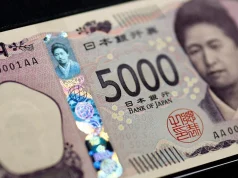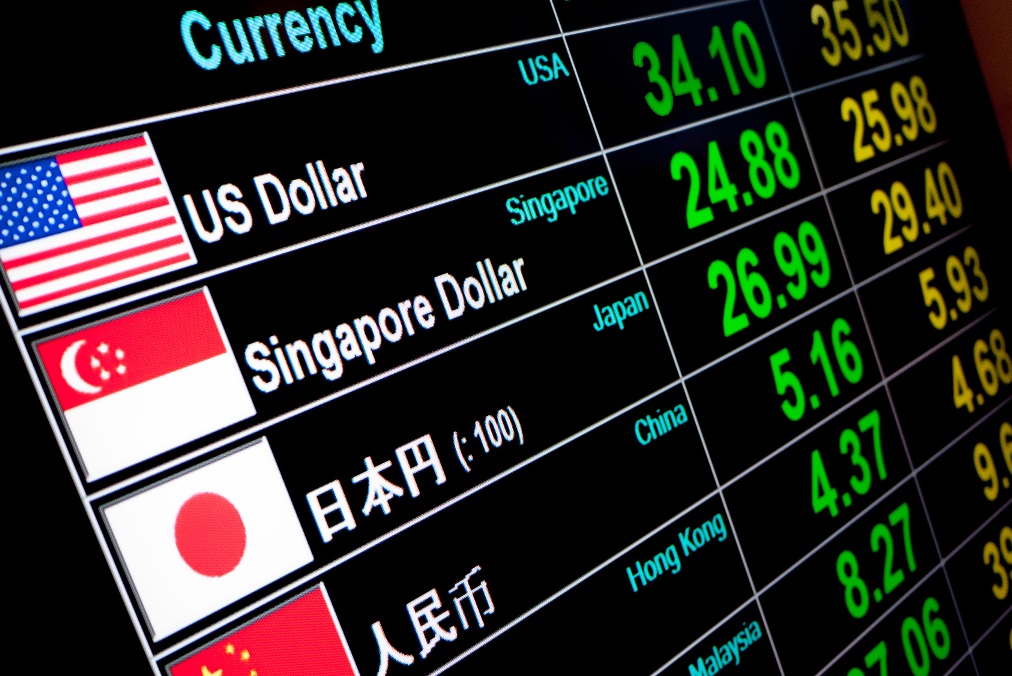
Asian currencies traded mixed on Friday as the Japanese yen weakened despite the Bank of Japan raising interest rates to a 31-year high.
Meanwhile, the US dollar remained supported by a more hawkish Federal Reserve outlook. Investors were also assessing the likely direction of global monetary policy.
The US Dollar Index was little changed near 100.23, holding close to the seven-week high reached on Thursday.
Yen Falls After BOJ Rate Hike
The Japanese yen weakened after the Bank of Japan raised its policy rate by 25 basis points to 1.25%.
Following the decision, the USD/JPY pair rose around 0.7% to near 157 yen.
The rate hike was widely expected by markets. However, the BOJ approved the decision in a 7-2 vote, with two policymakers supporting unchanged interest rates.
That split reduced expectations for an aggressive tightening cycle and gave the decision a slightly more dovish tone.
Capital Economics analysts also noted that two of the more hawkish members of the BOJ board are expected to leave next July. As a result, the board could become less inclined toward further rapid rate increases.
Investors were therefore focused on comments from BOJ Governor Kazuo Ueda for more guidance on the timing of future rate hikes.
Japan Inflation Remains Close to BOJ Target
Japanese inflation data also attracted market attention.
Core consumer prices, which exclude volatile fresh food costs, increased 1.7% year over year in August. That was slightly below economists’ expectations for a 1.8% rise and unchanged from the previous month.
Another inflation measure that excludes both fresh food and fuel increased 1.9% from a year earlier.
The figures suggest that inflation remains close to the BOJ’s 2% target.
However, the softer-than-expected core inflation reading gave traders little reason to expect the central bank to accelerate the pace of future rate hikes.
US Dollar Supported by Hawkish Federal Reserve
The US dollar remained firm as markets continued to assess the possibility of another Federal Reserve rate hike.
Fed funds futures indicated roughly a 53% probability of a 25-basis-point increase at the next policy meeting, according to CME FedWatch data.
The Federal Reserve had already raised its benchmark interest rate by 25 basis points to a range of 3.75% to 4.00%.
Updated Fed projections also pointed to the possibility of one additional increase during the year.
Expectations for higher US interest rates have helped support the dollar while also putting pressure on some Asian currencies.
Australian Dollar Gains as Asian FX Trades Mixed
Elsewhere in the Asian foreign exchange market, currency movements were mixed.
The Australian dollar gained around 0.3% against the US dollar.
The Chinese yuan strengthened slightly, with USD/CNY falling around 0.2%. By contrast, USD/KRW rose about 0.4%, reflecting weakness in the South Korean won.
The Singapore dollar and Indian rupee were largely unchanged against the US currency.
Higher US Yields Pressure Market Sentiment
Higher US Treasury yields and elevated energy prices also weighed on investor sentiment.
Markets are now closely watching signals from both the Federal Reserve and Bank of Japan as traders attempt to determine how quickly global central banks will adjust interest rates.
For Asian currencies, the outlook is likely to remain closely linked to US monetary policy, Japanese rate expectations, inflation data and movements in global bond yields.