Asian stocks moved higher on Thursday after the U.S. Treasury expanded its long-dated bond buyback program, helping to ease pressure across global bond markets.
A renewed rally in semiconductor shares also lifted sentiment, with South Korea’s KOSPI and Japan’s Nikkei posting strong gains.
The U.S. Treasury said it will at least double the size of buyback operations for longer-dated government debt to $4 billion or more per transaction, starting in September.
The announcement came after a sharp bond selloff pushed the 30-year Treasury yield to its highest level since 2007.
Treasury Yields Retreat After Buyback Announcement
The Treasury move helped bring longer-term yields lower.
The 30-year Treasury yield fell to around 5.18%, while the benchmark 10-year yield declined to approximately 4.63%.
Lower bond yields helped reduce some of the pressure that had recently weighed on global equity markets.
In Asian trading, Nasdaq 100 futures gained around 0.4%, while S&P 500 futures rose approximately 0.1%.
The MSCI AC Asia Pacific equity index climbed roughly 1.4%, ending a two-session losing streak.
Bond Market Relief Supports Risk Appetite
Recent increases in government borrowing costs had raised concerns about inflation, high levels of debt issuance and the enormous financing requirements linked to the artificial intelligence investment boom.
The Treasury’s expanded buyback program could improve liquidity in longer-dated government bonds and temporarily reduce market stress.
However, investors remain cautious.
Persistent fiscal deficits and large government borrowing requirements could keep longer-term bond yields elevated even after the latest intervention.
KOSPI Surges as SK Hynix and Samsung Rally
South Korea’s KOSPI surged more than 6%, staging a dramatic rebound after a sharp semiconductor-led selloff during the previous session.
SK Hynix jumped around 13%, while Samsung Electronics gained roughly 9%.
The recovery came just one day after the KOSPI fell more than 5%, briefly triggering a program-selling “sidecar” trading halt.
SK Hynix Announces Record Share Buyback
SK Hynix helped fuel the rebound after announcing a 40 trillion won, or approximately $28.6 billion, share buyback and cancellation program.
The plan represents around 3.3% of the company’s outstanding shares.
SK Hynix also said it intends to return at least 50% of cumulative free cash flow to shareholders through 2027.
The announcement strengthened investor expectations that the strong cash flows generated by AI-related memory demand could result in larger shareholder distributions.
Samsung Shareholder Return Hopes Lift Sentiment
Samsung Electronics also rallied following reports that the company could announce a shareholder-return program valued at more than 100 trillion won.
The possibility of larger buybacks or dividends added to optimism surrounding South Korea’s semiconductor sector.
Investors are increasingly looking for evidence that the artificial intelligence boom will translate not only into higher earnings, but also into stronger shareholder returns.
Japan’s Nikkei Advances as Tech and Automakers Rally
Japanese equities also moved higher.
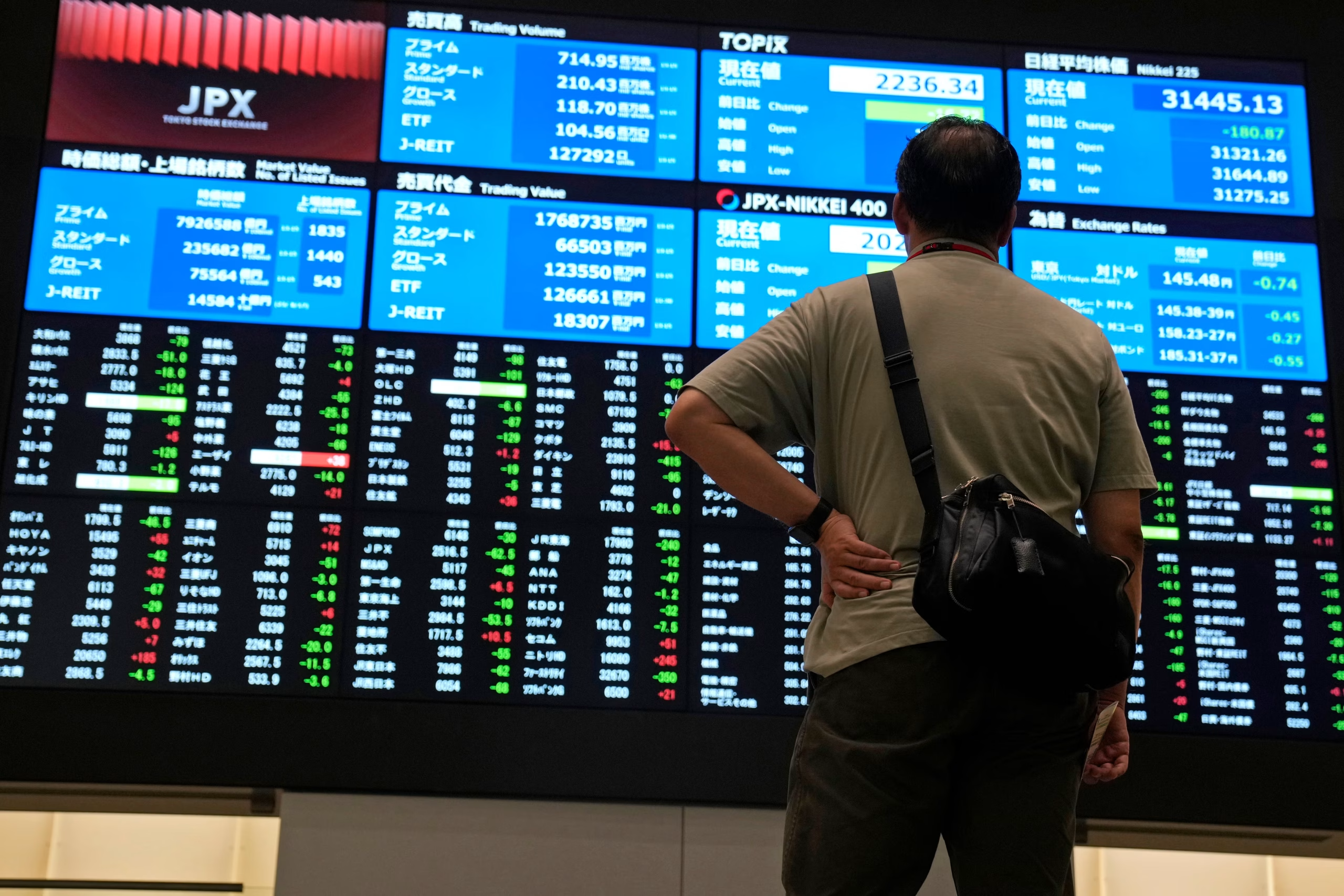
The Nikkei 225 rose around 1.1%, while the broader TOPIX index gained approximately 0.8%.
Technology-related shares performed strongly, with Kioxia Holdings rising 5.7% and Sony advancing 2.8%.
Japanese automakers also rallied.
Honda Motor jumped roughly 4.7%, while Toyota Motor gained around 3.7%.
The moves followed progress toward lower U.S. tariffs on Canadian-made vehicles as part of an emerging trade agreement between Washington and Ottawa.
China Technology Stocks Recover
Chinese equities also traded higher.
The CSI 300 gained around 0.2%, while the Shanghai Composite advanced 0.3%. Hong Kong’s Hang Seng Index climbed approximately 1.1%.
Technology stocks were among the strongest performers.
Alibaba gained 2.3%, Xiaomi rose 3.8%, Baidu advanced 3.5%, JD.com climbed 2.8% and Tencent added around 1.8%.
China AI and Robotics Theme Remains Strong
Investor interest in China’s artificial intelligence and robotics sector also remained elevated.
Unitree Robotics surged 460% during its Shanghai market debut on Wednesday.
The company’s initial public offering attracted exceptional demand, with retail subscriptions reportedly exceeding the available shares by more than 8,000 times.
The performance highlighted continued enthusiasm for companies linked to AI, robotics and advanced technology.
Australia Employment Data Shows Labor Market Cooling
Australia’s S&P/ASX 200 edged around 0.2% higher, although weaker employment data added uncertainty to the outlook.
Australia’s unemployment rate increased to 4.5% in July from 4.4% in June, while employment declined by approximately 16,000 jobs.
The data suggests that the Australian labor market is beginning to cool, which could influence expectations for future Reserve Bank of Australia policy decisions.
Other Asian Markets Trade Mixed
Elsewhere in the region, Singapore’s Straits Times Index fell around 0.5%.
India’s Nifty 50 gained approximately 0.5%, while Indonesia’s Jakarta Composite advanced around 1.2%.
The Indonesian market received support after Bank Indonesia kept its benchmark interest rate unchanged at 5.75%, in line with market expectations.
Oil Prices Remain a Risk for Asian Markets
Elevated energy prices remained a potential headwind.
Brent crude traded near $92 per barrel and was on track for a fifth consecutive session of gains.
Oil prices have remained supported as Washington increases economic pressure on Iran and uncertainty continues around the reopening of the Strait of Hormuz.
Persistently high crude prices could increase inflationary pressure and complicate the outlook for global interest rates.
Asian Market Outlook Improves, but Risks Remain
The rebound in Asian stocks reflects improving risk appetite following the Treasury’s decision to expand long-term bond buybacks.
Lower Treasury yields, strong semiconductor gains and renewed optimism surrounding AI-related companies provided additional support.
However, investors will continue to monitor government borrowing costs, oil prices, geopolitical risks and central-bank policy.
For now, the sharp rebound in the KOSPI and broader recovery across Asian equities suggest that sentiment has improved after a difficult start to the week.