Asian currencies traded in mixed territory on Thursday as the U.S. dollar remained near a seven-week high following the Federal Reserve’s first interest rate increase in three years.
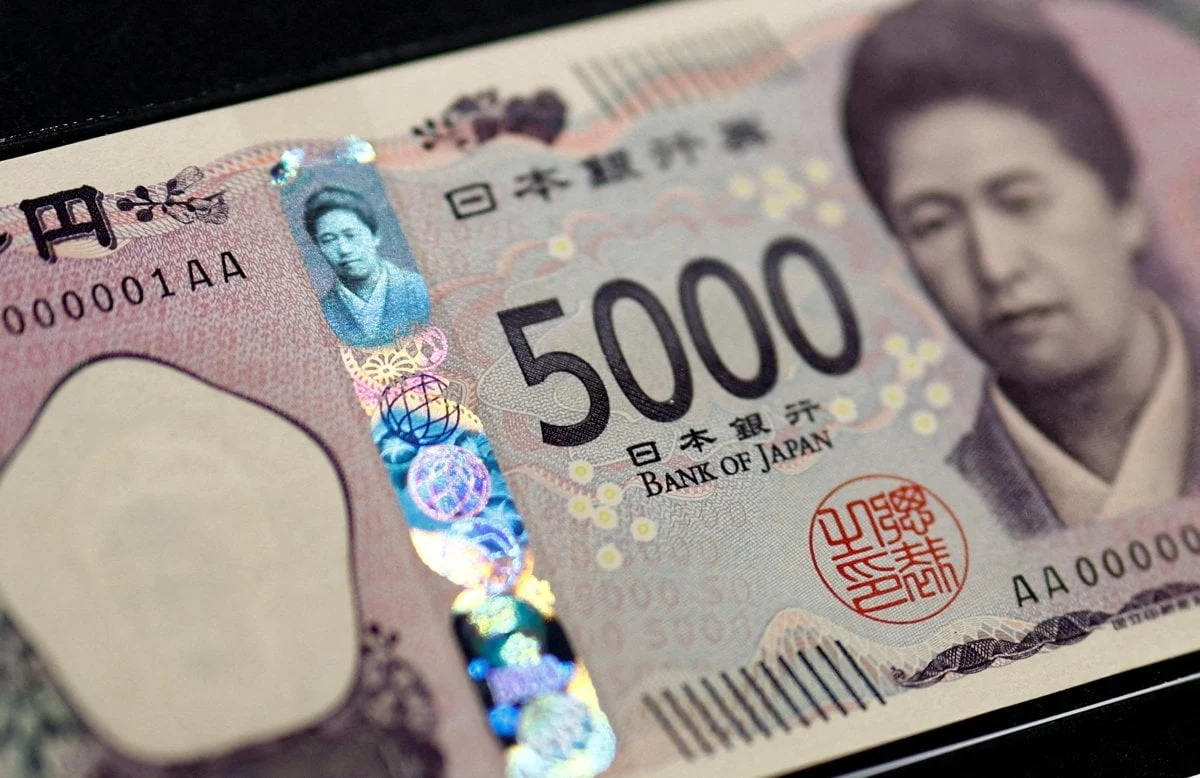
The Japanese yen also stabilized near a two-week low as investors turned their attention to the Bank of Japan’s upcoming policy decision.
The U.S. Dollar Index hovered around 100.30 after gaining roughly 0.7% in the previous session.
Fed Rate Hike Supports the US Dollar
The Federal Reserve unanimously voted to raise its policy rate by 25 basis points to 3.75%-4.00%.
The decision marked the central bank’s first rate increase in three years.
Fed projections also suggested that policymakers expect another rate hike before the end of the year.
Higher interest rate expectations supported both the dollar and U.S. Treasury yields.
Markets are now pricing in a high probability of another 25-basis-point increase before year-end.
Dollar Remains Firm After Hawkish Fed Shift
The dollar held most of its recent gains as investors adjusted expectations for U.S. monetary policy.
Markets increasingly expect the next move to come later in the year rather than at the Federal Reserve’s October meeting.
Fed Chair Kevin Warsh continued to avoid giving specific guidance on the future path of interest rates.
However, broader Fed projections still pointed toward the possibility of another increase in 2026.
Some analysts expect the U.S. Dollar Index to remain within the broad range seen since mid-2025, rather than entering a tightening cycle similar to 2022.
Yen Steadies Ahead of Bank of Japan Decision
The Japanese yen traded near a two-week low, with USD/JPY around 156.08.
The yen had weakened to approximately 156.32 earlier in the session.
Investors are now focused on Friday’s Bank of Japan meeting.
Markets expect the BOJ to raise its policy rate to the highest level in more than three decades as Japanese policymakers respond to persistent inflation pressures.
Higher oil prices have added to inflation concerns, increasing expectations that the central bank could maintain a tighter monetary policy stance.
Markets Await Guidance From BOJ Governor Ueda
Attention will also focus on comments from Bank of Japan Governor Kazuo Ueda.
Traders will be looking for signals about the timing and pace of any additional rate increases.
The yen’s recent strength has been supported by expectations of higher Japanese interest rates, intervention in currency markets and the possibility that Japanese investors could bring more overseas capital back home.
However, the currency has weakened from the seven-month high it reached last week.
Pound in Focus Ahead of Bank of England Decision
The British pound also remained in focus ahead of the Bank of England’s latest interest rate decision.
GBP/USD traded near 1.3377, leaving sterling close to a recent six-week low.
The BOE decision follows the Federal Reserve’s hawkish policy shift, which has increased volatility across global currency markets.
Meanwhile, EUR/USD was broadly unchanged as traders assessed recent policy developments from the European Central Bank.
ECB Responds to Higher Inflation Risks
The European Central Bank recently increased its three key interest rates by 25 basis points.
The move reflected renewed concerns about inflation as geopolitical tensions in the Middle East contributed to higher energy prices.
Rising energy costs can increase inflationary pressure across Europe, complicating the ECB’s policy outlook.
As a result, investors continue to monitor economic data for clues about the central bank’s next move.
Chinese Yuan Remains Resilient
The Chinese yuan remained relatively stable against the dollar.
Both USD/CNY and USD/CNH traded close to 6.71.
China has also expanded its onshore foreign exchange clearing system to include additional international currencies.
The initiative is designed to encourage more direct trading against the yuan while reducing reliance on the U.S. dollar.
Over time, the expanded system could support Beijing’s efforts to increase the yuan’s role in international trade and finance.
Asian Currencies Trade Mixed
Elsewhere in Asia, currency performance remained uneven.
The South Korean won weakened, with USD/KRW rising about 0.2%, while the Indonesian rupiah also came under pressure as USD/IDR gained around 0.6%.
The Indian rupee strengthened modestly, while the Malaysian ringgit weakened against the dollar.
The Singapore dollar also gained slightly.
In the broader Asia-Pacific region, the Australian dollar rose against the greenback, while the New Zealand dollar also strengthened modestly.
Overall, Asian currencies remain sensitive to shifting global interest rate expectations, with central bank decisions in the United States, Japan and the United Kingdom likely to remain key drivers in the near term.