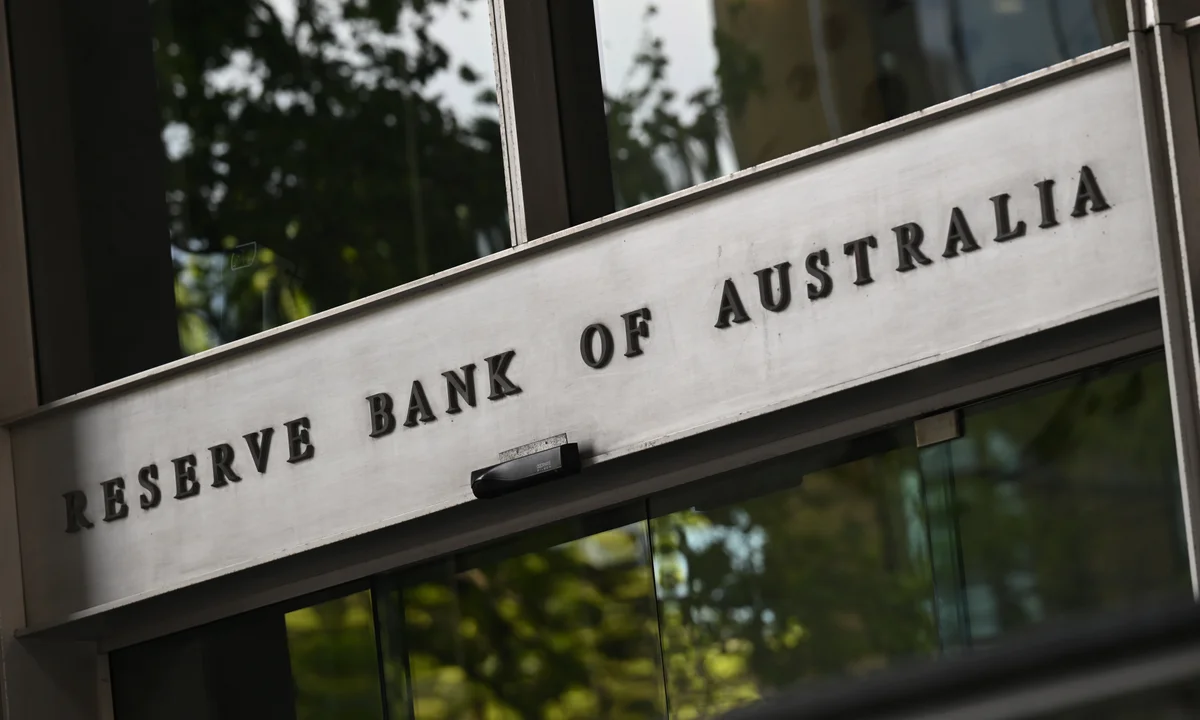
The Reserve Bank of Australia (RBA) raised interest rates to their highest level in 18 years on Tuesday, November 3, as persistent inflation forced policymakers to tighten monetary policy further.
The central bank also sharply increased its inflation forecasts, warning that elevated energy costs, strong domestic price pressures, and growing investment in artificial intelligence could keep consumer prices higher for longer.
The latest decision marks Australia’s fifth interest rate increase in 2026, raising concerns about borrowing costs, economic growth, and the outlook for Australian households.
RBA Raises Interest Rates to 4.85%, Highest Since 2008
The Reserve Bank of Australia increased its benchmark cash rate by 25 basis points to 4.85%, matching market expectations.
The decision pushed Australian interest rates to their highest level since late 2008, underscoring the central bank’s determination to bring inflation under control.
However, the move revealed divisions among policymakers. Six members of the nine-person Monetary Policy Board supported the increase, while three preferred to leave interest rates unchanged at 4.60%.
The split decision suggests that policymakers remain divided over how much additional tightening the Australian economy can withstand.
Nevertheless, the RBA emphasized its commitment to restoring price stability while maintaining sustainable employment conditions.
Australia Inflation Forecasts Revised Sharply Higher
Alongside its latest interest rate decision, the RBA significantly raised its inflation projections for the remainder of 2026.
The central bank now expects headline Consumer Price Index (CPI) inflation to reach 4.5% by the December quarter, compared with its previous forecast of 3.6%.
Meanwhile, trimmed mean inflation, a key measure of underlying price pressures, is projected to reach 3.6%, up from the earlier estimate of 3.3%.
Both readings remain above the RBA’s official inflation target range of 2% to 3%.
The higher forecasts indicate that inflation is proving more persistent than previously anticipated, increasing pressure on the central bank to maintain restrictive monetary conditions.
Energy Prices and AI Investment Fuel Inflation Pressures
Several economic developments have contributed to Australia’s worsening inflation outlook.
Higher oil and energy prices, partly driven by the ongoing conflict in the Middle East, have increased operating costs for businesses and raised household expenses.
At the same time, domestic demand and investment in artificial intelligence infrastructure have added further pressure to prices.
Rapid expansion in data centers and technology-related investment has supported economic activity. However, it has also increased demand for resources and equipment, contributing to higher costs in certain industries.
These developments have complicated the RBA’s efforts to slow inflation without causing excessive damage to economic growth.
The central bank is particularly concerned that businesses and consumers could begin expecting permanently higher inflation, making price pressures more difficult to reverse.
RBA Warns Inflation Could Remain Elevated Through 2027
The Reserve Bank of Australia expects inflation to remain above 3% until late 2027, reflecting persistent domestic pressures and uncertainty surrounding global energy markets.
The bank now anticipates that inflation will return to the midpoint of its 2% to 3% target range around mid-2028.
This outlook suggests that Australian borrowers could face elevated interest rates for longer than previously expected.
However, the RBA has not committed to another increase. Future monetary policy decisions will depend on incoming inflation figures, labor market developments, and broader economic conditions.
The central bank continues to balance its price stability objectives against growing signs of economic weakness.
Australian Economic Growth Forecast Improves Despite Higher Rates
Despite the inflation challenges, the RBA slightly upgraded its economic growth forecast for 2026.
The central bank now expects Australia’s gross domestic product (GDP) to expand by 1.6% over the year to December, compared with its previous projection of 1.4%.
The revision reflects stronger-than-anticipated economic activity in certain sectors, including investment in technology and data center infrastructure.
However, higher borrowing costs are expected to limit household spending and business investment.
Meanwhile, the RBA increased its unemployment forecast for the December 2026 quarter to 4.7%, up from its earlier estimate of 4.5%.
The revised labor market outlook suggests that tighter monetary conditions could gradually weaken employment demand as economic activity slows.
Australian Dollar Weakens Following RBA Rate Hike
The Australian dollar declined modestly following the central bank’s announcement, despite the increase in interest rates.
The AUD/USD currency pair fell approximately 0.2% as investors assessed the RBA’s policy outlook and the implications of its divided vote.
Although higher interest rates can support a currency by improving returns on interest-bearing assets, financial markets also respond to expectations about future monetary policy.
The split vote raised questions about whether the RBA is approaching the end of its current tightening cycle.
Some economists believe the central bank may be close to its interest rate peak, although persistent inflation risks could delay any future easing.
What Comes Next for RBA Interest Rates?
The outlook for Australian interest rates remains uncertain as policymakers attempt to balance inflation control with slowing economic activity.
Further increases cannot be ruled out if consumer prices remain elevated or inflation expectations continue to rise.
On the other hand, weaker economic growth, declining household spending, and rising unemployment could reduce the need for additional tightening.
Investors will now closely monitor upcoming inflation reports, employment data, and statements from RBA officials for signals about the central bank’s next move.
For now, Australia’s highest interest rates since 2008 highlight the continuing challenge of restoring price stability without placing excessive pressure on the broader economy.