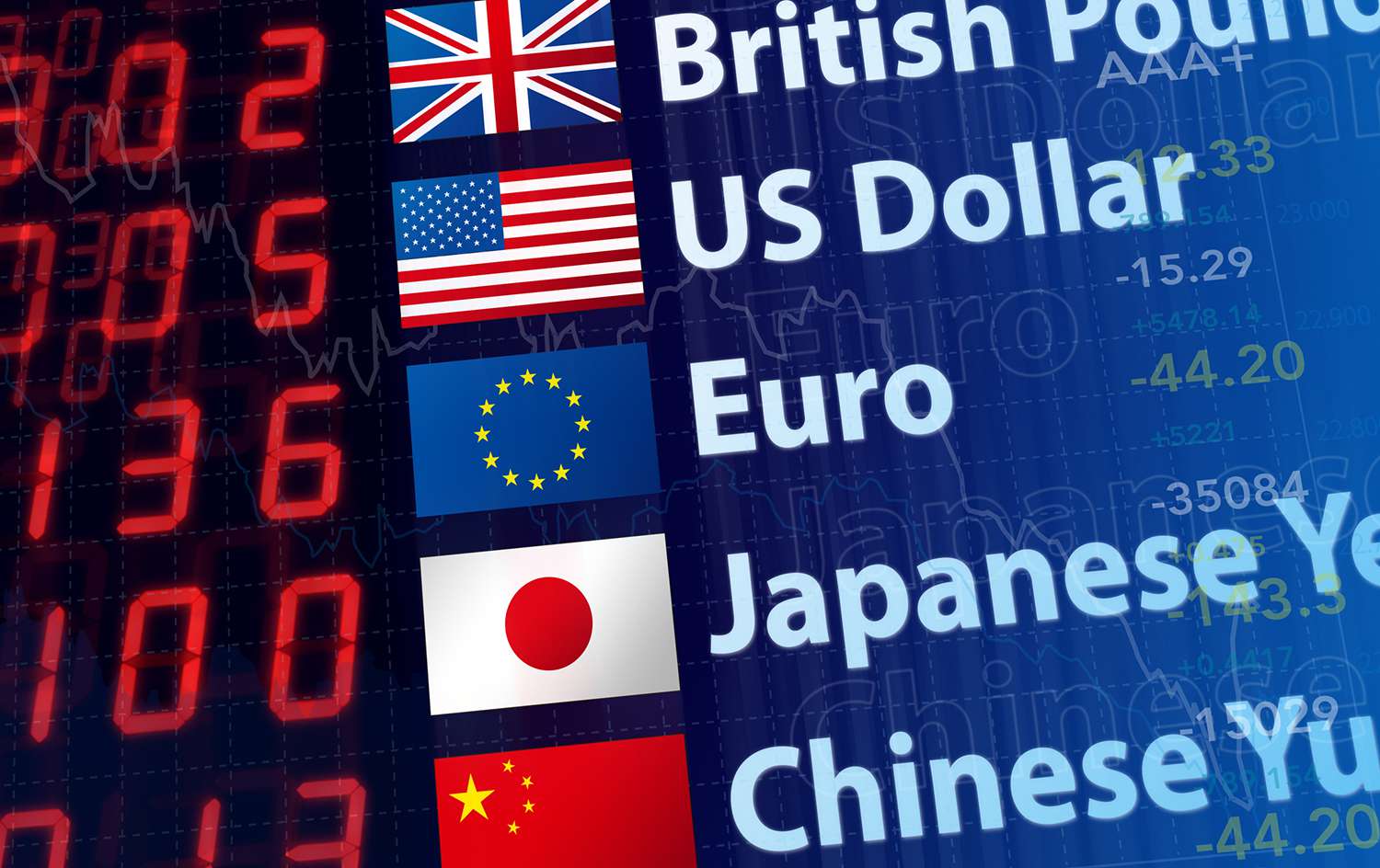
The U.S. dollar weakened on Thursday, October 29, as investors assessed the latest Federal Reserve and European Central Bank (ECB) interest rate decisions. Both central banks kept borrowing costs unchanged, broadly matching market expectations.
Meanwhile, the euro gained modest ground against the dollar, while the British pound extended its advance for a second consecutive session following the United Kingdom’s latest budget announcement.
At 14:40 ET, the U.S. Dollar Index (DXY), which measures the greenback against six major currencies, declined 0.2% to 102.02. Currency traders also evaluated stronger U.S. economic growth and persistent inflation pressures.
Federal Reserve Holds Interest Rates Steady as Inflation Remains Elevated
The Federal Reserve maintained its benchmark interest rate within the 3.75%–4.00% range following its October monetary policy meeting.
The Federal Open Market Committee (FOMC) approved the decision by a 10–2 vote. However, Federal Reserve Governor Lisa Cook and Cleveland Fed President Beth Hammack supported an additional 25-basis-point increase.
The decision followed September’s quarter-point rate hike, the first increase in more than three years.
Federal Reserve Chair Kevin Warsh emphasized the continued resilience of the U.S. economy and reaffirmed the central bank’s commitment to achieving its 2% inflation target.
However, Warsh avoided providing a definitive outlook for future interest rate decisions. Instead, he highlighted the importance of evaluating incoming economic data before determining the next monetary policy move.
Fed Rate Hike Expectations Remain in Focus
Despite the October pause, financial markets continued to anticipate another Federal Reserve interest rate increase in December.
Warsh acknowledged that financial and credit conditions had tightened following September’s policy adjustment. Nevertheless, he indicated that overall conditions had not yet become sufficiently restrictive.
His remarks suggested that additional monetary tightening could remain appropriate without necessarily pushing the economy into a significant slowdown.
Bill Adams, chief U.S. economist at Fifth Third Commercial Bank, interpreted the comments as evidence that the Federal Reserve still sees room for further interest rate increases.
According to Adams, policymakers appear focused on a measured adjustment rather than an aggressive tightening cycle that could threaten economic growth.
Meanwhile, investors will closely monitor upcoming inflation and employment reports for further indications of the Federal Reserve’s next move.
U.S. GDP Growth Accelerates to 3.4% in Third Quarter
Fresh economic data reinforced expectations that the Federal Reserve could maintain a restrictive monetary policy stance.
According to the Bureau of Economic Analysis (BEA), the U.S. economy expanded at an annualized rate of 3.4% during the third quarter.
The reading marked a notable acceleration from the previous quarter’s 2.2% growth and exceeded market forecasts.
Stronger investment activity and resilient consumer spending helped support economic expansion, highlighting the underlying strength of the American economy.
Consequently, the latest GDP figures strengthened the argument that the economy may be able to withstand additional interest rate increases.
Core PCE Inflation Signals Persistent Price Pressures
The latest U.S. inflation figures also attracted considerable attention across financial markets.
September’s headline Personal Consumption Expenditures (PCE) Price Index increased 0.5% month over month, while the Core PCE Price Index advanced 0.3%.
On an annual basis, headline PCE inflation reached 3.6%, while core inflation stood at 3.1%.
All four readings matched economists’ expectations. However, the annual figures accelerated compared with August and remained above the Federal Reserve’s 2% inflation objective.
The data suggested that inflationary pressures continue to pose challenges for monetary policymakers.
Therefore, investors increasingly focused on whether the combination of solid economic growth and elevated inflation would encourage another Federal Reserve rate hike before the end of the year.
Euro Rises as European Central Bank Keeps Rates Unchanged
Across the Atlantic, the euro strengthened approximately 0.1% against the U.S. dollar, trading near $1.1162.
The European Central Bank maintained its three key policy interest rates, as widely expected by financial markets.
However, ECB policymakers warned that rising energy prices could increase inflation risks while simultaneously weakening economic growth.
The central bank also highlighted tighter financing conditions and noted that the full economic effects of higher energy costs had yet to emerge.
Although underlying inflation remained relatively stable, policymakers acknowledged that future price developments would require close monitoring.
As a result, market participants continued to anticipate a possible ECB interest rate increase in December.
Christine Lagarde Announces Early ECB Departure
Alongside its latest interest rate decision, the ECB confirmed that President Christine Lagarde would step down on February 7, 2027.
Her departure will come several months before the scheduled conclusion of her eight-year term in October 2027.
The announcement introduced an additional element of uncertainty surrounding the ECB’s monetary policy outlook, particularly as European economies face elevated energy costs and inflation risks.
Mark Wall, chief European economist at Deutsche Bank, suggested that the combination of previous interest rate increases and tighter financial conditions may not be sufficient to offset further energy-driven inflation.
He also noted that the leadership transition could create uncertainty around future policy decisions.
Nevertheless, Deutsche Bank anticipated another interest rate increase in December, potentially bringing the relevant policy rate to 2.75% before the ECB concludes its tightening cycle.
British Pound Extends Gains Following UK Budget
Elsewhere in foreign exchange markets, the British pound climbed approximately 0.3% to $1.3361, marking its second consecutive session of gains.
Sterling benefited from a relatively positive market response to the United Kingdom’s latest budget announcement.
Chancellor John Healey presented the government’s fiscal plans on Wednesday under Prime Minister Andy Burnham’s administration.
The budget maintained the government’s commitment to fiscal discipline while avoiding major unfunded spending increases that could have unsettled financial markets.
Furthermore, the Treasury retained approximately £15 billion in fiscal headroom for the 2029/30 financial year, broadly aligning with market expectations.
These developments helped reassure investors about the government’s approach to public finances.
UK Fiscal Outlook Remains Under Pressure
Although the budget received a relatively favorable market response, economists warned that Britain’s fiscal challenges have not disappeared.
Sanjay Raja, chief UK economist at Deutsche Bank, suggested that the government’s measured approach helped avoid unnecessary financial market disruption.
The budget also included measures targeting household living costs and business expenses, alongside initiatives aimed at supporting investment.
However, Britain’s relatively limited fiscal flexibility could complicate future policy decisions, particularly if economic conditions deteriorate.
Consequently, investors will continue assessing government borrowing requirements, economic growth expectations, and potential changes in Bank of England monetary policy.
US Dollar, Euro and Pound Outlook Depends on Central Bank Policy
Overall, the latest Federal Reserve and ECB decisions contributed to a modest decline in the U.S. dollar, while the euro and British pound registered gains.
Although both central banks left interest rates unchanged, persistent inflation and stronger economic activity kept expectations of further tightening alive.
Meanwhile, the UK’s latest budget provided some support for sterling by reinforcing the government’s commitment to fiscal stability.
Looking ahead, foreign exchange markets will remain sensitive to upcoming inflation figures, employment reports, economic growth data, and central bank commentary.
The direction of the U.S. dollar, euro, and pound will likely depend on how monetary policy expectations evolve across the United States, eurozone, and United Kingdom.