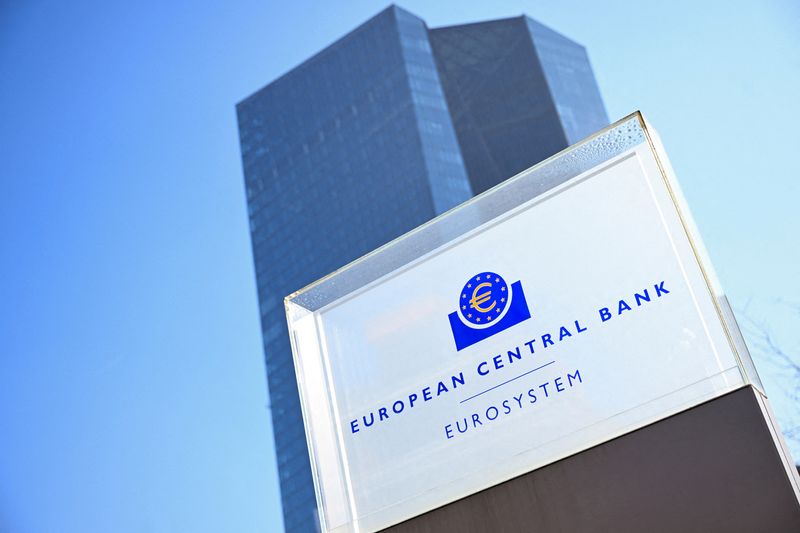
The European Central Bank (ECB) kept interest rates unchanged on Thursday, October 29, as policymakers weighed rising energy prices, persistent eurozone inflation, and growing financial market uncertainty.
The widely anticipated ECB interest rate decision was accompanied by a major leadership announcement, with President Christine Lagarde confirming that she will step down in February 2027, several months before her term officially expires.
Meanwhile, concerns surrounding France’s government bond market and the economic impact of higher oil prices continued to complicate the central bank’s monetary policy outlook.
ECB Holds Interest Rates at 2.5% Amid Inflation Concerns
The European Central Bank maintained its deposit facility rate at 2.50%, in line with economists’ expectations.
The main refinancing operations rate remained at 2.65%, while the marginal lending facility rate stayed at 2.90%.
The decision followed earlier interest rate increases aimed at containing renewed inflationary pressures across the eurozone.
In its latest monetary policy statement, the ECB warned that rising energy prices could push inflation higher while simultaneously weakening economic growth.
Furthermore, policymakers acknowledged that the full impact of the ongoing energy shock had not yet materialized.
Although underlying inflation remained relatively stable, the central bank emphasized that future developments could create additional challenges for price stability.
Rising Oil Prices Threaten Eurozone Inflation Outlook
Higher energy costs remain a major concern for European monetary policymakers.
The ongoing Middle East conflict has disrupted global energy markets, contributing to elevated oil and natural gas prices.
These developments could increase transportation, manufacturing, and household energy expenses throughout the eurozone.
Consequently, businesses may face higher operating costs, while consumers could experience additional pressure on their purchasing power.
The ECB also warned that prolonged energy disruptions could generate broader inflationary effects, particularly if businesses pass rising costs on to customers.
However, higher energy prices can simultaneously weaken economic activity by reducing consumer spending and business investment.
This combination presents a difficult challenge for policymakers seeking to control inflation without triggering a significant economic slowdown.
France’s Bond Market Turmoil Adds Pressure on ECB
Financial market instability has emerged as another important concern for the European Central Bank.
Government bond yields have increased sharply in several eurozone countries, particularly France, where political uncertainty and fiscal concerns have unsettled investors.
The country’s substantial public debt and ongoing social tensions have contributed to higher borrowing costs.
Rising government bond yields can also affect businesses and households by increasing financing expenses across the broader economy.
As a result, tighter financial conditions could eventually slow economic growth and reduce inflationary pressures.
The ECB acknowledged that financing conditions had tightened since its previous monetary policy meeting.
Therefore, policymakers must consider whether further interest rate increases are necessary or whether existing financial market pressures are already helping restrain inflation.
ECB December Rate Hike Remains a Possibility
Despite the decision to leave borrowing costs unchanged, investors continued anticipating another ECB interest rate increase in December.
Andrew Kenningham, Chief Europe Economist at Capital Economics, described the latest policy statement as somewhat cautious regarding additional monetary tightening.
He suggested that the ECB could deliver one final interest rate increase during the current tightening cycle, potentially at its December meeting.
However, the central bank has not committed to a predetermined interest rate path.
Instead, future decisions will depend on incoming economic data, inflation trends, and the effectiveness of existing monetary policy measures.
The ECB remains focused on returning inflation sustainably toward its medium-term target of 2%.
Christine Lagarde Announces Early Departure From ECB
In a significant development, ECB President Christine Lagarde announced that she will leave her position on February 7, 2027.
Her departure will come approximately nine months before the scheduled conclusion of her eight-year term in October 2027.
Lagarde has led the European Central Bank since November 2019, overseeing monetary policy during several major economic challenges.
Her tenure has included the COVID-19 pandemic, energy market disruptions, geopolitical tensions, and periods of elevated inflation.
The decision to leave early introduces uncertainty surrounding the central bank’s future leadership at a time when the eurozone faces considerable economic challenges.
Why Christine Lagarde Is Leaving the European Central Bank
During a press conference, Lagarde explained that her decision was motivated by a desire to participate more openly in discussions beyond monetary policy.
She emphasized that ECB officials must maintain political neutrality to protect the central bank’s independence.
However, Lagarde indicated that she increasingly wanted the freedom to express her views on broader international and political developments.
After years of leading major financial institutions, she believes her experience could contribute to important public discussions outside the restrictions of central banking.
Her comments fueled additional speculation about her future career.
Previous media reports suggested that Lagarde could potentially assume a leadership position at the World Economic Forum or become involved in political discussions surrounding France’s upcoming elections.
Nevertheless, she has not confirmed any future appointment or formally announced plans to enter electoral politics.
European Council Begins Search for Lagarde’s Successor
Following Lagarde’s announcement, the European Council confirmed that the process of selecting the next ECB president would begin immediately.
The appointment will require agreement among European leaders under the European Union’s established institutional procedures.
The leadership transition comes at a particularly sensitive moment for the eurozone.
Persistent inflation, volatile energy prices, and concerns about sovereign debt sustainability will present significant challenges for the next ECB president.
Furthermore, investors will closely assess whether Lagarde’s successor favors a more restrictive or accommodative monetary policy approach.
Media reports have suggested that European leaders could reach a decision on the next ECB president before the end of the year, although no official timetable has been confirmed.
Lagarde Pledges to Remain Focused Until February 2027
Despite announcing her early departure, Lagarde reassured financial markets that she would continue performing her responsibilities until her final day in office.
She emphasized her commitment to preserving the ECB’s independence and maintaining its focus on price stability.
The outgoing president also reaffirmed that returning inflation to the central bank’s 2% target remains a central priority.
Her commitment is intended to support continuity during the leadership transition and reduce uncertainty about monetary policy decisions in the coming months.
Nevertheless, investors will continue monitoring potential candidates and the implications of a change in leadership.
ECB Interest Rate Outlook Faces Growing Uncertainty
Overall, the European Central Bank’s decision to maintain interest rates at 2.50% reflected a cautious approach to persistent inflation and weakening financial conditions.
Higher energy prices continue threatening price stability, while rising government borrowing costs and uncertainty surrounding France’s fiscal outlook create additional risks for economic growth.
Meanwhile, Christine Lagarde’s planned departure adds a new dimension to the eurozone’s monetary policy outlook.
Looking ahead, investors will closely monitor inflation reports, energy market developments, government bond yields, and the European Council’s search for a new ECB president.
The December interest rate meeting could prove particularly important as policymakers reassess whether further monetary tightening is necessary.
For now, the ECB remains focused on balancing inflation risks against economic stability while preparing for a significant leadership transition.