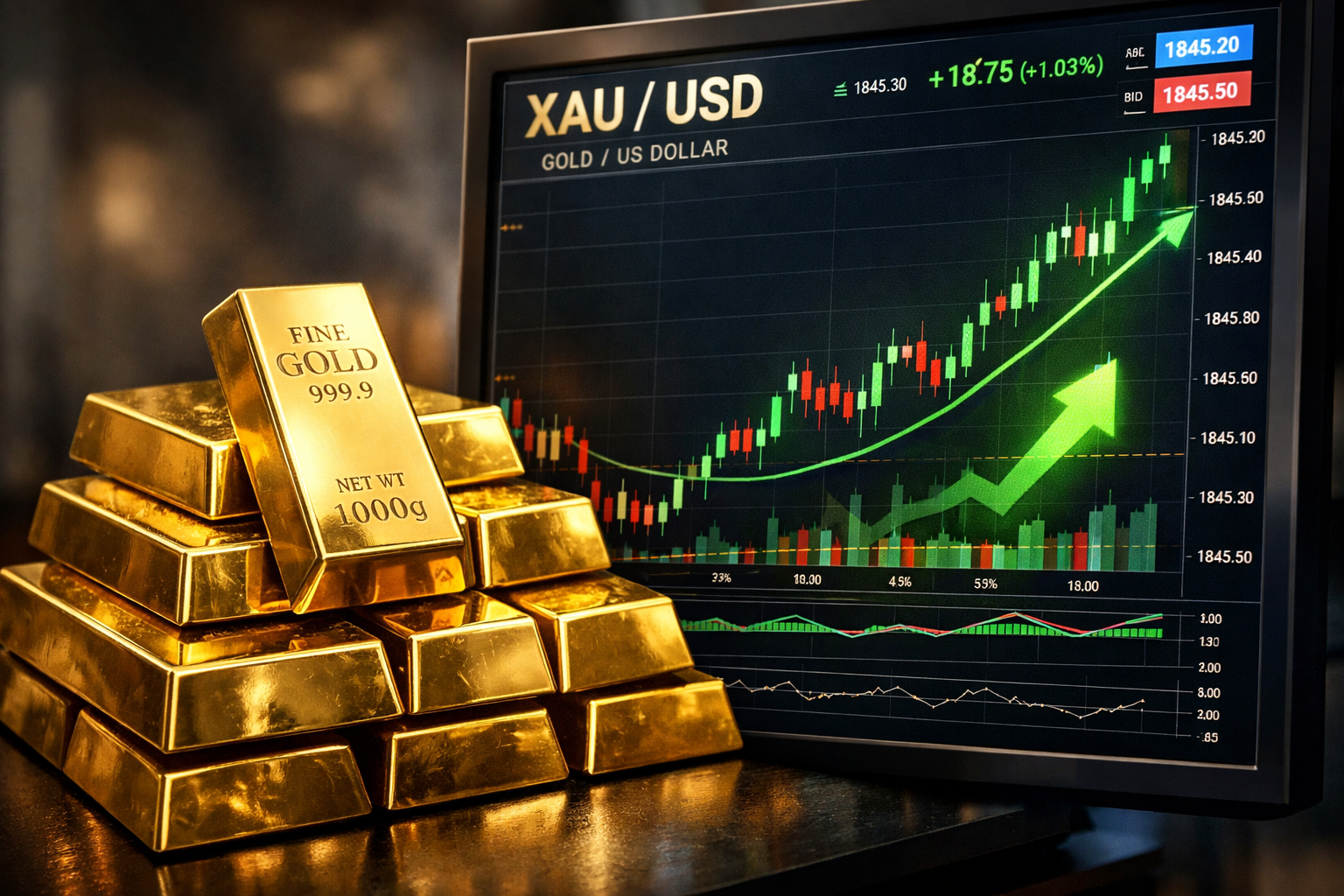
Gold prices declined on Monday as investors evaluated the Federal Reserve’s interest rate outlook, although falling crude oil prices helped cushion the precious metal’s losses.
The gold market remains sensitive to expectations surrounding US monetary policy, inflation and global economic uncertainty. Meanwhile, safe-haven demand and continued central bank purchases are providing underlying support for bullion.
At 09:49 ET (13:49 GMT), spot gold fell 0.4% to $4,150.42 per ounce, while gold futures declined 0.3% to $4,170.47 per ounce.
The latest pullback followed a 0.7% weekly decline, as traders reassessed the possibility of additional Federal Reserve interest rate increases.
Gold Prices Face Pressure From Federal Reserve Rate Expectations
Investors have increased their expectations that the Federal Reserve will leave interest rates unchanged at its upcoming October monetary policy meeting.
The shift followed comments from Fed Chair Kevin Warsh last week, which encouraged markets to anticipate a temporary pause in monetary tightening.
However, traders still expect the central bank to resume raising borrowing costs in December.
In September, the Federal Reserve increased interest rates for the first time since 2023, responding to concerns about inflation fueled by rising energy prices.
Higher interest rates generally create challenges for gold because the precious metal does not generate interest or dividend income.
Consequently, rising yields on government bonds and other interest-bearing assets can reduce gold’s attractiveness to investors.
Meanwhile, lower crude oil prices are helping ease inflation concerns, potentially reducing the pressure on the Fed to pursue more aggressive monetary tightening.
Safe-Haven Demand Supports Gold Above $4,000
Despite recent weakness, gold has continued trading above the important $4,000-per-ounce level since August.
Demand for safe-haven assets has helped support prices as investors navigate geopolitical tensions, economic uncertainty and concerns surrounding government debt.
Analysts at ANZ highlighted that growing fiscal imbalances and questions about debt sustainability are changing how investors interpret elevated bond yields.
Traditionally, higher yields can indicate stronger economic growth or expectations of tighter monetary policy.
However, concerns about mounting government debt may encourage investors to view rising yields as a potential warning sign rather than evidence of economic strength.
Under these conditions, gold can become more attractive as a hedge against financial instability and long-term fiscal risks.
Chinese Investors and Central Banks Continue Buying Gold
Strong investment demand from China remains another important source of support for the precious metal.
According to ANZ analysts, Chinese investors continue to favor gold amid persistent weakness in the country’s equity and property markets.
Uncertainty surrounding these traditional investment sectors has encouraged investors to seek alternative assets capable of preserving wealth.
At the same time, central banks have accelerated efforts to diversify their international reserves.
Gold plays an important role in these strategies because it allows monetary authorities to reduce their dependence on individual currencies and other financial assets.
Continued purchases by central banks could therefore provide a significant foundation for longer-term gold demand.
ANZ Forecasts Gold Prices Above $5,000 in 2027
Although gold faces near-term challenges, ANZ maintains a positive outlook for the precious metal over the longer term.
The bank expects gold prices to remain relatively constrained in the short term before potentially climbing above $5,000 per ounce in 2027.
Its forecast depends partly on sustained investment demand and continued gold accumulation by central banks.
However, the direction of US interest rates and movements in the US dollar will remain important factors influencing the market.
A more restrictive Federal Reserve policy could weigh on bullion, while declining real interest rates or renewed demand for safe-haven assets could strengthen its outlook.
Iran Conflict and Energy Prices Remain Key Market Risks
Geopolitical developments continue to influence gold prices and expectations for global inflation.
Despite its recent stability above $4,000, the precious metal remains approximately 20% below its levels in late February, when the outbreak of the Iran conflict triggered a sharp increase in energy prices.
The resulting inflation concerns raised expectations of tighter monetary policy, creating additional pressure on gold.
Looking ahead, investors will closely monitor crude oil prices, Federal Reserve announcements and geopolitical developments for indications of the precious metal’s next major move.
While near-term uncertainty continues to limit upside momentum, ANZ’s longer-term forecast suggests that investment demand, central bank diversification and fiscal concerns could eventually support another significant gold rally.