The U.S. dollar remained close to a two-month high on Friday as rising Treasury yields and expectations for additional Federal Reserve rate hikes supported the greenback.
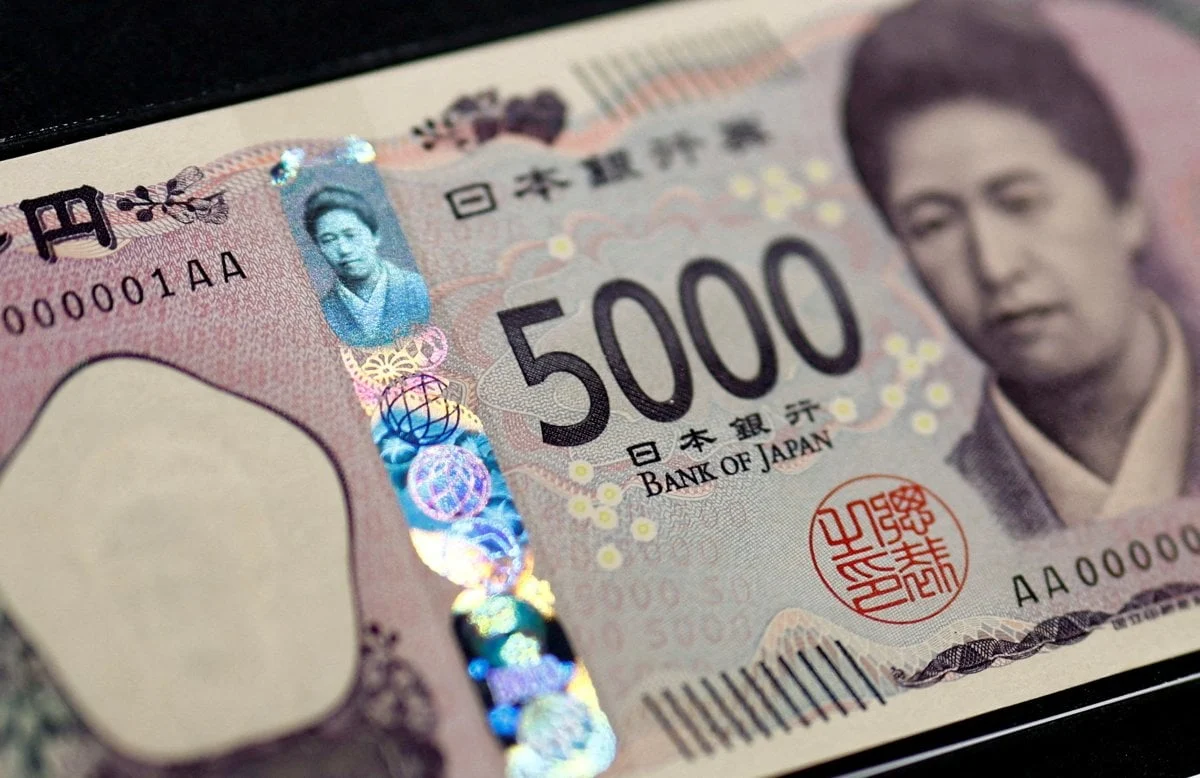
The stronger dollar placed renewed pressure on Asian currencies and pushed the Japanese yen closer to the closely watched 160-per-dollar level.
The U.S. Dollar Index traded near 101.28 in early Asian trading after rising for a fourth consecutive session.
The index gained about 0.2% on Thursday, following a 0.5% increase on Wednesday. It is now up roughly 1.1% for the week.
Treasury Yields Support the Dollar
Higher U.S. Treasury yields have been one of the main drivers behind the dollar’s recent strength.
Stronger economic data and persistent inflation concerns have also increased expectations that the Federal Reserve could raise interest rates again.
The 30-year Treasury yield climbed to its highest level since June 2004, while the benchmark 10-year yield reached its strongest level in nearly two decades.
Meanwhile, weekly U.S. initial jobless claims fell by 1,000 to 197,000.
That was below the 201,000 forecast and suggested that the U.S. labor market remains relatively resilient.
Federal Reserve Rate Hike Expectations Increase
The Federal Reserve raised interest rates by 25 basis points last week, bringing the target range to 3.75%-4.00%.
Since then, several Fed officials have indicated that further tightening could be necessary if inflation remains elevated.
Those comments have strengthened market expectations for another possible rate increase.
Higher interest rates generally support the U.S. dollar because they can increase demand for dollar-denominated assets.
Oil Prices Add to Inflation Pressure
Oil prices have also contributed to concerns about inflation.
Crude prices jumped almost 4% during volatile trading after a Houthi missile attack on Saudi Arabia renewed fears of potential supply disruptions.
However, oil later gave back some gains following reports that the United States and Iran had discussed the possibility of reopening the Strait of Hormuz.
Persistently high energy prices could complicate efforts to bring inflation under control and reinforce expectations for tighter monetary policy.
Japanese Yen Nears Key 160 Level
The Japanese yen remained under significant pressure against the U.S. dollar.
The USD/JPY pair traded near 158.46, while the yen weakened as far as 159.04 on Thursday.
That marked its weakest level since September 2.
Markets are now closely watching the 160 level, which could become an important test of how much further yen weakness Japanese authorities are willing to tolerate.
Intervention Speculation Returns
The yen has declined for two consecutive weeks following the Bank of Japan’s September 18 policy meeting.
Although the BOJ accelerated its monetary tightening cycle, investors viewed its policy stance as less aggressive than the Federal Reserve’s.
As a result, the gap between U.S. and Japanese interest-rate expectations has continued to favor the dollar.
The yen’s move closer to 160 has also renewed speculation about possible intervention by Japanese authorities in the foreign exchange market.
Australian Dollar Leads Weekly Losses
The Australian dollar has been among the weakest major currencies against the U.S. dollar this week.
According to DBS, the Aussie has fallen around 1.6% against the greenback.
Pressure increased after Australia’s unemployment rate climbed to 4.6% in August, its highest level since 2021.
The weaker labor-market reading reduced some of the monetary-policy support for the currency.
The AUD/USD pair traded near $0.70, while the New Zealand dollar was around $0.57.
Chinese Yuan Faces Renewed Pressure
The Chinese yuan also weakened against the dollar.
The USD/CNY pair climbed to 6.71, marking a second consecutive daily increase.
The pair had previously spent three sessions below 6.70 for the first time since January 2023.
China’s onshore stock and bond markets were closed on Friday for the Mid-Autumn Festival and are scheduled to reopen on Monday, September 28.
South Korean financial markets were also closed for the Chuseok holiday.
Asian Currencies Remain Under Pressure
Elsewhere in Asian foreign exchange markets, the Korean won strengthened modestly as USD/KRW fell 0.3% to 1,361.75.
The Indonesian rupiah weakened, with USD/IDR rising 0.3% to 17,930.1.
The Indian rupee was little changed at around 96.08 per dollar, while USD/MYR fell approximately 0.3% to 4.07.
The Singapore dollar traded near 1.2791 per U.S. dollar.
Dollar Outlook Remains Tied to Fed and Bond Yields
The U.S. dollar remains supported by a combination of high Treasury yields, resilient economic data and expectations for tighter Federal Reserve policy.
At the same time, the Japanese yen remains vulnerable as the gap between U.S. and Japanese interest rates stays wide.
With USD/JPY approaching the 160 level, traders are likely to remain focused on both Federal Reserve signals and any indications that Japanese authorities could respond to further yen weakness.