The U.S. dollar climbed to nearly a two-week high on Monday as traders increased bets that the Federal Reserve will raise interest rates this week.
A fresh rise in crude oil prices and persistent U.S. inflation helped strengthen expectations for tighter monetary policy, giving the greenback additional support.
Dollar Index Rebounds Sharply
The U.S. Dollar Index, which measures the greenback against six major currencies, rose around 0.55% to 99.55.
The move marked a strong recovery after the index recorded two consecutive weeks of modest losses.
Rising Treasury yields and expectations of another Federal Reserve rate increase helped drive renewed demand for the dollar.
Euro Falls to Near Two-Week Low
The euro weakened by around 0.5%, falling close to $1.1500 and reaching its lowest level in nearly two weeks.
Traders continued to assess the European Central Bank’s latest interest-rate increase, which lifted its key deposit rate to 2.50%.
However, concerns over weak economic growth and persistent inflation in the eurozone continued to weigh on the currency.
At the same time, renewed strength in the U.S. dollar added further pressure to the EUR/USD exchange rate.
Japanese Yen Pauses After Strong Rally
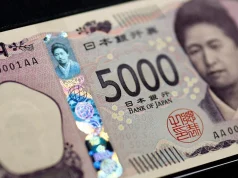
The Japanese yen also weakened against the dollar on Monday.
USD/JPY rose around 0.65% to trade near 154.55.
Despite the pullback, the yen remained close to seven-month highs reached during the previous week.
The Japanese currency has still gained roughly 4% during September, supported by expectations that the Bank of Japan could continue tightening monetary policy.
Major Central Bank Decisions Take Center Stage
Currency markets are preparing for a crucial week of central bank decisions.
The Federal Reserve is scheduled to announce its policy decision on Wednesday.
The Bank of England will follow on Thursday, while the Bank of Japan is expected to deliver its decision on Friday.
Together, these meetings could significantly influence global currency markets heading into the fourth quarter.
Fed Rate Hike Odds Rise Sharply
Financial markets are pricing in an 86% probability that the Federal Reserve will increase its benchmark interest rate by 25 basis points.
The expectations strengthened after the latest U.S. inflation report showed that headline CPI remained at 3.4%.
Core inflation also rose by 0.3% month over month.
The inflation data helped push the benchmark 10-year U.S. Treasury yield briefly above the important 5% level.
Traders are also increasing bets that the Federal Reserve could deliver another rate hike in December.
Bank of Japan Expected to Raise Rates
Attention is also turning to Japan.
The Bank of Japan is widely expected to raise interest rates by 25 basis points on Friday, bringing its policy rate to 1.25%.
Expectations of faster BOJ tightening have supported the yen in recent weeks.
Capital returning to Japan from overseas investments has also strengthened demand for the currency.
In addition, traders remain cautious following Japan’s previous large-scale currency intervention, which increased the risk of further action if exchange-rate volatility rises sharply.
Investors Turn Bullish on the Yen
Speculative investors have shifted to a net bullish position on the Japanese yen for the first time since February.
This change reflects growing confidence that Japanese interest rates could continue rising.
A narrowing gap between U.S. and Japanese borrowing costs could provide further support for the yen over the coming months.
Oil Rally Adds to Inflation Pressure
Energy markets are creating another challenge for central banks.
Brent crude oil rose roughly 3% on Monday, trading close to $112 per barrel.
The rally followed new attacks on Saudi Arabian pipeline infrastructure and further advances by Houthi forces near important Red Sea shipping routes.
Growing supply concerns in the Persian Gulf have increased fears that energy prices could remain elevated.
Stronger Oil Prices Support Fed Tightening Bets
Higher oil prices could add another layer of inflationary pressure to the global economy.
That risk has strengthened expectations that central banks may need to keep interest rates higher for longer.
For the U.S. dollar, the combination of higher Treasury yields, persistent inflation and expectations of additional Federal Reserve tightening continues to provide strong support.
The upcoming Fed decision will now be closely watched for clues about whether further rate increases could follow later this year.