Iran has warned neighbouring countries against supporting Washington’s planned sanctions campaign, saying any state that joins the effort could be treated as an enemy and see its interests targeted in retaliation.
According to Al Jazeera, Iranian security chief Mohsen Rezaei issued the warning on Sunday, ahead of a new round of U.S. measures against Tehran.
U.S. Prepares Tougher Sanctions on Iran
The warning came before U.S. Treasury Secretary Scott Bessent was expected to announce new sanctions on Monday. The Trump administration has described the upcoming measures as some of the toughest restrictions ever imposed on Iran.
Possible measures reportedly include sanctions on independent Chinese refineries that purchase Iranian crude oil. Washington could also target major Chinese banks that process Iranian funds.
Another option under consideration is the introduction of secondary tariffs on countries that continue trading with Iran.
China Remains a Key Buyer of Iranian Oil
China purchased more than 80% of Iran’s seaborne oil exports in 2025, making Chinese companies and financial institutions an important part of Washington’s strategy to reduce Tehran’s energy revenues.
However, sanctions against major Chinese banks could increase tensions between Washington and Beijing and potentially trigger retaliatory measures from China.
Pezeshkian Calls Situation a Full-Scale War
Iranian President Masoud Pezeshkian described the current confrontation as a “full-scale economic, military and security war.”
He also acknowledged that Iran continues to face serious domestic economic challenges.
Pezeshkian called for an end to the prolonged state of uncertainty between war and peace. According to the president, fears of renewed fighting are discouraging investment and putting additional pressure on Iran’s economy.
He said Iranian officials were discussing possible ways to reach an understanding that would protect the country’s core principles while reducing the risk of another attack.
Iranian Leaders Divided Over Escalation
Pezeshkian’s remarks followed earlier comments from parliamentary speaker Mohammad Bagher Ghalibaf, who called for action to address Iran’s economic crisis and pursue a path toward peace.
Hardline political figures, however, have continued preparing for the possibility of further escalation. They have also warned of a strong response if Iran faces additional attacks.
Strait of Hormuz Remains Largely Closed
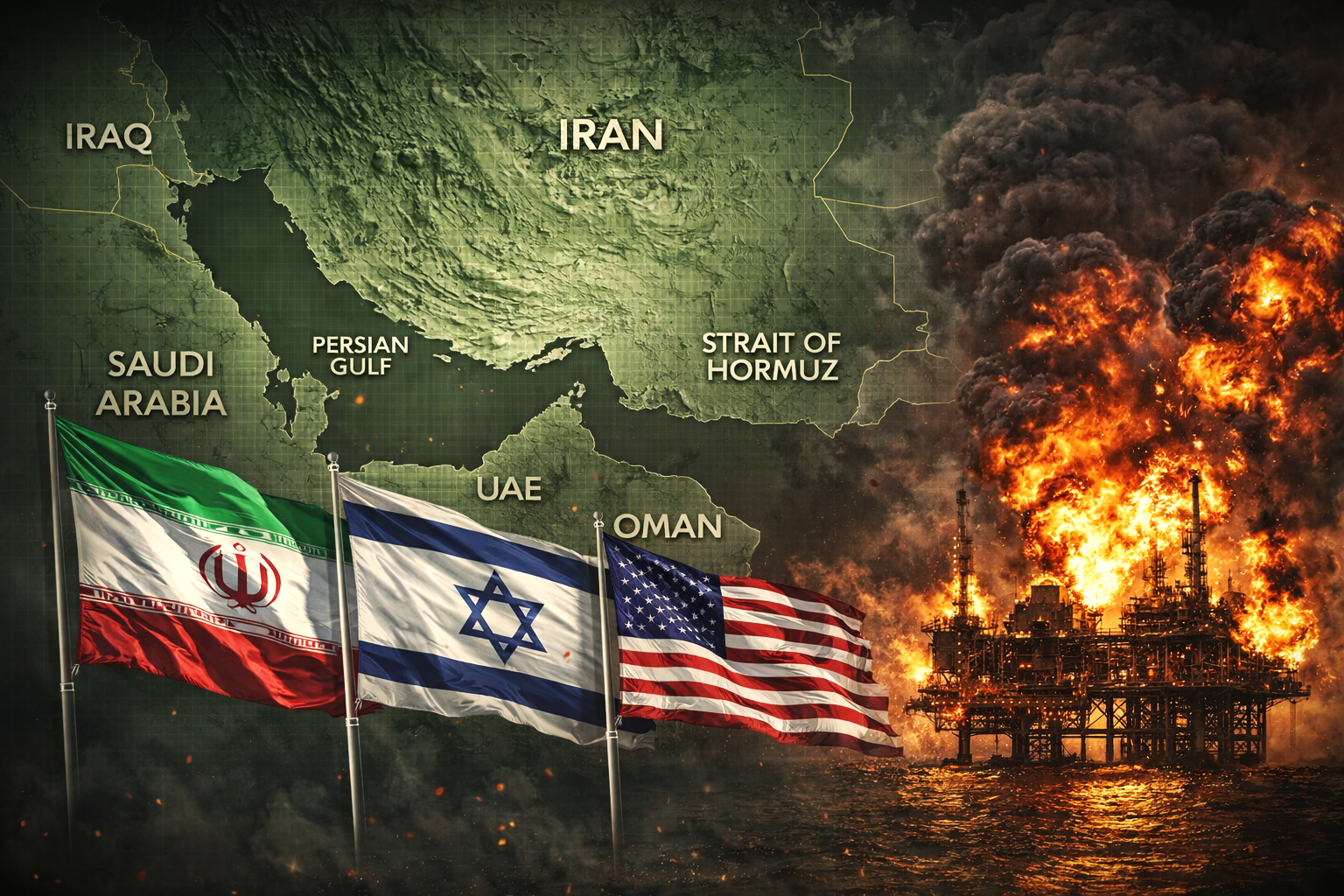
The Strait of Hormuz remains largely closed as tensions continue.
Tehran has said it will not fully reopen the strategic waterway while the U.S. naval blockade of Iranian ports remains in place.
Iran has occasionally permitted selected vessels to pass through the Strait, including some Iraqi oil tankers.
Negotiations with Oman over possible arrangements to reopen the waterway have reportedly made progress, although no final agreement has been reached.
WTI crude oil was trading around $85.54 per barrel, down approximately 1.75%, as markets continued to monitor developments in the region.
Iran Announces Major Natural Gas Discovery
Separately, Iranian Oil Minister Mohsen Paknejad said Sunday that the country had discovered more than 7.5 trillion cubic feet of natural gas in a field located south of Fars Province.
The discovery comes as Iran faces mounting pressure on its energy sector from sanctions and regional instability.
Hormuz Oil Flows Remain Below Pre-War Levels
U.S. Energy Secretary Chris Wright previously said military operations had helped increase the seven-day average flow of oil through the Strait of Hormuz to approximately 8 million barrels per day.
However, that remains well below the more than 20 million barrels per day that moved through the strategic waterway before the conflict.
The Strait of Hormuz is one of the world’s most important energy transportation routes, making disruptions there a major concern for global oil markets.
France and Saudi Arabia Consider Alternative Trade Routes
French President Emmanuel Macron and Saudi Crown Prince Mohammed bin Salman are expected to discuss alternative regional trade routes.
Possible proposals include expanding pipeline infrastructure, strengthening rail connections and increasing the use of Omani ports located outside the Gulf.
Such projects could help reduce dependence on shipping routes through the Strait of Hormuz.
Pakistan Pushes for Regional Diplomacy
Pakistan’s army chief, Asim Munir, is also expected to visit Tehran on Monday as Islamabad continues its diplomatic efforts in the region.
The visit comes as regional governments attempt to prevent further escalation while concerns over sanctions, energy supplies and the future of the Strait of Hormuz remain elevated.