Asian Currencies Rise as Dollar Weakens on Iran Peace Hopes
Most Asian currencies strengthened on Thursday, while the U.S. dollar moved lower as investor sentiment improved. Optimism grew around potential talks between the United States and Iran before the current ceasefire deadline next week, reducing demand for safe-haven assets.
Regional currencies benefited as officials signaled that negotiations could resume soon, with expectations that the conflict may be nearing an end.
Dollar Slides to Multi-Week Lows
The dollar index and its futures both declined by around 0.1%, marking a ninth consecutive session of losses. The greenback is now trading near its weakest level in six weeks.
Additional pressure came from softer U.S. producer inflation data and increasing expectations that the Federal Reserve could still proceed with interest rate cuts later this year.
Asian FX Markets See Broad Gains
Across Asia, several currencies posted gains against the dollar:
- Japanese yen (USD/JPY) fell 0.2%
- South Korean won (USD/KRW) declined 0.3%
- Singapore dollar (USD/SGD) and Indian rupee (USD/INR) each slipped 0.1%
- Taiwan dollar (USD/TWD) dropped 0.2%
These moves reflect a broader shift toward riskier assets as geopolitical tensions ease.
Chinese Yuan Holds Steady Despite Strong GDP
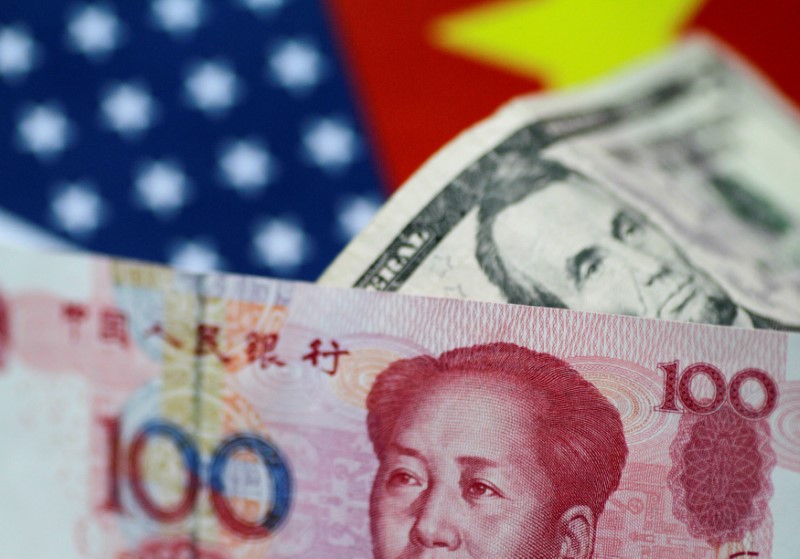
The Chinese yuan remained relatively unchanged, with the USD/CNY pair hovering around 6.8, close to a three-year high.
China’s economy expanded by 5% in the first quarter, beating expectations of 4.8% and accelerating from the previous quarter’s 4.5% growth.
Economic expansion was largely driven by strong exports, while domestic consumption and investment also showed signs of recovery after a prolonged period of weakness.
Growth Risks Persist for China
Despite strong headline GDP data, challenges remain. Increased reliance on exports could become a vulnerability, particularly if geopolitical tensions disrupt global trade flows or energy markets.
Additional economic indicators pointed to a slowdown toward the end of the first quarter, as the impact of the Iran conflict began to weigh on activity. Rising fuel costs may also create headwinds for domestic demand, although the overall impact is expected to remain limited.
Australian Dollar Strengthens on Rate Hike Expectations
The Australian dollar (AUD/USD) rose nearly 0.4%, reaching its highest level since June 2022. The currency often acts as a barometer for regional risk sentiment and benefited from improving market conditions.
Although Australia’s March employment data came in slightly below expectations and showed slower growth compared to February, the labor market remains tight.
This supports the case for further policy tightening by the Reserve Bank of Australia, which recently raised interest rates and continues to monitor inflation pressures linked to global developments.