Uncertainty Surrounds U.S. Hormuz Blockade
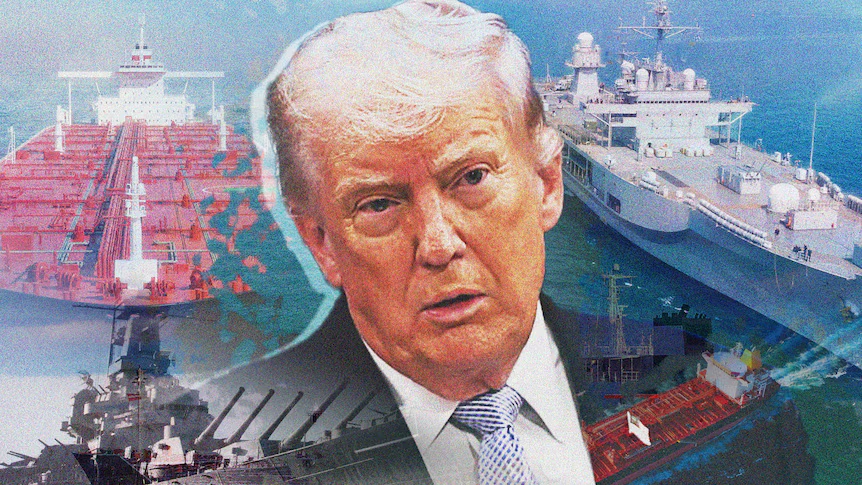
It remained unclear on Monday whether a U.S. blockade targeting parts of the Strait of Hormuz had fully come into effect. However, President Donald Trump issued a strong warning, cautioning Iranian vessels against approaching the restricted area.
In a social media statement, Trump declared that any Iranian ships nearing the blockade would be “immediately eliminated,” signaling a sharp escalation in tensions.
U.S. Military Outlines Scope of Blockade
Earlier, the U.S. military announced that the blockade would begin at 10:00 ET, focusing on vessels entering or leaving Iranian ports and coastal zones. Reports also suggested that the administration is considering limited military strikes following unsuccessful diplomatic efforts over the weekend.
According to maritime authorities, the restrictions may extend across Iran’s entire coastline, including key ports and energy infrastructure.
Enforcement Measures and Shipping Restrictions
The blockade is expected to be enforced in the Gulf of Oman and the Arabian Sea, covering vessels linked to Iranian activity. Ships entering the restricted area without authorization could face interception, diversion, or seizure.
However, neutral vessels transiting the Strait of Hormuz for non-Iranian destinations are expected to continue operations without disruption.
Iran Responds with Strong Warnings
Iran has strongly condemned the blockade, labeling it an act of “piracy.” Officials warned that no location in the Persian Gulf or the Sea of Oman would remain secure if the measures are enforced.
Tehran also stated it would prevent U.S. vessels from passing through the Strait and defend its territorial waters.
Rising Tensions and Threats of Retaliation
Iranian officials dismissed the blockade as political posturing but warned of retaliation if it is treated as an act of war. Lawmakers emphasized that Iran retains additional strategic options and would respond decisively if provoked.
Senior leadership reiterated a firm stance, signaling that the country would not yield under pressure.
Europe Distances Itself from U.S. Actions
European nations, including the United Kingdom and Spain, have indicated they will not participate in the blockade. European Commission President Ursula von der Leyen called for maintaining freedom of navigation in the region.
Meanwhile, Trump criticized NATO allies for their limited involvement, raising questions about future cooperation within the alliance.
Israel Supports U.S. Strategy
Israel has backed the blockade, with Prime Minister Benjamin Netanyahu describing it as a strong and necessary response. Ongoing regional tensions remain high, particularly after recent strikes on Iran-linked targets in Lebanon.
Markets React to Escalation
Financial markets responded cautiously to the developments. Oil prices climbed back above $100 per barrel, while global equities showed signs of volatility.
Analysts noted that while the situation poses risks, investors have so far reacted in a measured manner.
Diplomatic Efforts Collapse
The escalation follows 21 hours of negotiations between the U.S. and Iran in Pakistan, which ended without agreement. Key disagreements included Iran’s nuclear program, regional influence, and control over strategic shipping routes.
Possibility of Military Action Remains
Reports indicate that the U.S. is considering limited military strikes against Iran, though a full-scale campaign appears less likely at this stage. The administration is balancing pressure tactics with a desire to avoid a prolonged conflict.
Negotiations May Resume
Despite the breakdown, diplomatic channels remain open. Several countries are working to bring both sides back to the negotiating table, with the possibility of renewed talks in the coming days.
Key Disputes Between U.S. and Iran
The U.S. has reportedly demanded a complete halt to Iran’s uranium enrichment, dismantling of nuclear facilities, reopening of the Strait of Hormuz, and an end to support for regional proxy groups.
Iran has proposed more limited concessions, but both sides have so far failed to reach common ground.