U.S. and Iran Exchange Air Strikes as Peace Deal Hopes Fade
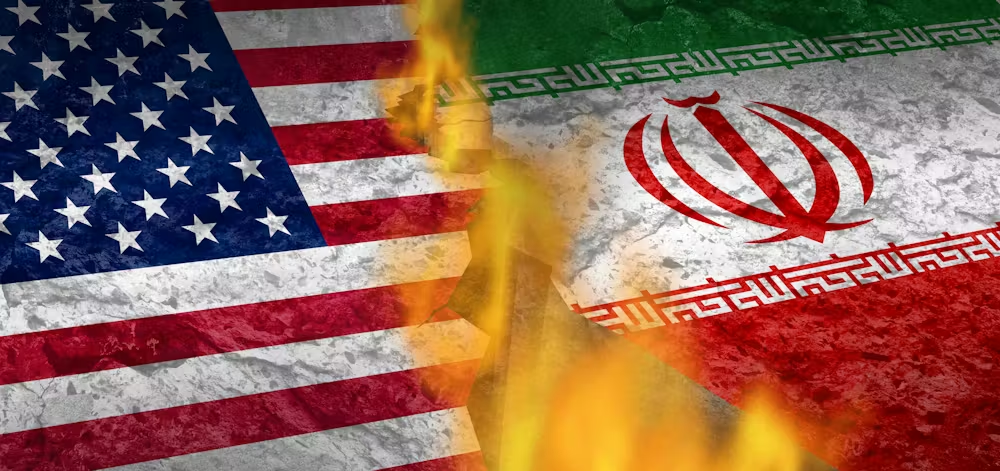
The United States and Iran reportedly exchanged air strikes on Thursday, raising fresh concerns that efforts to secure a peace agreement and reopen the Strait of Hormuz remain far from complete.
The renewed escalation pushed oil prices higher after U.S. President Donald Trump downplayed expectations that a breakthrough deal with Iran was close.
U.S. Targets Bandar Abbas, Iran Responds
According to media reports, the U.S. military launched strikes near the Iranian port city of Bandar Abbas earlier in the day.
In response, Iran’s Islamic Revolutionary Guard Corps (IRGC) claimed responsibility for attacks targeting a U.S. military base in Kuwait.
Kuwaiti authorities separately confirmed they were defending against incoming missile and drone attacks, although they did not officially identify the source.
Reuters also reported that U.S. forces shot down four Iranian attack drones and struck a ground control station in Bandar Abbas during the confrontation.
Ceasefire Uncertainty Continues to Grow
The latest exchange of strikes signaled a possible return to direct hostilities between Washington and Tehran, especially after Iran warned earlier this week that it would retaliate following previous U.S. military operations.
The United States described Thursday’s actions as measures taken in “self-defense” and maintained that a ceasefire agreement with Iran technically remained in place.
However, the fresh violence raised doubts about whether diplomatic negotiations are making meaningful progress.
Trump Rejects Strait of Hormuz Deal Reports
Thursday’s military escalation came shortly after President Donald Trump dismissed reports suggesting that Iran and Oman would jointly oversee shipping traffic through the Strait of Hormuz under a proposed peace agreement.
Trump stated that no single country should control the strategic waterway and indicated that while Iran appeared interested in reaching a deal, he was not yet satisfied with the current terms.
The Strait of Hormuz remains one of the world’s most important energy shipping routes, carrying roughly one-fifth of global oil supplies.
Proposed Framework Deal Faces Major Questions
Iranian media reported on Wednesday that an unofficial draft framework agreement would restore commercial shipping through the Strait of Hormuz to pre-war levels within a month.
The reports also claimed that the United States would lift its blockade on Iranian ports as part of the arrangement.
However, U.S. officials continued to insist that Iran must not be allowed to develop nuclear weapons. Reports surrounding the framework agreement reportedly did not address Tehran’s enriched uranium stockpile, leaving major disagreements unresolved.
Oil Prices Rise as Middle East Risks Intensify
Oil prices climbed roughly 2.6% following Thursday’s attacks, recovering part of the sharp losses recorded earlier this week.
Despite recent volatility, crude oil prices remain more than 20% above levels seen before the conflict began in late February.
Meanwhile, regional tensions remained elevated as Israeli military operations against Hezbollah forces in southern Lebanon also continued.