Trump Threatens Iranian Infrastructure Over Hormuz Ship Attacks
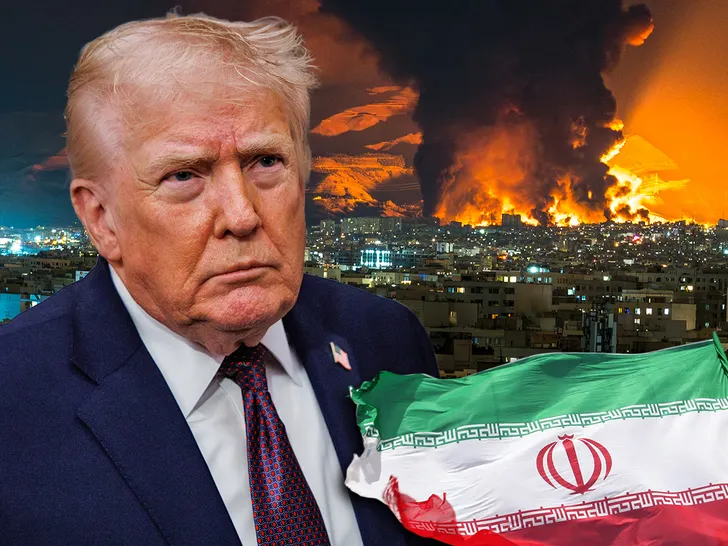
U.S. President Donald Trump warned on Wednesday that the United States would strike Iranian infrastructure if Tehran continues attacking vessels in the Strait of Hormuz.
Trump said each Iranian attack on a ship could trigger a U.S. strike against one bridge or power plant in Iran. He added that infrastructure near Tehran could also become a target.
The warning covers attacks involving missiles, rockets, drones or other weapons. It represents another escalation in the conflict between Washington and Tehran.
Rubio Questions Iran’s Commitment to Peace Talks
Earlier on Wednesday, U.S. Secretary of State Marco Rubio accused Iran of failing to take peace negotiations seriously.
Speaking during a meeting of Southeast Asian foreign ministers in the Philippines, Rubio said Washington remained open to a diplomatic solution. However, he questioned whether Tehran shared the same commitment.
Rubio said the United States would pursue negotiations if Iran approached them seriously. Otherwise, Washington would take the necessary steps to defend its interests and allies.
Strait of Hormuz Remains Central to the Conflict
Rubio also argued that Iran must not be allowed to control oil shipments through the Strait of Hormuz.
The narrow waterway is one of the world’s most important energy routes. Therefore, any disruption can affect international oil supplies, shipping costs and global inflation.
Rubio warned that allowing one country to dominate such a strategic route could create a dangerous precedent for other global maritime chokepoints. He specifically referred to territorial disputes in the South China Sea, where several Southeast Asian countries have competing claims with China.
Mediators Push for a New Ceasefire
Diplomatic efforts are continuing despite the latest threats and military attacks.
Iranian Interior Minister Eskandar Momeni reportedly met Pakistani mediators during the week. According to a senior Iranian official cited by Reuters, mediators presented Tehran with a proposal for a 10-day ceasefire.
The proposal aims to revive an earlier framework agreement signed by the United States and Iran in June.
However, the latest diplomatic efforts have not yet produced a breakthrough. Trump expressed doubts about renewed negotiations on Tuesday and said Washington had little interest in meeting Iranian representatives under the current conditions.
U.S. Strikes Against Iran Continue
Military operations have continued while negotiations remain stalled.
The U.S. military completed an 11th consecutive night of strikes against targets in Iran early on Wednesday.
Trump also threatened further action against a suspected underground Iranian nuclear facility known as Pickaxe Mountain. The site is believed to be located deep inside a mountain and may contain uranium-enrichment equipment.
Iran responded by warning that an attack against its nuclear facilities could lead to a major expansion of the conflict.
Meanwhile, Tehran has reportedly targeted U.S. military facilities in Bahrain, Kuwait and Jordan. Iranian forces have also been accused of attacking commercial vessels in and around the Strait of Hormuz.
Houthi Threats Put Red Sea Shipping at Risk
The conflict may also be expanding toward the Red Sea.
Iran-aligned Houthi forces in Yemen warned shipping companies that vessels transporting Saudi oil could face attacks. Such action could disrupt crude oil shipments passing through the Bab el-Mandeb Strait.
The Bab el-Mandeb Strait connects the Red Sea with the Gulf of Aden. As a result, it represents another important route for international trade and energy supplies.
Several oil tankers carrying Saudi crude reportedly changed course to avoid waters near Yemen. Reduced vessel traffic through both Hormuz and Bab el-Mandeb highlights the growing risks facing commercial shipping.
Oil Prices Rise on Supply Disruption Fears
Oil prices climbed toward six-week highs as traders assessed the risk of further supply disruptions.
Attacks on tankers or the closure of strategic waterways could reduce global crude oil flows. In addition, shipping companies may face higher insurance, security and transportation costs.
Higher oil prices could eventually increase fuel and production expenses worldwide. Consequently, investors are concerned that the conflict may trigger another inflationary wave.
Persistent energy inflation could also make it harder for central banks to reduce interest rates.
Cost of the Iran War Reaches $37.5 Billion
U.S. Defense Secretary Pete Hegseth told Congress that the conflict with Iran had cost the United States approximately $37.5 billion.
The estimate reportedly covers military payroll, operations, maintenance and expected expenses through the end of the fiscal year in September.
The Trump administration is seeking a supplemental funding package worth nearly $90 billion. A large share of that funding would support ongoing military operations connected to Iran.
However, other estimates suggest the final cost could be considerably higher. Additional spending may be required to repair military bases and replace equipment damaged during Iranian attacks.
Markets Monitor the Risk of Further Escalation
Investors will continue to monitor military developments, ceasefire negotiations and shipping activity across the Strait of Hormuz and the Red Sea.
Any additional attacks on energy infrastructure or commercial vessels could push oil prices higher. They could also increase inflation concerns and affect global interest-rate expectations.
For now, the combination of escalating military threats, limited diplomatic progress and disrupted shipping continues to create uncertainty across energy and financial markets.