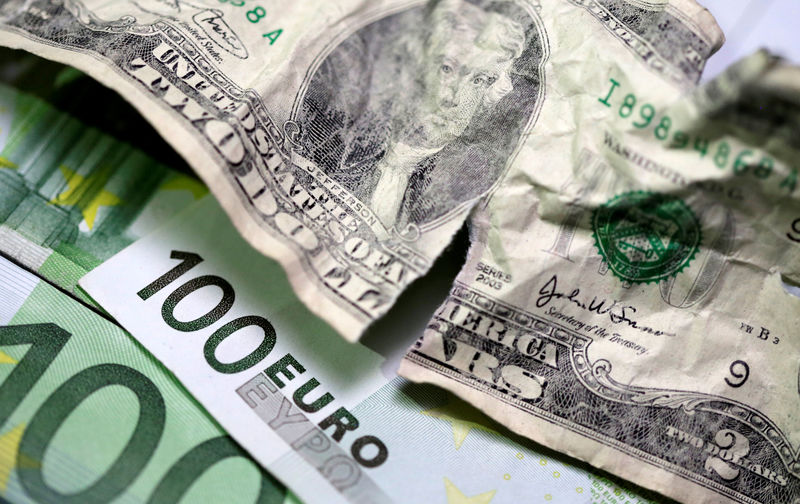
The U.S. dollar edged lower on Wednesday as investors adopted a cautious stance ahead of quarterly earnings from AI heavyweight Nvidia. The results are widely expected to influence broader market sentiment, particularly within the technology sector.
At 03:50 ET (08:50 GMT), the Dollar Index — which measures the greenback against a basket of six major currencies — slipped 0.1% to 97.707. Despite the modest decline, the index remains up nearly 1% over the past month, reflecting underlying resilience in the U.S. currency.
Nvidia earnings in focus as tariffs take effect
The dollar has traded within a relatively narrow range since U.S. President Donald Trump’s new 10% global tariff came into force on Tuesday. Markets are also weighing the possibility of a further increase to 15%.
During his overnight State of the Union address, President Trump confirmed he intends to move forward with his tariff agenda despite the recent Supreme Court ruling. However, his ability to introduce additional duties is expected to be limited, as Congressional approval would be required for further measures.
Investor attention is now turning to Nvidia’s earnings, scheduled for release after the Wall Street close. With concerns growing about high valuations in the technology sector and heavy spending on artificial intelligence infrastructure, the report is seen as a key test for risk appetite.
Analysts at ING noted that Nvidia will likely need to exceed consensus expectations and deliver strong forward guidance to reassure investors. According to the bank, downside risks to global sentiment from disappointing results may outweigh the potential upside from a positive surprise.
ING also suggested that if the U.S. dollar were to weaken alongside high-beta currencies, it could signal broader U.S.-specific concerns linked to AI-driven revaluations. However, the bank expects the dollar to maintain its reduced — but still negative — correlation with U.S. equities.
Euro supported by stronger German growth
In Europe, EUR/USD rose 0.2% to 1.1792, supported by fresh data showing that Germany’s economy expanded by 0.3% in the fourth quarter of 2025 compared with the previous quarter. The improvement marks a rebound from flat growth in the preceding three months and offers some support to the eurozone’s largest economy.
Despite the positive data, gains in the single currency remain limited, with markets awaiting key inflation figures due on Friday, which could shape expectations for European Central Bank policy.
ING added that concerns about concentration risks in U.S. markets continue to support buying interest on EUR/USD dips. The bank believes the 1.1750–1.1760 support area is likely to hold in the near term.
Pound rebounds; yen remains under pressure
GBP/USD advanced 0.2% to 1.3521, recovering slightly from a one-month low. Comments from Bank of England Governor Andrew Bailey provided some support after he indicated that while a March rate cut remains possible, services inflation has not declined as much as policymakers had hoped. Earlier this month, Bailey voted with a 5-4 majority on the Monetary Policy Committee to keep interest rates unchanged.
In Asia, USD/JPY edged 0.1% higher to 156.00, hovering near a two-week high. Reports suggested that Prime Minister Sanae Takaichi raised concerns about further rate hikes during a meeting with Bank of Japan Governor Kazuo Ueda, fuelling speculation that political resistance could limit the central bank’s tightening path.
Elsewhere, USD/CNY fell 0.2% to 6.8672. Meanwhile, AUD/USD jumped 0.7% to 0.7106 after data showed that Australia’s headline inflation rose 3.8% year-on-year in January, unchanged from December but above market expectations. The Reserve Bank of Australia’s preferred trimmed-mean core inflation measure climbed to 3.4%, its highest level in more than a year, prompting markets to increase bets on a potential May interest rate hike.