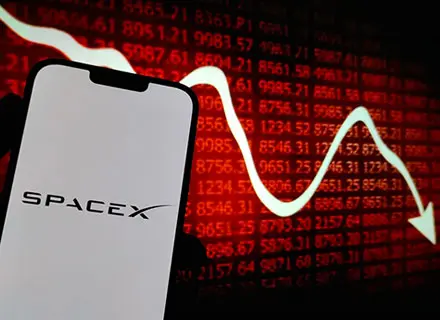
SpaceX shares dropped more than 11% in premarket trading on Wednesday, despite the company reporting stronger-than-expected financial results.
In a research note, Piper Sandler said the decline did not appear to reflect weakness in SpaceX’s quarterly performance. Instead, the firm linked the sell-off to expectations of a sharp increase in tradable shares, significantly higher capital spending, and uncertainty surrounding artificial intelligence contracts.
SpaceX Revenue Beats Market Expectations
Piper Sandler analyst Alexander Potter said SpaceX comfortably exceeded consensus estimates during its first earnings report.
Second-quarter revenue increased by approximately 92% from the same period a year earlier, reaching $7.8 billion. This result was around $1 billion higher than analysts had expected.
Adjusted EBITDA climbed 191% year over year to $3.5 billion, demonstrating strong growth in the company’s underlying profitability.
Profit Margins Improve Sharply
SpaceX also reported a substantial improvement in its margins.
Gross margin rose to 55%, while the adjusted EBITDA margin reached 45%. These figures indicate that SpaceX is generating more profit from each dollar of revenue as its operations expand.
The company’s chief financial officer also provided an ambitious outlook for recurring revenue.
According to management, SpaceX expects to achieve an annual recurring revenue run rate of at least $100 billion by December. That forecast implies considerable upside compared with current analyst estimates.
Why SpaceX Stock Is Falling
Despite the impressive results, SpaceX stock moved sharply lower before the market opened.
Piper Sandler identified three main factors behind the decline.
The first is an expected increase of more than 140% in the number of shares available for public trading. A larger supply of tradable shares could create selling pressure and limit near-term valuation growth.
The second concern is SpaceX’s capital expenditure forecast. Spending during fiscal 2027 could reach approximately $65 billion, around $17 billion more than analysts had previously expected.
Finally, investors remain uncertain about the durability of the company’s AI cloud agreements. Although these contracts may generate substantial revenue, they can reportedly be cancelled, making their long-term value difficult to estimate.
Tradable Share Supply Could Pressure Valuation
Piper Sandler said fewer than 5% of SpaceX’s total outstanding shares are currently available for unrestricted trading.
However, the proportion of freely tradable shares is expected to increase to approximately 50% by June 2027.
This major expansion in the public float could create what analysts describe as a lockup-expiration overhang. Investors may hesitate to pay a higher valuation when they expect a large number of additional shares to become available.
Piper Sandler warned that SpaceX’s valuation multiple may not closely reflect its business fundamentals while the tradable share count continues to rise.
Capital Spending Forecast Surprises Investors
The company’s spending outlook also appears to have contributed to the negative market reaction.
SpaceX may invest around $65 billion in fiscal 2027 as it expands infrastructure, develops new technologies, and supports future growth projects.
Although heavy investment could strengthen the company’s long-term position, it may reduce free cash flow and increase execution risks over the short term.
The projected spending level is significantly higher than previous estimates, which may have surprised investors despite SpaceX’s strong revenue growth.
AI Contracts Add Another Layer of Uncertainty
SpaceX’s artificial intelligence cloud contracts represent another potential source of growth.
However, Piper Sandler noted that these agreements may be cancelled, making it difficult to assess how reliable the associated revenue will be over the long term.
Investors may therefore apply a discount to projected AI revenue until there is greater evidence that the contracts are stable and recurring.
Piper Sandler Cuts SpaceX Valuation Multiple
Piper Sandler increased its financial estimates following the company’s strong results. However, it also reduced the valuation multiple used to calculate its price target.
The firm lowered its target multiple from 20 times to 12 times estimated 2031 enterprise value-to-EBITDA.
Analysts selected the lower multiple partly because it matches Tesla’s historical valuation low, which Piper Sandler now considers a more appropriate comparison following SpaceX’s market reaction.
Strong Fundamentals Meet Valuation Concerns
SpaceX’s latest results showed rapid revenue growth, expanding margins, and an ambitious recurring revenue target.
However, investors appear more focused on the expected increase in tradable shares, higher capital expenditure, and uncertainty surrounding AI-related contracts.
The share decline therefore reflects valuation and supply concerns rather than clear weakness in SpaceX’s underlying business performance.