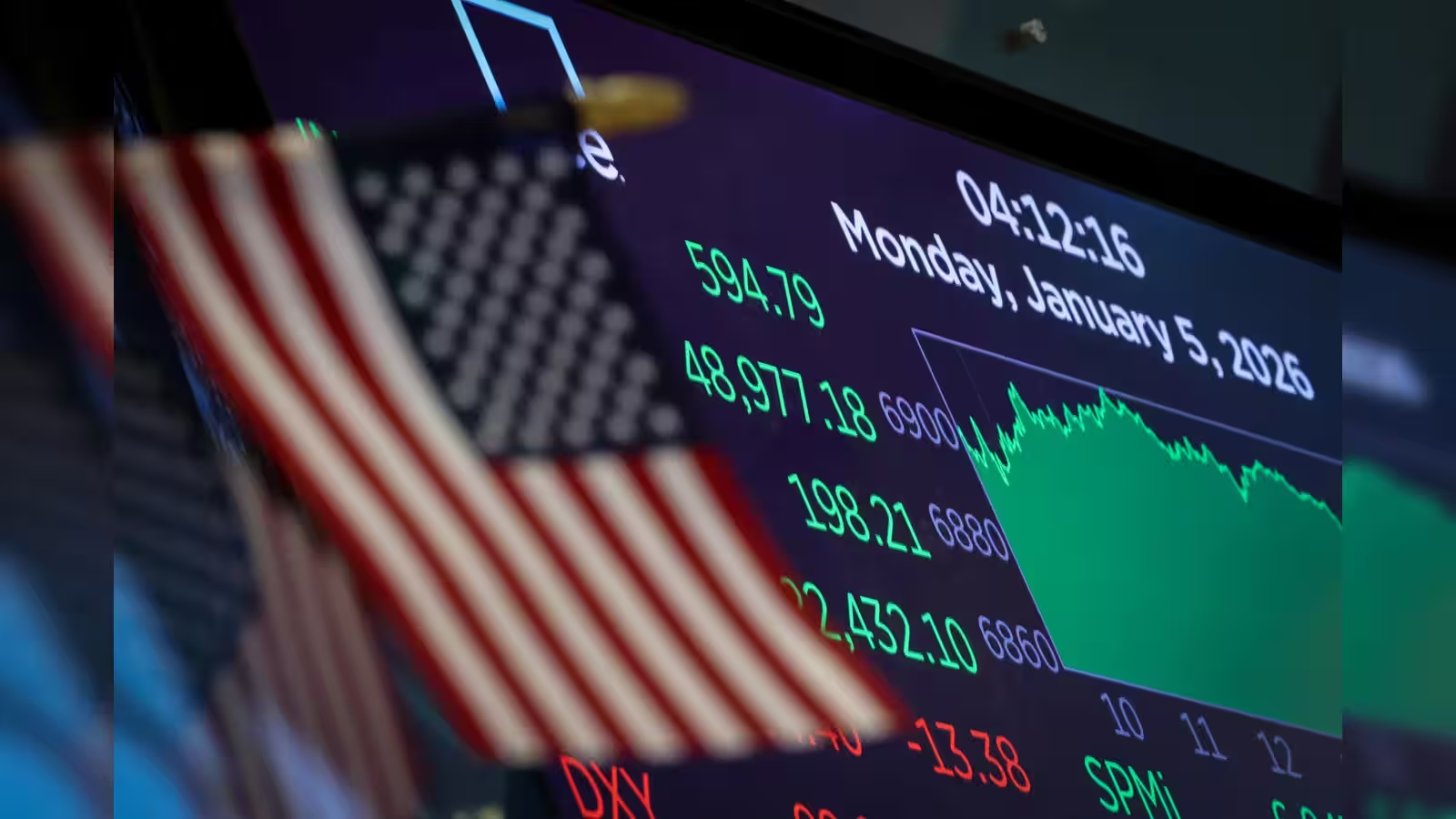
US stock futures moved higher on Sunday evening as investors cautiously returned to technology and artificial intelligence stocks following last week’s sharp market selloff. Nasdaq futures led the recovery, while upcoming corporate earnings reports offered a potential catalyst for renewed investor confidence.
S&P 500 futures advanced 0.8% to 7,765.00 points by 02:03 ET (06:03 GMT). Meanwhile, Nasdaq 100 futures surged 1.4% to 29,787.25 points, outperforming other major US equity benchmarks.
Dow Jones futures also registered gains, climbing 0.5% to 52,482.0 points.
The rebound followed a difficult trading week for technology stocks, as investors questioned elevated AI valuations and the substantial financing requirements associated with artificial intelligence infrastructure.
US Stock Futures Rebound After Technology Sector Selloff
Wall Street experienced significant volatility last week as concerns surrounding AI-related investments weighed heavily on growth stocks.
The Nasdaq Composite declined 4.5%, ending a four-week winning streak. Meanwhile, the S&P 500 dropped nearly 2%, recording its sharpest weekly decline since late June.
However, the Dow Jones Industrial Average managed to outperform the broader market, gaining 0.7% over the same period.
The divergence highlighted growing investor caution toward technology companies, particularly those with significant exposure to artificial intelligence infrastructure spending.
Although AI remains an important driver of long-term market expectations, investors have become increasingly concerned about whether companies can generate sufficient returns to justify their substantial capital expenditures.
Semiconductor Stocks Face Growing AI Investment Concerns
Semiconductor companies were among the hardest-hit segments of the US stock market during the previous week’s downturn.
The Philadelphia Semiconductor Index extended its losing streak on Friday to its longest since the 2008 global financial crisis.
The prolonged weakness reflected mounting concerns about the sustainability of artificial intelligence spending and the financial risks associated with rapidly expanding computing infrastructure.
Investors have started reassessing whether demand for AI-related hardware and data centers can continue growing fast enough to support elevated technology stock valuations.
CoreWeave Shares Plunge as Financing Risks Mount
Nvidia-backed data center operator CoreWeave (NASDAQ: CRWV) attracted particular attention amid growing concerns about heavily indebted AI infrastructure companies.
CoreWeave shares tumbled 12% on Friday, extending their five-day decline to approximately 25%.
The sharp selloff reflected investor worries that companies investing aggressively in AI computing infrastructure could struggle to generate profits quickly enough to cover rising financing expenses.
As borrowing costs remain an important consideration, investors are paying closer attention to corporate debt levels, capital expenditure plans and the potential profitability of large-scale artificial intelligence projects.
Consequently, companies heavily dependent on external financing could remain vulnerable to further market volatility.
Meta and Tesla Earnings Could Influence Wall Street Sentiment
Attention is now shifting toward another important week for US corporate earnings, with several major technology companies scheduled to release their financial results.
Among the closely watched names are Meta Platforms (NASDAQ: META) and Tesla (NASDAQ: TSLA).
Their earnings announcements could provide investors with additional insight into corporate profitability, technology investment trends and the broader outlook for growth stocks.
Market participants will also be looking for indications of whether artificial intelligence spending is generating sufficient financial returns.
Stronger-than-expected earnings or encouraging forward guidance could help stabilize sentiment following the recent technology sector selloff.
However, disappointing financial results or concerns about future spending could renew pressure on AI-linked equities.
Oil Prices Decline Following Changes to US Sanctions on Russia
Beyond equity markets, investors continued monitoring developments in global energy markets and geopolitical tensions.
Crude oil prices declined during early Asian trading on Monday following US President Donald Trump’s decision to waive sanctions and tariffs targeting Russia.
The move raised expectations that additional Russian energy supplies could become available to international markets.
December Brent crude futures dropped nearly 2%, falling below $108 per barrel.
Meanwhile, US West Texas Intermediate (WTI) crude futures declined 1.4% to $99.99 per barrel.
The retreat in oil prices reflected changing expectations about global fuel supplies and the potential impact of US policy decisions on energy markets.
Strait of Hormuz Developments Remain in Focus
Geopolitical developments in the Middle East also remained an important consideration for global investors.
Iranian Foreign Minister Abbas Araqchi told domestic media on Sunday that Tehran’s proposal to the United States concerning the reopening of the Strait of Hormuz remained available.
According to Araqchi, the proposal involves reopening the strategically important waterway within seven days.
The Strait of Hormuz remains a critical route for international oil shipments, making developments surrounding its accessibility particularly significant for energy prices and financial markets.
Any progress toward restoring shipping activity could influence global oil supply expectations and broader investor sentiment.
For now, Wall Street’s near-term direction will likely depend on a combination of technology sector earnings, renewed investor appetite for AI stocks and geopolitical developments affecting energy markets.
Although US stock futures have started recovering from last week’s losses, uncertainty surrounding AI investment profitability and global economic conditions could continue contributing to market volatility.