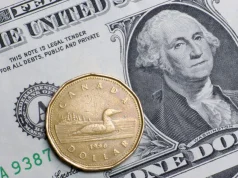
The US dollar weakened on Thursday, retreating from an 18-month high as declining Treasury yields overshadowed stronger-than-expected American inflation figures. The reversal helped the euro stage its strongest daily recovery in nearly two months, while investors reassessed expectations for the Federal Reserve’s next interest rate decision.
The US Dollar Index (DXY), which measures the greenback against six major currencies, slipped toward 102.00, reversing much of the previous session’s advance.
Despite another surprisingly strong inflation report, cautious comments from Federal Reserve officials and falling bond yields reduced demand for the American currency.
US Producer Price Inflation Surges Above Expectations
The latest US Producer Price Index (PPI) report revealed a substantial increase in wholesale inflation during September.
Producer prices jumped 1.3% from the previous month, more than double economists’ expectations of a 0.6% increase. The reading also marked a sharp acceleration from August’s 0.5% rise.
On an annual basis, US producer inflation climbed to 6.3%, compared with 5.6% in August and forecasts of 5.3%.
The latest figures highlighted persistent inflationary pressures throughout the American economy, raising concerns about the outlook for consumer prices and monetary policy.
Furthermore, the report followed another stronger-than-expected inflation release on Wednesday.
US headline consumer inflation accelerated to 3.7% year over year in September, while core CPI increased approximately 2.6%.
Together, these inflation reports reinforced expectations that the Federal Reserve could maintain restrictive monetary conditions for longer.
However, the dollar failed to sustain its recent rally as investors increasingly focused on falling Treasury yields and broader financial market uncertainty.
Federal Reserve Officials Ease October Rate Hike Expectations
The initial market reaction to Wednesday’s Consumer Price Index report was relatively hawkish.
Following the inflation surprise, traders briefly assigned approximately a 50% probability to a 25-basis-point interest rate increase at the Federal Reserve’s October 27–28 policy meeting.
However, subsequent comments from senior central bank officials helped moderate those expectations.
Federal Reserve Vice Chair for Supervision Michelle Bowman and San Francisco Fed President Mary Daly suggested that policymakers have sufficient time to evaluate incoming economic data before deciding whether additional tightening is necessary.
These remarks encouraged investors to reconsider the likelihood of an immediate interest rate increase.
Consequently, market-implied expectations for an October rate hike eased toward 30%, reducing support for the dollar.
At the same time, US Treasury yields declined as investors sought safer investments amid volatility in technology stocks and corporate credit markets.
The combination of lower yields and less aggressive monetary policy expectations weighed on the greenback despite the unexpectedly strong inflation readings.
Investors are now turning their attention to Federal Reserve Chair Kevin Warsh’s appearance at the IMF-World Bank Annual Meetings in Bangkok.
His comments could provide additional insight into the central bank’s policy outlook ahead of its late-October meeting.
EUR/USD Rallies as Dollar Retreats From 18-Month Highs
The euro emerged as one of the main beneficiaries of the dollar’s weakness.
The EUR/USD currency pair advanced approximately 0.5%, climbing toward $1.1210 after recently touching its lowest level in 18 months.
The recovery positioned the European currency for its strongest single-session performance in almost two months.
Much of the move appeared to reflect short covering, as traders reduced bearish euro positions following the decline in US Treasury yields.
Nevertheless, the broader outlook for the euro remains complicated by economic and fiscal challenges across the eurozone.
France’s widening budget deficit continues to attract attention, with the country’s fiscal shortfall estimated at approximately 5.4% of gross domestic product.
European Central Bank President Christine Lagarde has emphasized that French authorities must address their fiscal challenges primarily through domestic policy measures.
Her comments reinforced the ECB’s reluctance to directly intervene in individual countries’ budget difficulties.
Despite these unresolved concerns, the dollar’s retreat provided enough momentum for the euro to stage a notable recovery.
ECB Inflation Concerns Remain Focused on Energy Prices
European monetary policy also remains an important factor influencing currency markets.
Lagarde recently highlighted the significant role of higher energy prices in driving inflation across the eurozone.
The recent surge in energy costs has placed renewed pressure on businesses and households, creating additional challenges for policymakers.
However, ECB officials continue to assess whether these increases will translate into more persistent underlying inflation.
The distinction is important because temporary energy price shocks may require a different monetary policy response from sustained increases in core inflation.
For now, investors remain attentive to the balance between European inflation risks, government borrowing pressures and the ECB’s future interest rate decisions.
These factors could influence whether the euro’s latest recovery develops into a more sustained upward movement.
Japanese Yen Strengthens as Intervention Warnings Return
The Japanese yen also gained ground against the US dollar during Thursday’s trading session.
The USD/JPY currency pair declined approximately 0.3%, supported by falling American bond yields and renewed warnings from Japanese authorities about excessive exchange rate volatility.
Japan’s Finance Minister Satsuki Katayama reiterated the government’s concerns about disorderly currency movements.
She also emphasized the importance of maintaining stability in foreign exchange markets, reflecting Tokyo’s willingness to respond to excessive speculation.
Japanese officials have repeatedly warned that sharp and speculative currency movements could justify intervention.
These statements followed earlier efforts by Japanese authorities to support the yen during periods of significant depreciation.
Lower US Treasury yields also reduced some of the dollar’s interest rate advantage over the Japanese currency.
As a result, the yen benefited from both changing yield expectations and the possibility of additional action by Tokyo.
US Dollar Outlook Hinges on Fed Policy and Treasury Yields
The latest currency market developments highlight an increasingly complicated environment for the US dollar.
On one hand, persistent inflation continues to support expectations that American interest rates could remain elevated.
On the other, declining Treasury yields, financial market uncertainty and cautious Federal Reserve communication are limiting the greenback’s upside momentum.
The dollar’s retreat from its 18-month highs also suggests that investors may be reassessing positions following its substantial rally.
For EUR/USD, the recovery toward $1.1210 represents an important short-term improvement in sentiment. However, continued gains may depend on whether US yields remain under pressure.
Meanwhile, USD/JPY could remain sensitive to intervention warnings and changes in expectations for American monetary policy.
Looking ahead, incoming economic indicators and further Federal Reserve guidance will likely determine whether the dollar resumes its broader advance or experiences a deeper correction.
For now, the unexpected weakness in the greenback despite stronger inflation data suggests that interest rate expectations and safe-haven capital flows are playing a more influential role in currency market direction.