Trump Reportedly Open to Ending Iran Ceasefire if US Troops Are Killed
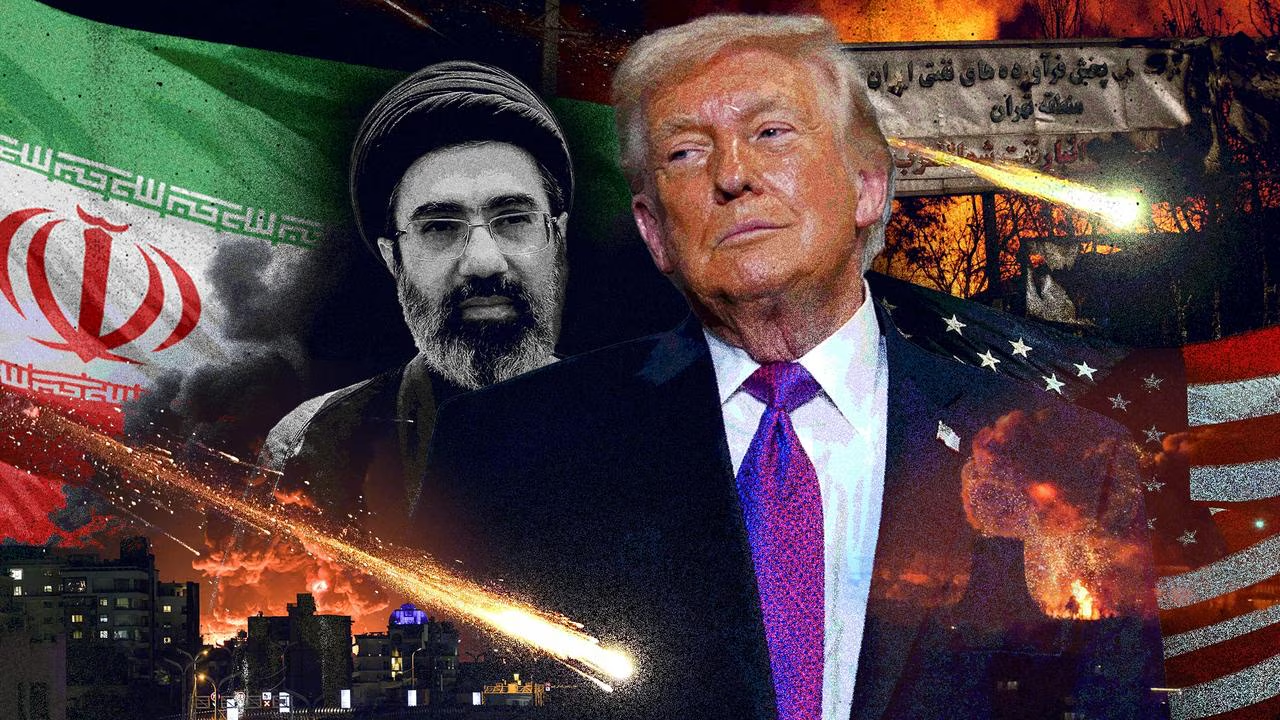
U.S. President Donald Trump reportedly told senior aides that he would consider terminating the ceasefire agreement with Iran if American military personnel were killed, according to a report published by The Wall Street Journal.
The comments highlight the fragile nature of the current truce and underscore the ongoing risks of renewed escalation between Washington and Tehran.
Ceasefire Faces Continued Pressure
The reported remarks come after the United States and Iran exchanged a series of airstrikes over the past week, testing an already delicate ceasefire arrangement.
While U.S. officials described recent military actions as defensive measures, Iranian authorities accused Washington of violating the ceasefire agreement.
Despite the exchange of hostilities, U.S. officials have continued to maintain that the ceasefire remains in effect and that diplomatic channels remain open.
Human Cost of the Conflict Continues to Rise
According to U.S. military figures, at least 15 American service members have been killed and more than 540 injured since the conflict began.
Meanwhile, estimates from Iranian sources place the country’s casualties at more than 6,000 people, illustrating the significant human toll of the ongoing confrontation.
Diplomatic Efforts Face New Challenges
Earlier this week, President Trump reportedly intervened to halt Israeli plans for a military operation in Lebanon after Iranian officials warned that such action could undermine ongoing diplomatic efforts.
However, reports from Iranian media suggest that Tehran has suspended indirect negotiations with the United States, creating further uncertainty about the prospects for a lasting agreement.
Despite those reports, Trump has repeatedly stated that discussions with Iran are continuing and recently suggested that a broader peace agreement could potentially be reached within a matter of days.
Nuclear Dispute Remains a Major Obstacle
One of the most significant barriers to a comprehensive settlement remains Iran’s nuclear program.
Tehran has consistently rejected U.S. demands to surrender its stockpile of enriched uranium, while Washington continues to view Iran’s nuclear ambitions as a key security concern.
The issue remains central to negotiations and is widely regarded as one of the most difficult challenges facing both sides.
Strait of Hormuz Tensions Continue
Energy markets remain focused on developments surrounding the Strait of Hormuz, one of the world’s most important oil shipping routes.
Iran has largely maintained restrictions affecting maritime traffic through the region, while the United States continues to enforce a naval blockade against the country.
Any prolonged disruption could have significant implications for global energy supplies and international trade.
Trump Signals Patience on Peace Negotiations
President Trump has indicated that his administration is not rushing to finalize a peace agreement with Iran.
In a recent interview with the New York Post, Trump suggested that the current U.S. blockade could remain in place until Labor Day if necessary.
The statement reflects a shift from earlier expectations. At the start of the conflict, administration officials had suggested that the confrontation would likely last no longer than six weeks. Instead, the war entered its fourth month this week, with no definitive resolution yet in sight.
As geopolitical tensions remain elevated, investors and global policymakers continue to closely monitor developments that could affect energy markets, military stability, and broader economic conditions.