European Stocks Edge Higher as Israel-Lebanon Ceasefire Revives Peace Hopes
European stock markets traded modestly higher on Thursday as investors evaluated the impact of a renewed ceasefire agreement between Israel and Lebanon and its potential implications for broader peace negotiations involving the United States and Iran.
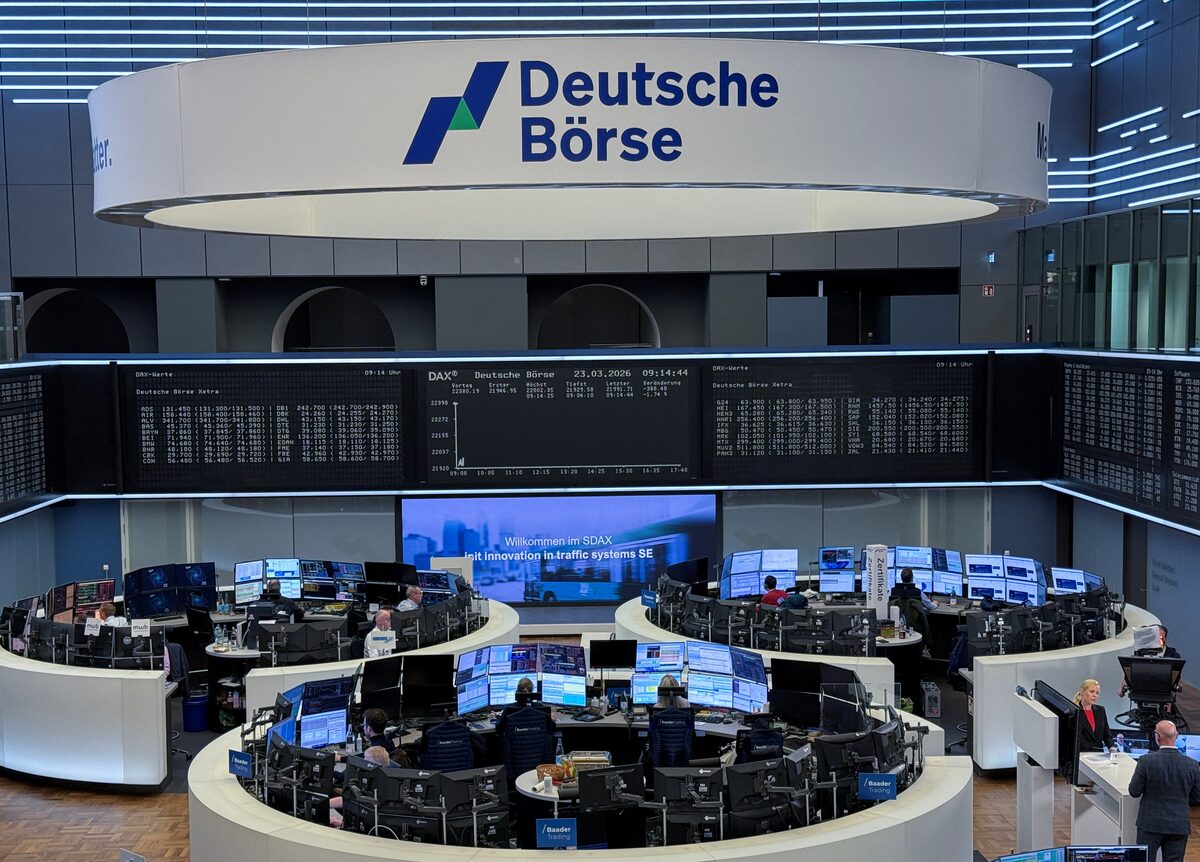
The pan-European Stoxx 600 index gained 0.1%, while Germany’s DAX advanced 0.2%. France’s CAC 40 added 0.3%, and the UK’s FTSE 100 remained largely unchanged during early trading.
Ceasefire Agreement Boosts Diplomatic Optimism
Investor sentiment improved after Israel and Lebanon agreed to renew a fragile ceasefire arrangement.
The development has strengthened hopes that diplomatic efforts between Washington and Tehran could eventually lead to a wider peace agreement. Progress in negotiations between the United States and Iran has been closely tied to stability in Lebanon, where Israeli forces backed by the U.S. have been engaged in conflict with Hezbollah militants supported by Iran.
Following a fourth round of U.S.-mediated discussions, both Israel and Lebanon stated that the ceasefire would depend on a complete halt to Hezbollah attacks and the withdrawal of Hezbollah personnel from areas south of the Litani River.
Officials described the agreement as an important step toward achieving a broader security and peace framework in the region.
Hezbollah Absent From Negotiations
Despite the ceasefire announcement, Hezbollah did not participate directly in the negotiations, raising questions about the long-term durability of the agreement.
Markets remain cautious, as the success of the ceasefire will largely depend on compliance by all parties involved in the conflict.
Oil Prices and Bond Yields Move Lower
Energy markets reacted positively to the ceasefire developments.
Brent crude oil prices declined by approximately 1%, falling to $96.84 per barrel as traders reduced some of the geopolitical risk premium that had been built into energy markets.
Government bond yields across the Eurozone also moved lower. Investors increasingly believe that a potential agreement between the United States and Iran could eventually lead to the reopening of the Strait of Hormuz, helping ease concerns over global energy supplies and inflationary pressures.
Lower energy prices could also reduce the urgency for additional monetary tightening by central banks.
Trump Signals Potential Progress With Iran
U.S. President Donald Trump suggested on Wednesday that meaningful progress in negotiations with Iran could occur as soon as this weekend.
At the same time, Iran’s foreign minister indicated that communication channels with Washington remain open, despite earlier reports suggesting that Tehran had suspended indirect contacts through intermediaries.
The comments provided further support for hopes that diplomatic efforts may eventually result in a broader de-escalation of tensions in the region.
Domestic Pressure Builds on Trump Administration
Political pressure is also increasing within the United States regarding the ongoing conflict.
The House of Representatives recently approved a resolution aimed at limiting the president’s ability to continue military operations. While the measure still requires Senate approval and would face a potential presidential veto, the vote highlights growing debate in Washington over the future direction of U.S. policy.
Artificial Intelligence Remains a Key Market Theme
Beyond geopolitical developments, artificial intelligence continues to dominate investor attention.
Taiwan Semiconductor Manufacturing Company (TSMC) reiterated its optimistic outlook for AI-driven growth, with company executives forecasting sustained demand for advanced semiconductors and computing power in the years ahead.
However, European semiconductor stocks faced some pressure after Broadcom’s latest earnings report failed to fully satisfy investor expectations.
Shares of STMicroelectronics and ASML traded lower as investors reacted to Broadcom’s guidance despite strong growth in AI-related revenue.
Remy Cointreau Shares Surge on Turnaround Strategy
One of the strongest performers in European markets was Remy Cointreau.
Shares of the French spirits producer jumped after management unveiled plans to increase operating profit by approximately €100 million by the 2028-2029 fiscal year.
The company also announced ambitions to significantly expand sales in travel retail and emerging markets as part of a broader three-year turnaround strategy designed to accelerate growth and improve profitability.