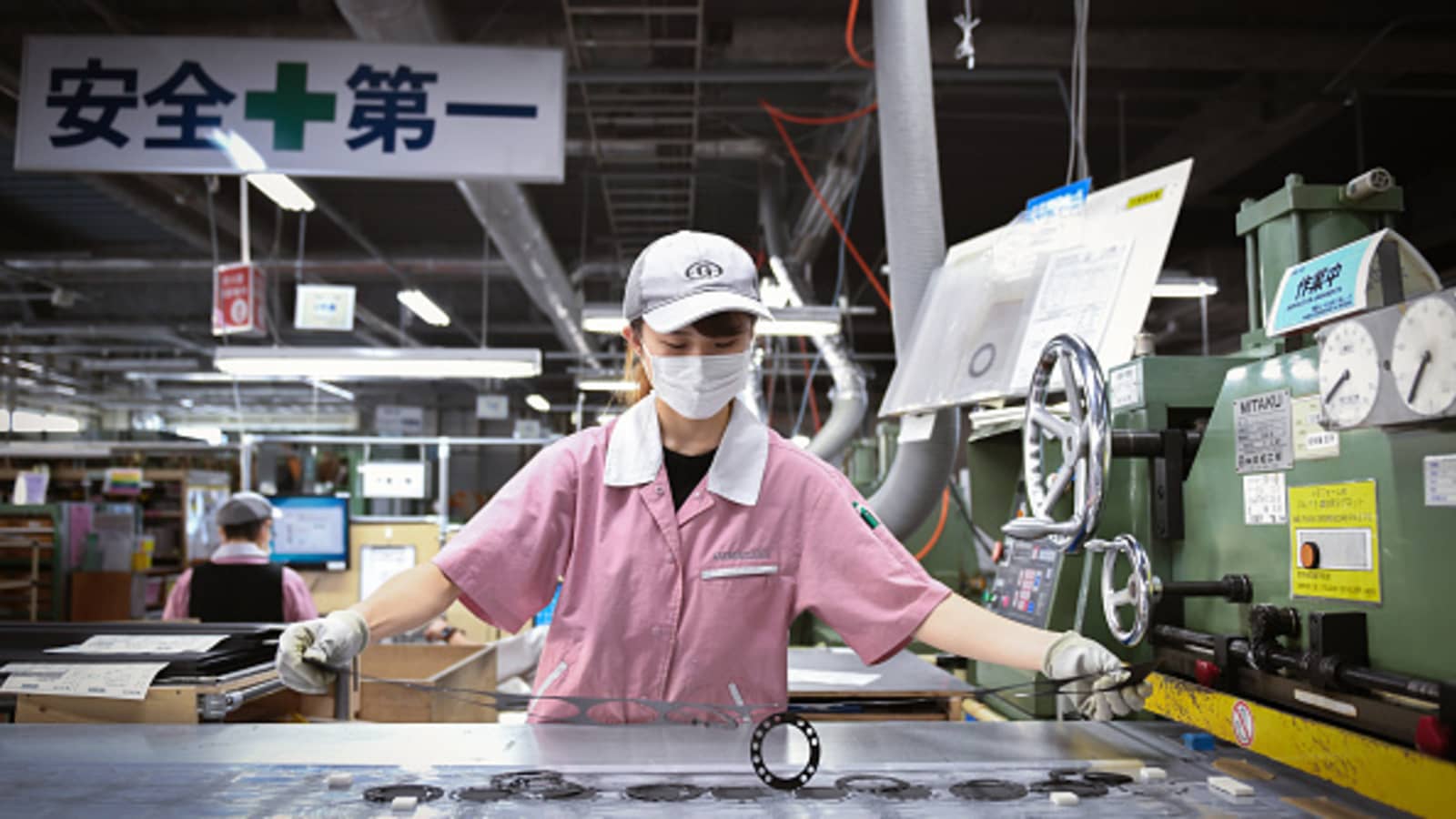
Japan’s manufacturing sector continued to expand in September, although growth lost momentum. The S&P Global Japan Manufacturing PMI fell to 54.1, down from 54.9 in August, marking the weakest rate of expansion in six months.
The survey, conducted between September 8 and September 24, showed slower growth in both manufacturing output and new orders.
Production Growth Loses Momentum
Factory production increased again in September, but at the slowest pace in three months. Some manufacturers reported that sales had been weaker than expected, limiting overall production growth.
New orders also continued to rise at a relatively strong rate. However, growth eased from August’s multi-year high and fell to its weakest level since May.
Some companies said customers were adjusting inventory levels after previously building up larger stocks.
Export Orders Remain Strong
Demand from overseas markets remained a key source of strength for Japan’s manufacturing sector.
New export orders increased sharply and remained close to August’s eight-and-a-half-year high. Manufacturers reported stronger demand from several Asian economies as well as the United States.
Manufacturing Employment Continues to Rise
Japanese manufacturers continued to increase staffing levels as companies expanded capacity to deal with higher volumes of new orders.
Employment growth remained close to August’s multi-year record. Strong hiring also helped companies manage outstanding workloads, with backlogs increasing at their slowest rate in six months.
Cost Pressures Remain Elevated
Manufacturers continued to face significant increases in operating costs, although input price inflation eased to a six-month low.
Companies reported higher expenses for wages, raw materials, energy and transportation. Some manufacturers linked rising costs to the ongoing Middle East conflict and weakness in the Japanese yen.
Businesses responded by increasing their selling prices, with output price inflation remaining among the strongest levels recorded since late 2022.
Supply Chain Delays Worsen
Delivery times for purchased materials increased during September as supplier performance deteriorated sharply.
The decline in vendor performance was among the most significant seen in four years. Manufacturers frequently reported shortages of products and components from suppliers.
Electronic components and technology linked to artificial intelligence were among the areas facing notable supply constraints.
AI and Semiconductor Demand Supports Outlook
Despite slower manufacturing growth in September, Japanese companies remained optimistic about the year ahead.
Manufacturers expect stronger activity from international customers and continued demand for semiconductors and AI-related technology to support future production.
Overall, Japan’s manufacturing sector remains in expansion territory, although September’s PMI figures suggest that the pace of growth has started to moderate.