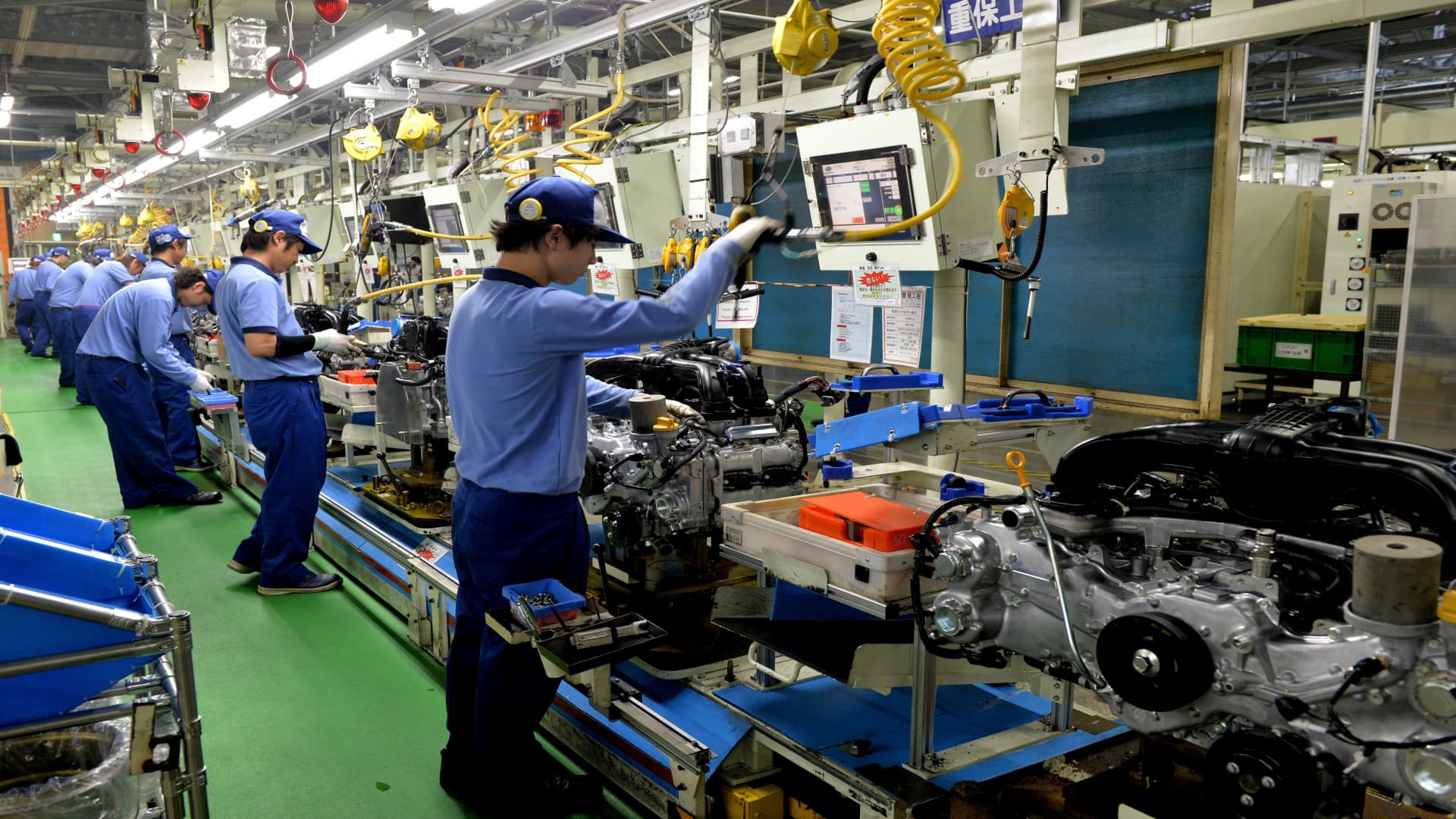
Japan’s manufacturing sector continued to expand in October 2026, although growth slowed to its weakest pace in seven months. Softer production and new orders weighed on activity, while rising input costs added pressure on manufacturers.
According to data released on Monday, the S&P Global Japan Manufacturing Purchasing Managers’ Index (PMI) declined to 53.3 in October from 54.1 in September.
Despite the slowdown, the index remained above the 50-point threshold that separates expansion from contraction, indicating continued growth in Japan’s manufacturing industry.
Japan Manufacturing PMI Signals Slower Factory Growth
Japan’s factory output increased for the tenth consecutive month in October, supported by higher order volumes and sustained demand for semiconductor products.
However, production growth eased to its slowest rate since March, suggesting that the manufacturing recovery was losing some momentum.
New orders also increased for a tenth straight month, reflecting generally favorable market conditions and continued demand from customers.
Nevertheless, the pace of new business growth weakened to a seven-month low.
Manufacturers highlighted strong demand linked to artificial intelligence technologies as an important factor supporting new orders.
The findings indicate that Japan’s industrial sector continues to benefit from technology-related investment, even as overall manufacturing growth moderates.
Artificial Intelligence and Semiconductor Demand Support Activity
Demand for semiconductors and artificial intelligence-related products remained a significant source of support for Japanese manufacturers.
Companies reported that favorable business conditions and growing interest in AI technologies helped sustain new orders throughout October.
However, the slower expansion in production and new business suggests that demand growth has become less vigorous compared with previous months.
The latest manufacturing PMI figures therefore present a mixed picture, with continued expansion accompanied by signs of weakening momentum.
Rising Input Costs Pressure Japanese Manufacturers
Inflationary pressures intensified during October as manufacturers reported faster increases in input prices.
At the same time, inflation in the prices charged to customers slowed to its lowest level in six months.
This divergence between rising production costs and slower selling price increases could put pressure on manufacturers’ profit margins.
In response to concerns about further cost increases, companies accelerated their purchasing activity and increased inventories of raw materials.
Stocks of purchases grew at their fastest pace in nearly four years as businesses sought to protect themselves against potential future price increases.
The inventory buildup suggests that manufacturers are taking precautionary measures to manage costs and maintain production stability.
Japan’s Manufacturing Confidence Reaches Eight-Month High
Despite slower factory growth and rising input costs, Japanese manufacturers became more optimistic about their business prospects.
Business confidence regarding the next 12 months improved to its highest level in eight months.
Companies cited several factors supporting their positive outlook, including upcoming product launches, the continued expansion of artificial intelligence, and opportunities to attract new customers.
The growing importance of AI-related technologies appears to be strengthening expectations for future manufacturing demand.
Meanwhile, plans to introduce new products and expand customer relationships have added to optimism about business activity over the coming year.
Japan’s Manufacturing Outlook Remains Positive Despite October Slowdown
October’s manufacturing PMI results highlight both the resilience and challenges facing Japan’s industrial economy.
Although factory output and new orders expanded for a tenth consecutive month, their slower growth rates suggest that manufacturing activity is gradually losing momentum.
Higher input costs also remain a concern, particularly as manufacturers face more limited increases in selling prices.
Nevertheless, sustained semiconductor demand, expanding AI-related business opportunities, and improving confidence provide reasons for optimism.
Looking ahead, investors and economists will closely monitor manufacturing orders, production trends, and inflationary pressures to determine whether Japan’s industrial sector can regain momentum in the coming months.