Gold prices moved higher on Friday, extending gains from the previous session as investors weighed rising geopolitical risks in the Middle East against expectations for the Federal Reserve’s next policy move.
Markets were also cautious ahead of the latest U.S. nonfarm payrolls report, which could provide fresh direction for gold and other major assets.
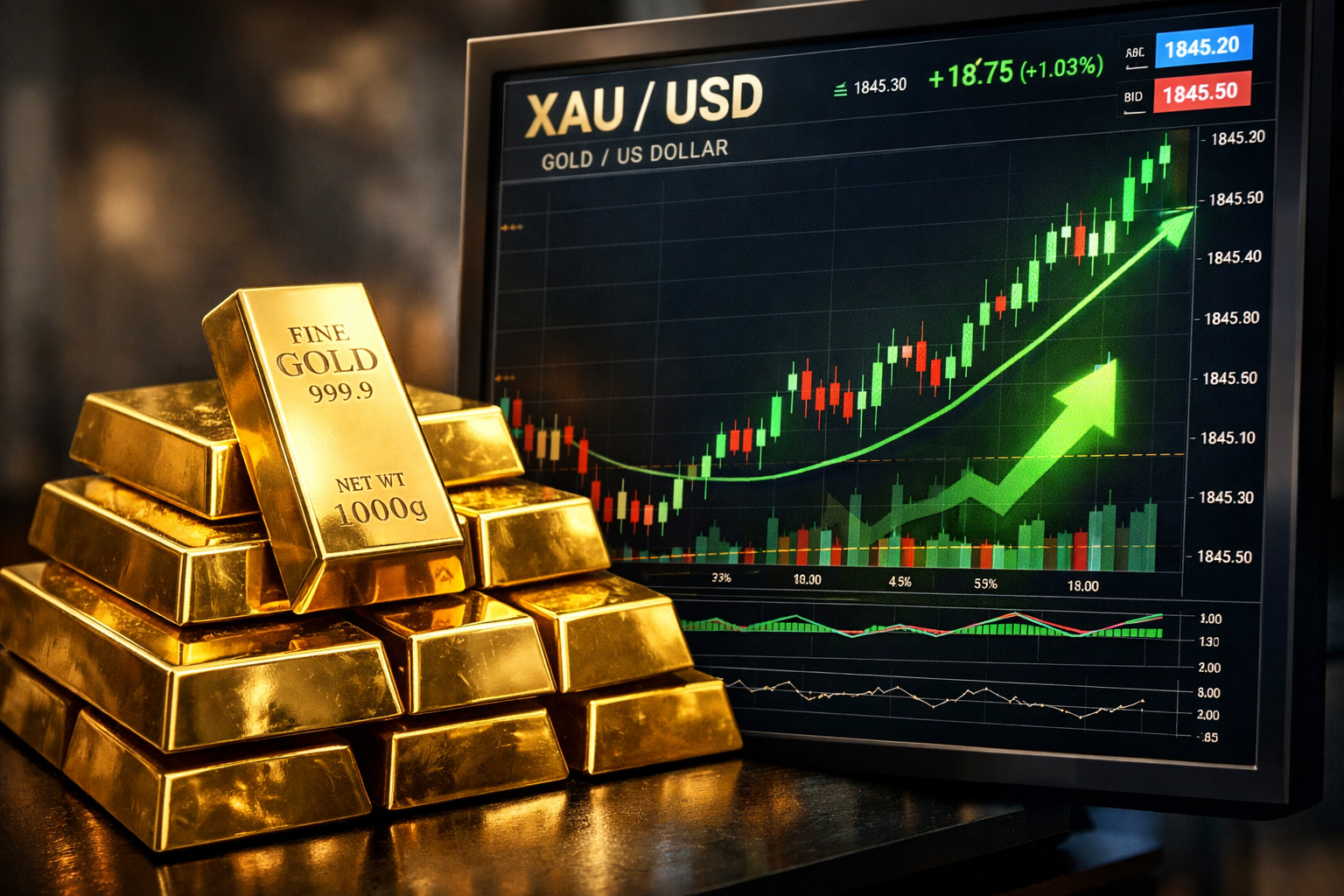
At 01:04 ET, XAU/USD was up around 0.6% at $4,264.22 an ounce, while gold futures gained a similar amount to $4,323.07.
Silver also advanced, with XAG/USD rising 1.2% to $62.26 an ounce. Platinum climbed 0.6% to around $1,740.05.
Strait of Hormuz Tensions Support Gold
Geopolitical risks remained a major driver of precious metals markets.
Iranian media reported that Tehran had attacked what it described as hostile targets in the Strait of Hormuz. Officials also indicated that Iran planned to block U.S. and Israeli vessels from using the strategic shipping route.
The reports followed earlier comments from Iranian officials suggesting that an agreement with Oman to reopen shipping lanes was nearing completion.
However, the latest developments increased uncertainty surrounding any potential deal.
Middle East Conflict Raises Broader Market Concerns
Tensions also intensified elsewhere in the region.
Yemen’s Houthi movement claimed responsibility for a major attack against Saudi-backed government forces. The development raised fears that the conflict could spread further across the Middle East.
Despite the renewed escalation, U.S. President Donald Trump said he expected the conflict to end relatively soon. He also maintained that the United States remained in control of the Strait of Hormuz.
The waterway is one of the most important energy shipping routes in the world, meaning any disruption could have significant consequences for global oil prices.
Gold Rally Faces Inflation and Fed Risks
Gold briefly moved above $4,300 an ounce on Thursday as optimism over a possible Hormuz agreement supported buying.
However, some of those gains faded as geopolitical tensions returned.
A prolonged disruption to energy supplies could push oil prices higher and increase inflationary pressures. That scenario could encourage the Federal Reserve to maintain tighter monetary policy for longer.
Higher interest rates typically create a headwind for gold because bullion does not provide interest or yield.
Markets Price in Higher Chance of September Fed Hike
Expectations for Federal Reserve policy have also shifted.
Markets now see roughly a 60% probability of an interest rate increase in September after reports suggested Fed Chair Kevin Warsh could support higher borrowing costs if inflation remains elevated.
The U.S. Dollar Index remained close to the 100 level, providing relatively little additional direction for gold.
A stronger dollar can often pressure gold prices because the metal becomes more expensive for buyers using other currencies.
US Payrolls Report Becomes Key Market Catalyst
Investors are now turning their attention to the latest U.S. nonfarm payrolls report.
The employment data could become the next major catalyst for expectations surrounding Federal Reserve monetary policy.
A stronger jobs report could support the case for tighter policy, particularly if wage pressures remain elevated.
On the other hand, weaker employment data could reduce expectations for additional rate hikes and potentially provide further support for gold prices.
Fed Officials Remain Focused on Inflation
Federal Reserve officials continue to signal that inflation remains a major concern.
St. Louis Fed President Alberto Musalem said policymakers cannot simply tolerate persistent inflation while waiting for stronger productivity growth to eventually reduce price pressures.
His comments reinforced the view that the central bank could remain cautious about easing monetary conditions.
As a result, upcoming inflation and employment data are likely to remain important drivers of both gold prices and interest rate expectations.
Chinese Gold Demand Provides Additional Support
Demand from China has also helped support the precious metal.
Chinese gold-backed exchange-traded funds have recorded 14 consecutive sessions of inflows, highlighting continued investor interest despite broader economic uncertainty.
Persistent ETF demand could help stabilize gold prices even if other macroeconomic factors, such as higher yields or a stronger dollar, create pressure.
Gold Technical Outlook Remains Constructive
Tony Sycamore, senior market analyst at IG, said recent price action suggests gold may have established a bottom near the late-June low around $3,942.
According to Sycamore, maintaining support above that area could strengthen the case for a continued recovery.
The next major technical level to watch is the 200-day moving average near $4,489.
A sustained move above that level could improve the longer-term outlook and potentially open the door to a broader recovery toward the $5,000 area.
However, the upcoming U.S. payrolls report could determine whether the latest gold breakout develops into a sustained rally or loses momentum.
For now, gold remains supported by geopolitical uncertainty, strong Chinese investment demand and expectations surrounding the Federal Reserve’s next move.