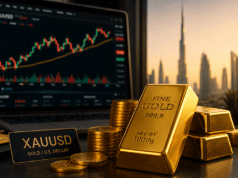
Gold prices hovered around $4,400 on Monday as stronger-than-expected US employment data kept expectations for another Federal Reserve rate hike elevated.
At the same time, rising oil prices added to concerns that inflation could remain stubbornly high.
Investors are now turning their attention to upcoming US inflation data for fresh clues about the Fed’s next policy decision.
Gold Prices Trade Near $4,400
At 09:53 ET, or 13:53 GMT, spot gold was down 0.6% at $4,403.69 per ounce.
Gold futures also fell 0.6% to $4,448.85.
The precious metal had already declined around 1% on Friday as stronger economic data supported the US dollar and pushed interest-rate expectations higher.
Strong US Payrolls Boost Fed Rate Hike Expectations
US employers added 162,000 jobs in August, beating market forecasts.
Meanwhile, the unemployment rate remained unchanged.
The stronger labor market data increased expectations that the Federal Reserve could raise interest rates at its September 15–16 meeting.
Markets are now pricing in roughly a 60% probability of a September rate hike.
Higher interest rates can reduce demand for gold because income-producing assets become more attractive compared with holding a non-yielding asset.
Stronger Dollar Adds Pressure on Gold
The US dollar also strengthened following the payroll report.
A stronger dollar can weigh on gold prices because bullion is priced in US currency. As a result, gold becomes more expensive for investors using other currencies.
ING analysts said they expect the Federal Reserve to deliver a 25-basis-point rate increase on September 16.
They added that such a move could provide temporary support for the dollar, particularly against lower-yielding currencies.
US Inflation Data Becomes the Next Major Catalyst
Investors are now preparing for another important round of economic data.
US producer price figures are due on Thursday, followed by consumer price inflation data on Friday.
These reports could strengthen expectations for another Fed rate hike if inflation remains elevated.
However, softer-than-expected readings could cause traders to reduce their expectations for tighter monetary policy.
Therefore, the upcoming inflation reports could become an important short-term catalyst for both gold and the US dollar.
Rising Oil Prices Add to Inflation Concerns
Geopolitical tensions are also influencing the outlook for inflation.
Iran said it had targeted three oil tankers in the Strait of Hormuz, along with several vessels linked to the United States.
The attacks reportedly came in response to US strikes on vessels over the weekend.
The latest escalation has increased concerns about energy supplies moving through the Strait of Hormuz, one of the world’s most important oil transit routes.
Brent crude traded near $97 per barrel.
Higher energy prices could increase inflation pressures and make the Federal Reserve less willing to shift toward easier monetary policy.
Gold Faces Technical Pressure
Gold has remained within a relatively narrow trading range after recovering from levels near $4,000 per ounce in July.
However, the metal recently fell below its 200-day moving average, which stood near $4,526.
That move created some short-term technical weakness and could keep traders cautious.
For now, gold prices remain caught between persistent geopolitical uncertainty and growing expectations for higher US interest rates.
The next major direction could depend heavily on this week’s inflation data and how it changes expectations for Federal Reserve policy.