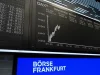
European bond yields moved higher on Monday as investors focused on central bank policy and escalating geopolitical tensions in the Persian Gulf.
Money markets were close to fully pricing in a 25-basis-point interest rate hike at Thursday’s European Central Bank meeting. That outlook kept pressure on government bonds across the region.
ECB Rate Hike Expectations Pressure European Bonds
Expectations for tighter monetary policy from ECB President Christine Lagarde and the Governing Council weighed on European fixed-income markets.
The pan-European STOXX 600 also slipped 0.1%, remaining near multi-week lows.
Higher sovereign bond yields continued to weigh on equity valuations, particularly in sectors that are highly sensitive to interest rates.
Eurozone Inflation Strengthens Case for ECB Hike
Markets became more confident about another ECB rate increase after preliminary Eurozone inflation data for August.
Headline inflation accelerated to 3.3% year-on-year.
The increase was driven largely by energy prices, which jumped 14.3%.
Core inflation, however, eased slightly to 2.4%.
The combination of higher headline inflation and persistent price pressures has reinforced expectations that the ECB will keep monetary policy restrictive.
German and Italian Bond Yields Stay Elevated
Benchmark borrowing costs across Europe remained near multi-year highs.
Germany’s 10-year Bund yield traded close to 3.36%, while Italian two-year yields also remained elevated.
Higher long-term interest rates can reduce the appeal of equities compared with government bonds.
As a result, rate-sensitive sectors such as real estate, construction and growth stocks have remained under pressure across major European markets.
Strait of Hormuz Tensions Add to Market Risk
Geopolitical concerns also weighed on investor sentiment.
Iranian authorities said they planned to declare a restricted maritime zone outside the Strait of Hormuz in the coming days.
The announcement followed military clashes over the weekend involving US forces and Iranian assets in the region.
The escalation increased concerns about further disruption to oil supplies and commercial shipping.
Oil Prices Rise on Supply Fears
Crude oil prices moved higher again on Monday as traders reacted to the increased geopolitical risk.
Oil benchmarks extended a strong weekly rally, with Brent crude holding above $90 per barrel.
The Strait of Hormuz remains one of the world’s most important energy transit routes.
Any restrictions on shipping through the area could reduce oil and gas flows and push energy prices even higher.
That possibility has renewed concerns about cost-driven inflation across European manufacturing and transportation industries.
Higher Energy Costs Could Complicate ECB Policy
Rising oil prices could create an additional challenge for the European Central Bank.
More expensive energy can feed through into transportation, production and consumer costs.
As a result, persistent energy inflation could make it harder for the ECB to bring inflation back toward its target.
This risk is one reason traders remain cautious ahead of Thursday’s policy decision.
US CPI Data Becomes the Next Global Catalyst
Investors are also preparing for key US inflation data later this week.
The upcoming Consumer Price Index report could have a significant impact on global bond markets and interest-rate expectations.
Friday’s stronger-than-expected US nonfarm payroll report showed that the economy added 162,000 jobs in August.
That strengthened expectations for another Federal Reserve rate increase at its September 15–16 policy meeting.
Inflation Data Could Drive the Next Bond Market Move
A hotter-than-expected US CPI reading could reinforce expectations for tighter monetary policy.
That would likely place additional pressure on global bond prices and push yields higher.
On the other hand, softer inflation data could reduce expectations for further rate increases and provide some relief to European bonds and equities.
For now, European bond markets remain caught between expectations for tighter ECB policy, rising energy prices and growing geopolitical risk.