Gold prices extended their decline on Monday as renewed military action between the United States and Iran pushed oil prices higher.
The escalation revived concerns that rising energy costs could create another inflation shock. That outlook strengthened expectations that the Federal Reserve may keep interest rates elevated, reducing demand for non-yielding assets such as gold.
Gold and Silver Prices Move Lower
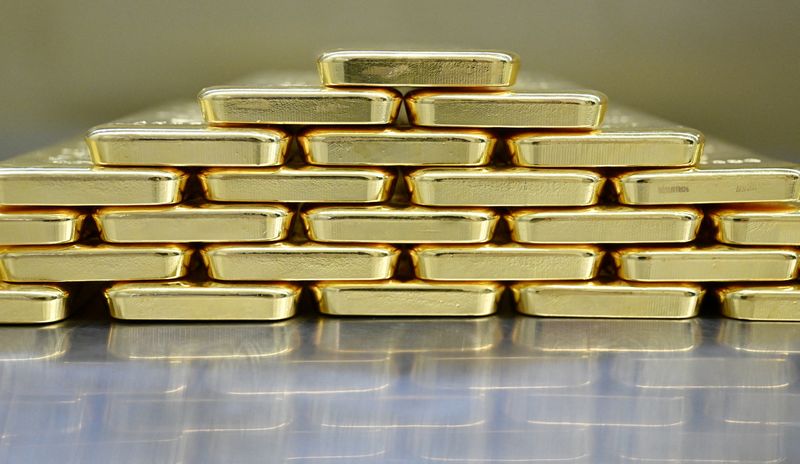
At 01:05 ET, or 05:05 GMT, spot gold fell 1.54% to $4,057.76 per ounce.
Gold futures declined 1.17% to $4,065.45 per ounce.
Other precious metals also came under pressure. Silver dropped 2.80% to $58.19 per ounce, while platinum fell 1.61% to $1,604.60.
U.S.-Iran Conflict Escalates
Tensions in the Middle East intensified over the weekend after the United States launched another round of strikes against Iranian targets.
The action followed an attack on a Cyprus-flagged cargo vessel in the Strait of Hormuz.
Iran said the important shipping route would remain closed until further notice. However, U.S. officials challenged that claim.
The conflicting statements highlighted the fragile state of ceasefire negotiations and increased uncertainty across global markets.
Oil Rally Revives Inflation Fears
Oil prices remained sharply higher after gaining around 3% following the weekend escalation.
Investors became increasingly concerned that renewed fighting could disrupt crude shipments through the Strait of Hormuz.
The waterway handles roughly one-fifth of the world’s oil supply, making it one of the most important energy routes globally.
Any prolonged disruption could push oil prices higher and increase costs for businesses and consumers.
Higher Interest Rates Pressure Gold
A sustained increase in energy prices could place fresh upward pressure on inflation.
That possibility has strengthened expectations that the Federal Reserve may need to keep interest rates high for longer.
Higher interest rates and rising bond yields usually reduce the appeal of gold because the metal does not generate interest or income.
A stronger U.S. dollar can also weigh on bullion by making dollar-priced gold more expensive for international buyers.
Fed Officials Show Greater Inflation Concern
Minutes from the Federal Reserve’s June meeting showed that several policymakers believed there could be a case for additional interest-rate increases.
Officials expressed greater concern about inflation, while worries surrounding the labor market appeared to ease.
The next Federal Reserve policy meeting is scheduled for July 28 and 29.
Markets will closely monitor whether policymakers signal another rate increase or maintain their current stance.
U.S. CPI Data Could Drive Gold’s Next Move
Investors are now preparing for Tuesday’s U.S. Consumer Price Index report.
The inflation figures could provide important clues about the direction of Federal Reserve policy.
Markets will also focus on Federal Reserve Chair Kevin Warsh’s first congressional testimony.
His comments may offer further guidance on inflation, interest rates and the economic outlook.
Gold Holds Near the $4,000 Support Level
Tony Sycamore, a market analyst at IG, said gold remains highly sensitive to geopolitical developments and incoming U.S. economic data.
He noted that the precious metal found support near the psychologically important $4,000 level last week.
A sustained move above the $4,200 to $4,220 range could improve the recovery outlook.
Such a breakout could open the way towards the 200-day moving average near $4,491.
Strong Inflation Data Could Trigger More Losses
Sycamore warned that a stronger-than-expected CPI reading could increase expectations for another Federal Reserve rate hike before the end of the year.
That scenario could strengthen the dollar and place further pressure on gold prices.
In contrast, weaker inflation data could reduce rate-hike expectations and help bullion stabilize after its recent decline.
Stronger Dollar Adds to Gold Pressure
The U.S. Dollar Index gained around 0.3% on Monday.
The stronger greenback added another source of pressure on gold and other dollar-denominated metals.
The near-term outlook for bullion will likely depend on Middle East developments, oil prices, U.S. inflation data and signals from the Federal Reserve.