Gold Prices Climb as Ceasefire Developments Ease Inflation Concerns
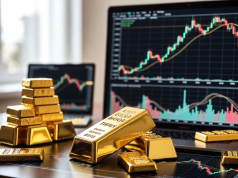
Gold prices moved higher on Thursday as falling oil prices and renewed hopes for stability in the Middle East improved market sentiment.
The precious metal also benefited from a weaker U.S. dollar, making gold more attractive and affordable for international investors.
Spot gold rose 1.6% to $4,505.12 per ounce, while gold futures gained 1.5% to trade at $4,533.72 per ounce during the session.
Israel-Lebanon Ceasefire Raises Hopes for Broader Peace Deal
Investor sentiment improved after Israel and Lebanon agreed to renew their fragile ceasefire, increasing optimism that diplomatic progress could eventually support a wider agreement between the United States and Iran.
Negotiations involving Washington and Tehran have been closely linked to developments in Lebanon, where Israeli forces have been engaged in conflict with Iran-backed Hezbollah militants.
Following a fourth round of U.S.-mediated talks, Israel and Lebanon announced that the ceasefire would depend on a complete halt to Hezbollah attacks and the withdrawal of Hezbollah operatives from areas south of the Litani River.
Officials described the agreement as a step toward a broader peace and security framework, although Hezbollah did not participate directly in the negotiations.
Trump Signals Possible Progress in U.S.-Iran Talks
Adding to market optimism, U.S. President Donald Trump suggested that progress in negotiations with Iran could be achieved as early as this weekend.
Iran’s foreign minister also indicated that communication channels with Washington remain open despite recent reports claiming that Tehran had suspended contact through intermediaries.
According to reports, Trump has informed advisers that military action against Iran would only resume if American forces suffer casualties, reducing fears of an immediate escalation in the conflict.
Domestic Pressure Mounts Against Further Military Action
The White House is also facing growing political pressure to avoid expanding military operations.
The U.S. House of Representatives recently approved a resolution aimed at limiting the president’s ability to continue the conflict. However, the proposal still requires Senate approval and would need substantial bipartisan support to overcome a potential presidential veto.
These developments have contributed to hopes that diplomatic efforts may gain momentum in the coming weeks.
Oil Prices Retreat but Supply Risks Remain
Crude oil prices moved lower following the ceasefire developments.
Brent crude futures fell 1.5% to $96.30 per barrel, while U.S. West Texas Intermediate crude declined 1.2% to $94.84 per barrel.
Despite the decline, oil prices remain significantly above levels seen before the conflict began. Ongoing disruptions around the Strait of Hormuz continue to restrict energy supplies and keep markets sensitive to geopolitical developments.
Inflation Risks Still a Key Market Concern
Investors remain concerned that elevated energy prices could trigger a fresh wave of inflation across global economies.
Higher inflation could force major central banks, including the Federal Reserve, to maintain restrictive monetary policies or keep interest rates elevated for longer.
Such an environment is generally less favorable for non-yielding assets like gold, which often face pressure when interest rates rise.
Treasury Yields Decline Ahead of Key Economic Data
Supporting gold prices on Thursday was a decline in U.S. Treasury yields.
Both the rate-sensitive two-year Treasury yield and the benchmark 10-year yield moved lower, reducing some of the opportunity cost associated with holding gold.
Meanwhile, analysts at UBS expect most major central banks, including the Federal Reserve and the Bank of England, to keep interest rates unchanged in the near term.
Markets Await Crucial U.S. Jobs Report
Attention is now turning to the upcoming U.S. employment report, scheduled for release on Friday.
The closely watched data could provide important insight into how the ongoing Middle East conflict is affecting the American labor market and broader economic conditions.
The report may also influence expectations for future Federal Reserve policy, making it one of the most significant market events of the week for gold traders and investors.