German industrial production increased slightly in June, beating market expectations and extending the positive momentum seen in previous months.
According to official data released on Friday, industrial output rose 0.2% month-over-month in June. Economists had expected a smaller increase of 0.1%.
German Industrial Production Supports Second-Quarter Growth
The June increase followed gains in both April and May.
As a result, total German industrial production rose 0.7% during the second quarter compared with the previous three-month period.
The improvement in factory activity contributed significantly to Germany’s broader economic growth during the quarter.
Auto Sector Drives June Output Higher
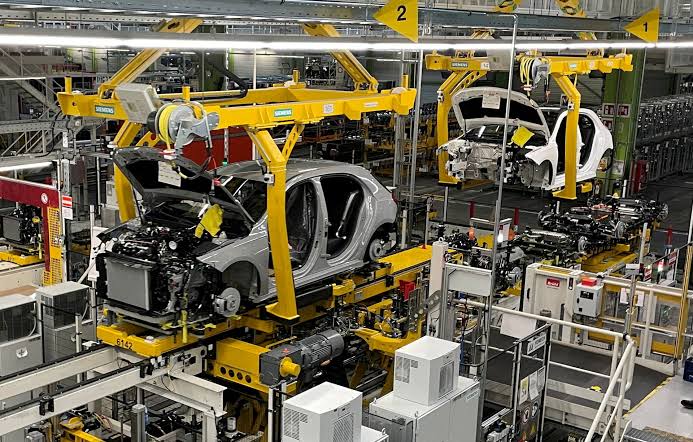
Germany’s automotive industry was the main driver of the latest increase.
Motor vehicle production climbed 3.6% month-over-month in June, providing a strong boost to overall industrial activity.
Production of other transport equipment rose even faster, increasing 8.4% during the month.
This category includes products such as military vehicles and other specialized transportation equipment.
Machinery and Energy-Intensive Industries Weaken
Not all parts of Germany’s industrial sector recorded gains.
Output of machinery and equipment declined during June.
Production in energy-intensive industries also fell during the month. However, these sectors still posted overall growth during the second quarter.
That performance came despite elevated global energy prices, which continue to create cost pressures for manufacturers.
German Manufacturing Sentiment Improves
Recent economic indicators suggest that momentum in Germany’s manufacturing sector could continue.
The Manufacturing Output PMI increased in July, pointing to improving production conditions.
Germany’s Ifo Business Climate Index also moved higher, indicating stronger business confidence among companies.
Together, the two indicators suggest that the manufacturing sector may continue to recover in the coming months.
Low Rhine Water Levels Create New Risk
Despite the improving economic data, extremely low water levels on the Rhine River could create problems for German industry.
The Rhine is an important transportation route for raw materials, fuel and industrial goods.
Lower water levels can restrict shipping capacity and raise transportation costs. As a result, some manufacturers could experience supply disruptions or reduced production in the coming weeks.
For now, Germany’s industrial sector continues to show signs of improvement, supported by strong automotive production and improving business sentiment. However, energy costs and transportation disruptions remain important risks to the outlook.