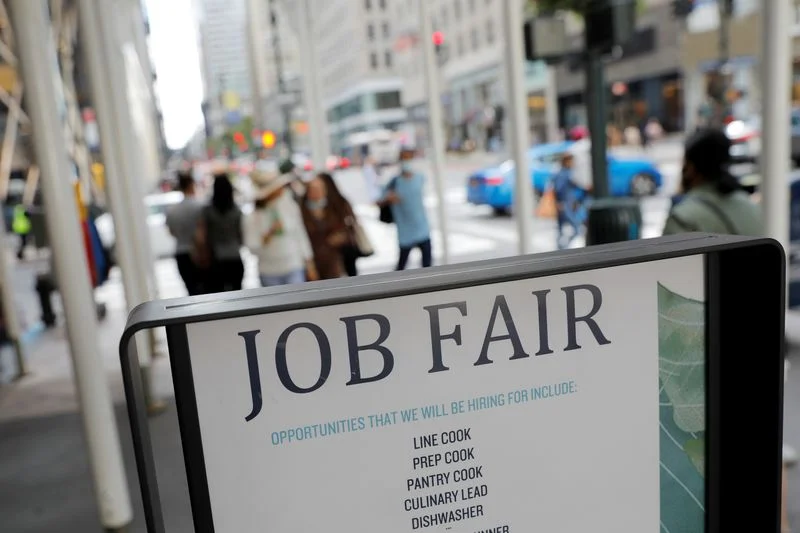
US jobless claims declined slightly last week, offering another sign that the American labor market may be regaining stability after a weaker summer period.
US Jobless Claims Fall Below Expectations
Initial claims for state unemployment benefits fell by 1,000 to a seasonally adjusted 197,000 for the week ending September 19, according to the Labor Department.
The figure came in below economists’ expectations. A Reuters poll had forecast 201,000 new claims for the latest week.
Jobless claims are now hovering near their lowest levels in 57 years. However, economists have cautioned that seasonal factors may be contributing to unusually low readings.
In particular, holidays such as Labor Day can make seasonal adjustments more difficult. Economists have also pointed to so-called residual seasonality, which can place additional downward pressure on claims as the year progresses.
Labor Market Shows Signs of Stabilization
Despite these seasonal effects, the broader trend in US jobless claims suggests that the labor market has regained some stability.
Employment conditions weakened during much of the summer. However, layoffs have remained relatively low, helping support the overall jobs market.
At the same time, businesses remain cautious about significantly increasing hiring.
Companies continue to face several challenges, including higher energy prices, import tariffs and a shrinking labor supply. Worker shortages have also become more noticeable as immigration restrictions and retirements reduce the number of available workers.
Companies Struggle to Find Workers
A recent S&P Global survey highlighted another challenge facing employers.
Companies reported increasing difficulty finding suitable employees in September, suggesting that labor shortages remain an important issue for businesses looking to expand their workforce.
While layoffs remain limited, hiring activity has therefore struggled to gain significant momentum.
Continuing Claims Rise Slightly
The Labor Department report also showed an increase in continuing unemployment claims.
The number of people receiving unemployment benefits after their initial week of assistance rose by 2,000 to a seasonally adjusted 1.719 million for the week ending September 12.
Continuing claims are often viewed as an indicator of how easily unemployed workers are finding new jobs.
The latest figures covered the period in which the government conducted its household survey for September’s unemployment rate.
Economists generally see the current level of continuing claims as consistent with a relatively stable unemployment rate.
US Unemployment Rate Remains at 4.1%
The US unemployment rate remained unchanged at 4.1% in August.
However, the underlying data showed that some Americans who lost their jobs were experiencing longer periods of unemployment.
Citigroup economist Veronica Clark said that if continuing claims remain at lower levels, the unemployment rate could move closer to 4% over the coming months.
However, she cautioned that a decline caused by a smaller labor force would not necessarily indicate that the labor market is tightening again.
Federal Reserve Raises Interest Rates
Labor market developments are also being closely monitored by the Federal Reserve as policymakers assess the outlook for the US economy.
The Fed recently increased its benchmark overnight interest rate by 25 basis points, bringing the target range to 3.75%-4.00%.
It marked the first interest rate increase in three years.
The central bank also indicated that additional increases in borrowing costs could follow in the coming months as policymakers continue to monitor inflation, employment and broader economic conditions.