The Federal Reserve is widely expected to raise its benchmark interest rate by 25 basis points, marking its first increase since July 2023.
Such a move would lift the federal funds target range to 3.75%-4.00%.
Markets Price In a 25bp Fed Rate Hike
Interest rate futures are pricing in close to a 90% probability of a quarter-point increase, according to the CME FedWatch Tool.
That figure has risen from roughly 70% before the latest U.S. inflation data.
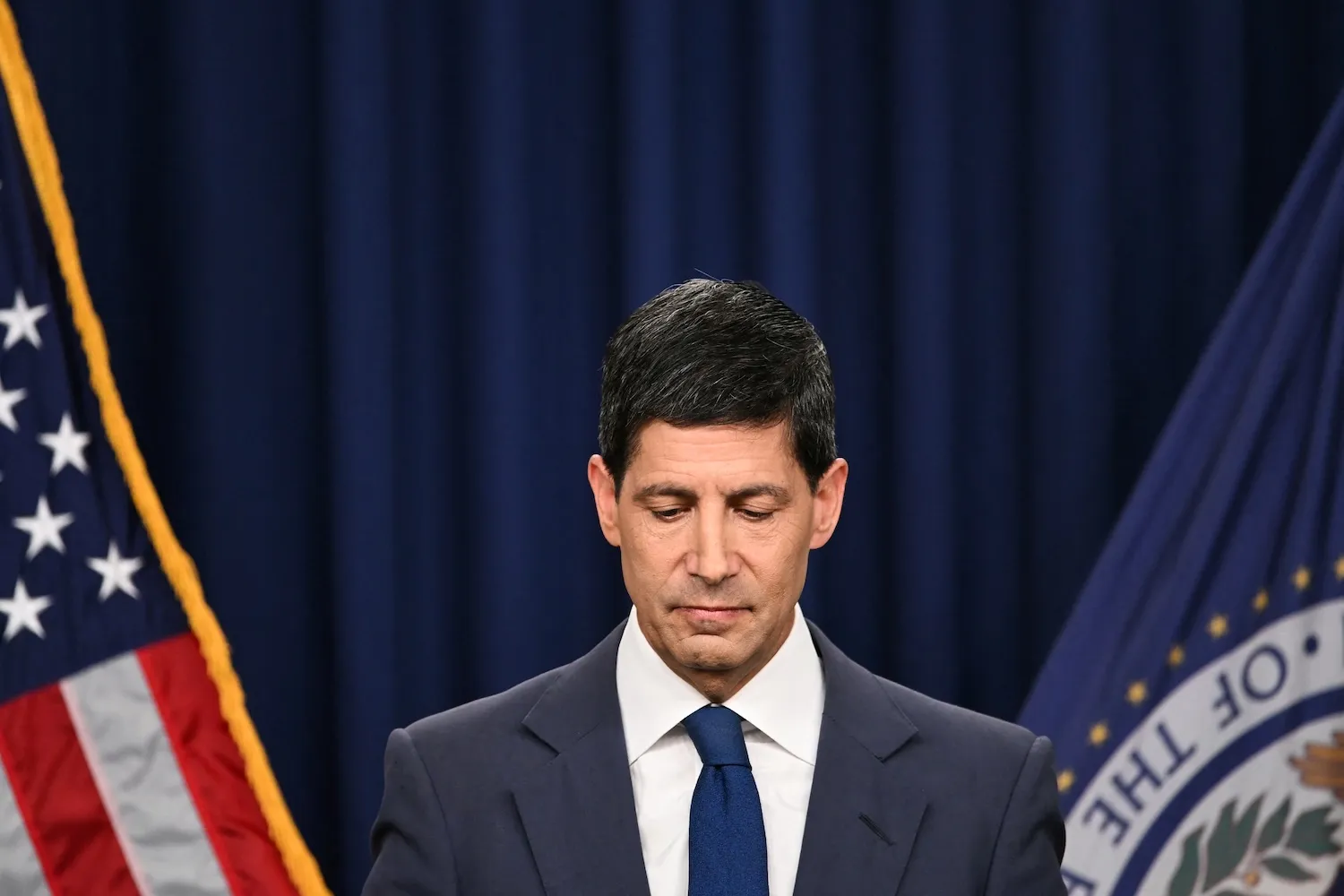
With the rate decision itself largely anticipated, investors are now focusing on the Fed’s updated dot plot and Chair Kevin Warsh’s post-meeting press conference.
These two elements could provide the clearest signal about the future path of U.S. interest rates.
Dot Plot Could Drive the Market Reaction
The Federal Reserve’s dot plot shows policymakers’ individual projections for future interest rates.
A more hawkish set of projections pointing to additional rate increases could push long-term Treasury yields higher and place pressure on long-duration bonds such as TLT.
By contrast, any indication that the Fed is close to pausing could provide relief to the bond market.
The year-end projections for 2026 and 2027 are therefore expected to receive significant attention.
Economists Expect a Quarter-Point Increase
A Reuters survey conducted after the latest August CPI and PPI reports found that 86 of 101 economists expected the Fed to raise rates by 25 basis points.
Major financial institutions including Goldman Sachs, J.P. Morgan, HSBC and Deutsche Bank have also moved toward the same forecast.
Their expectations have been influenced by stronger-than-expected inflation data and crude oil prices rising above $100 per barrel.
Citi economists said the combination of persistent core inflation and higher energy prices had strengthened the case for a 25-basis-point increase.
Morgan Stanley Sees More Than One Fed Hike
Morgan Stanley has taken a more hawkish position.
The bank expects two rate increases, one in September and another in December.
Its outlook reflects concerns about slower disinflation, strong investment demand linked to artificial intelligence and questions surrounding the Fed’s policy credibility.
Morgan Stanley also suggested that the neutral interest rate could temporarily be higher than previously assumed.
These factors, in its view, support a somewhat more restrictive monetary policy stance.
Citi Expects Only One Hike
Citi has a different outlook.
Its base case is for the Federal Reserve to raise rates once before eventually returning to rate cuts in June 2027.
This difference in expectations highlights why the Fed’s forward guidance could be more important than the rate increase itself.
All Eyes on Kevin Warsh
Kevin Warsh has provided limited forward guidance since becoming Fed Chair.
That makes the dot plot especially important because markets have fewer clues about how policymakers view the longer-term rate path.
The median projections for the end of 2026 and 2027 could become some of the most closely watched figures in the entire announcement.
Fed Vote Could Reveal Internal Divisions
Citi economists said the policy decision could be unanimous, although as many as two officials may vote in favor of keeping rates unchanged.
New York Fed President Williams has not clearly signaled support for a hike in recent comments, although he has left his options open.
Given differences of opinion within the Federal Open Market Committee, some dissent would not necessarily come as a surprise.
Warsh Could Frame Hike as a Calibration
One possible way for Warsh to build consensus would be to present the rate increase as a limited policy adjustment rather than the beginning of a prolonged tightening cycle.
Citi suggested that Warsh could describe the move as a “calibration” to current inflation risks.
Such language would allow the Fed to raise rates while maintaining flexibility for future meetings.
A more cautious message could also reinforce Warsh’s preference for a meeting-by-meeting approach rather than firm forward guidance.
For markets, the key question is therefore not simply whether the Fed raises rates, but whether policymakers signal that additional tightening is likely to follow.