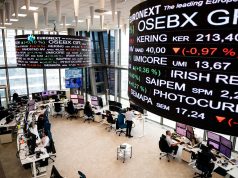
European stocks moved higher on Wednesday morning as falling oil prices helped ease concerns about corporate costs and profit margins.
The pan-European STOXX 600 gained around 0.4%, trading close to its highest level in two weeks.
Germany’s DAX and Italy’s FTSE MIB both advanced about 0.4%, while France’s CAC 40 and Britain’s FTSE 100 rose roughly 0.5%.
Falling Oil Prices Support European Stocks
Lower crude prices provided one of the main boosts to European markets.
Saudi Arabia has reportedly restarted its East-West oil pipeline following recent drone attacks.
The 1,200-kilometer pipeline allows crude to be transported toward the Red Sea and exported through the key port of Yanbu.
A return of Saudi supply through this route could help ease concerns about disruptions around the Strait of Hormuz.
Brent Crude Drops Below $100
Brent crude futures fell below $100 per barrel, providing additional relief for energy-intensive European companies.
Lower oil prices can reduce transportation, manufacturing and other operating costs for businesses.
They can also help limit inflationary pressure, which is particularly important for European companies already dealing with elevated energy expenses.
U.S.-Iran Diplomacy Improves Market Sentiment
Oil prices were also pressured by signs of diplomatic progress between the United States and Iran.
U.S. President Donald Trump said that a potential agreement with Tehran could be getting closer following extended discussions between American and Iranian officials at the United Nations General Assembly in New York.
The diplomatic signals raised hopes that tensions in the Middle East could ease.
Such a development could improve the outlook for global energy supplies and reduce the geopolitical risk premium in crude markets.
Strait of Hormuz Remains a Key Issue
Despite the improved tone, major disagreements between Washington and Tehran remain unresolved.
Iranian officials have continued to demand the removal of U.S. sanctions and naval restrictions before fully reopening the Strait of Hormuz.
The waterway remains one of the most important energy shipping routes in the world.
Any meaningful improvement in traffic through the Strait could have a significant impact on global oil and gas markets.
Iranian President Masoud Pezeshkian is also scheduled to address the UN General Assembly later on Wednesday.
Trump-Xi Meeting Adds to Risk Appetite
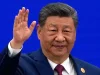
European market sentiment was also supported by expectations surrounding Chinese President Xi Jinping’s visit to Washington.
Xi is due to hold high-level talks with Trump as investors look for progress on U.S.-China trade relations.
Markets are increasingly focused on whether Washington and Beijing will extend their existing tariff truce.
Artificial intelligence, trade policy and strategic cooperation are also expected to feature in the discussions.
Improved relations between the world’s two largest economies could support global growth expectations and strengthen investor confidence.
Natural Gas Prices Remain a Risk
Despite Wednesday’s gains, European investors remain cautious about the outlook for natural gas.
Low storage levels could lead to renewed price pressure as the winter season approaches.
Higher natural gas prices could increase energy inflation and put pressure on both households and businesses.
The European Central Bank has repeatedly highlighted energy costs as an important risk to the inflation outlook.
Eurozone PMI Data Comes Into Focus
Investor attention is also turning toward September’s preliminary Eurozone Purchasing Managers’ Index data.
The figures will provide a fresh indication of economic activity across the region.
Markets will be watching closely for signs that businesses in Germany, France and other major economies are coping with higher energy prices and tighter monetary conditions.
Weak PMI readings could renew concerns over economic growth and put pressure on European equity valuations.
For now, European stocks remain supported by lower oil prices, improving Middle East diplomacy and expectations for progress in U.S.-China relations.
However, energy costs, economic data and geopolitical risks are likely to remain important drivers of market sentiment in the coming sessions.